
Roll Top Writing Bureau
A roll top writing bureau conceals papers beneath a curved sliding lid, offering a clever workspace suited to period studies.
Roll Top Writing Bureau
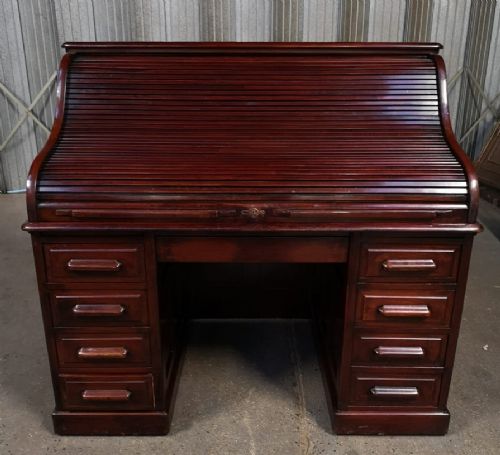
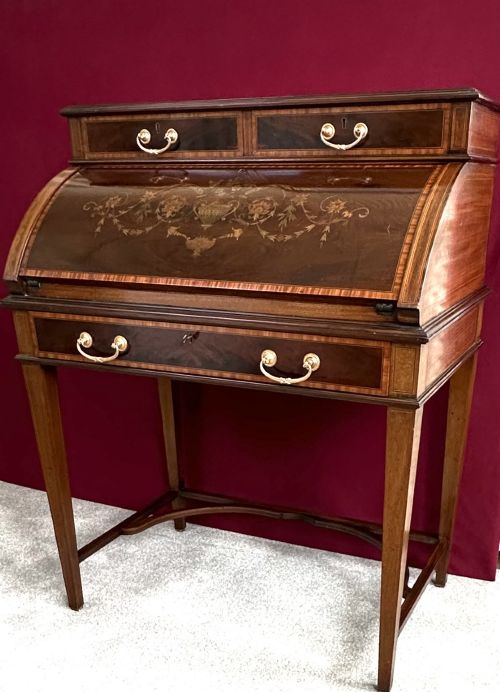
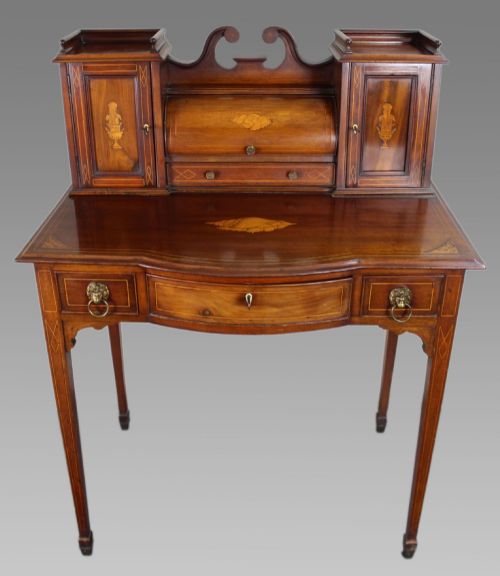
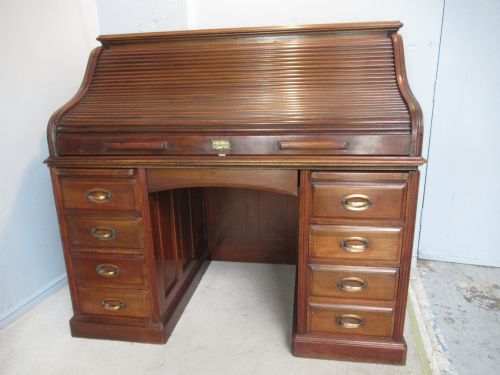
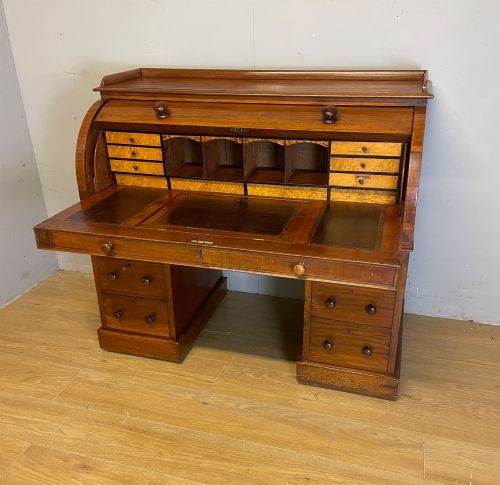
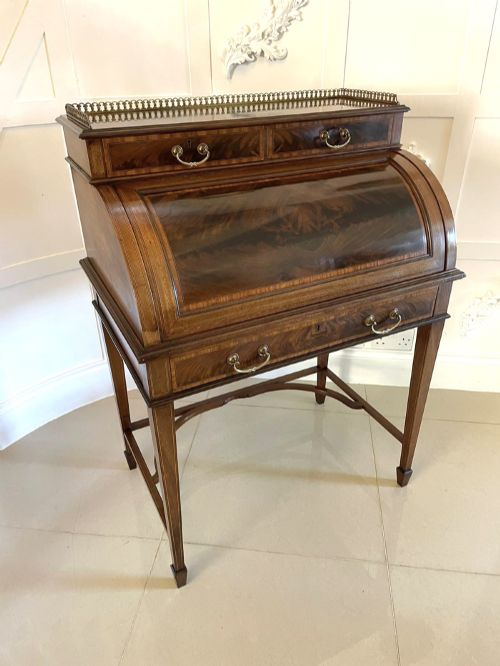
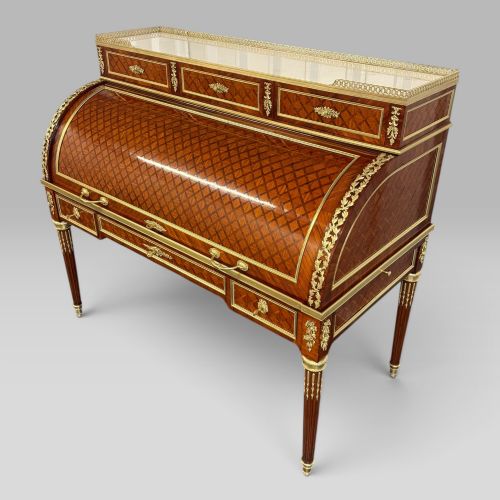
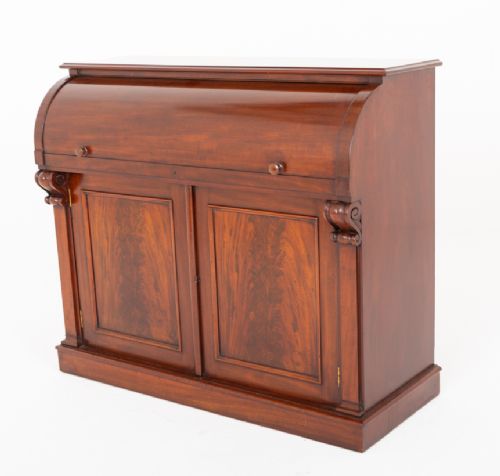
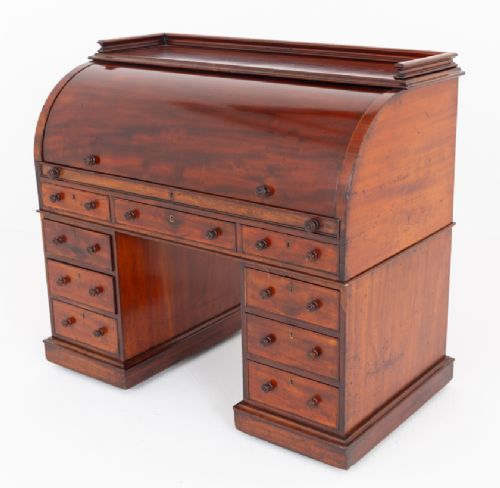
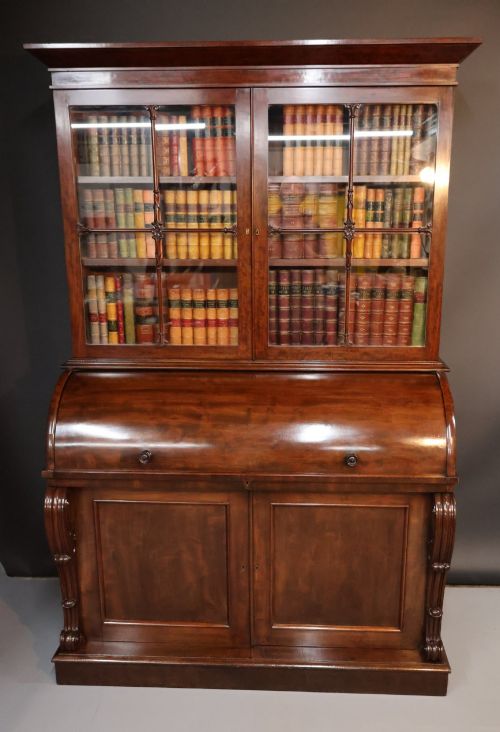
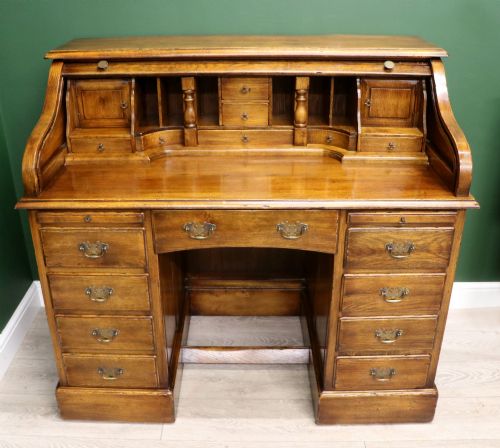
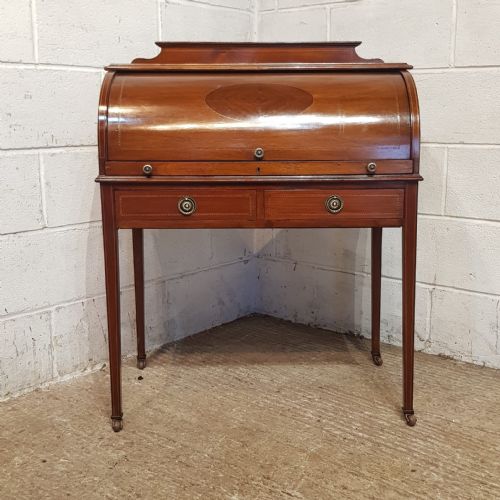
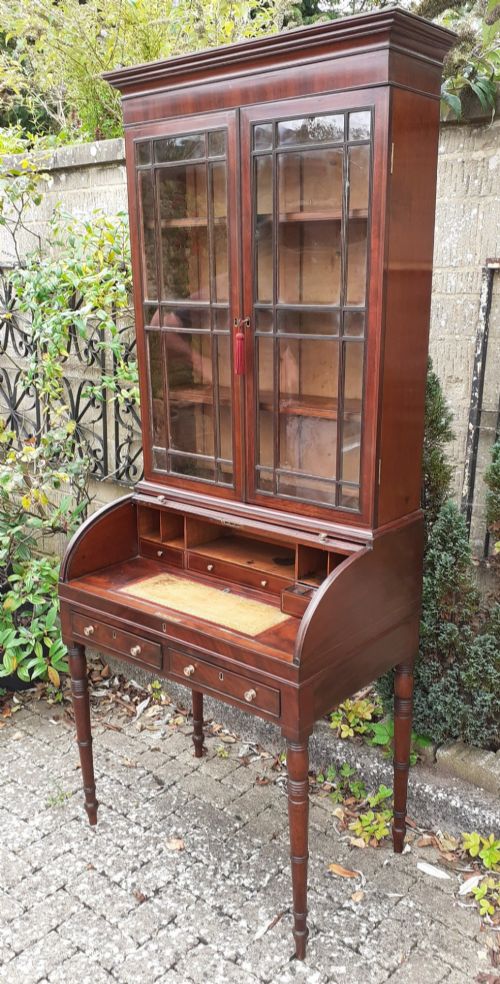
A roll top writing bureau provides a secure writing surface by housing internal drawers and pigeonholes beneath a slatted or cylindrical cover. These pieces span Georgian, Victorian, and Edwardian periods, appearing in forms ranging from compact ladies desks to large twin pedestal models and tall bureau bookcases.
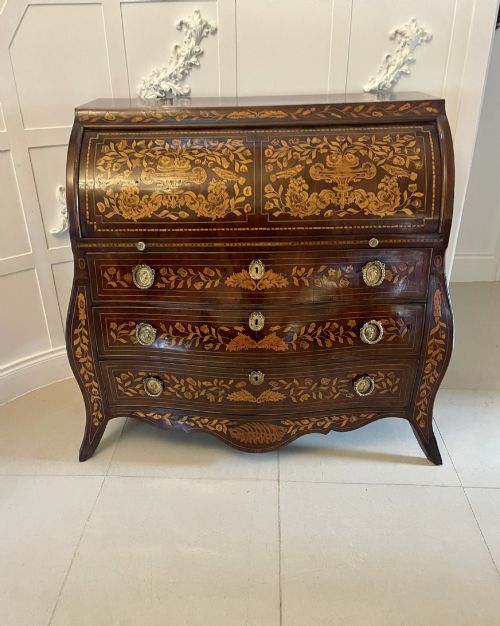
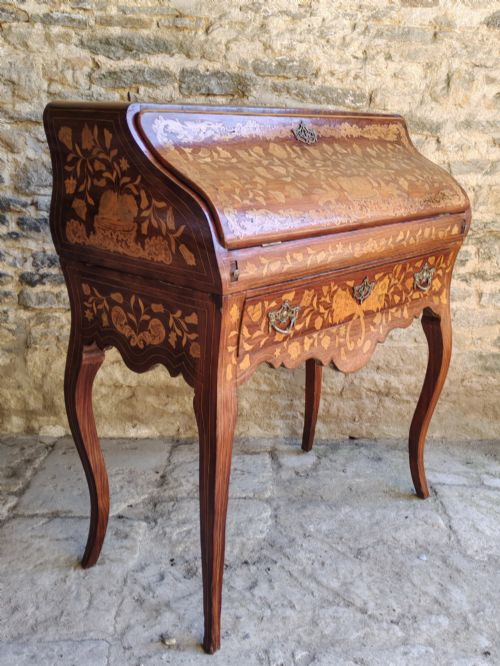
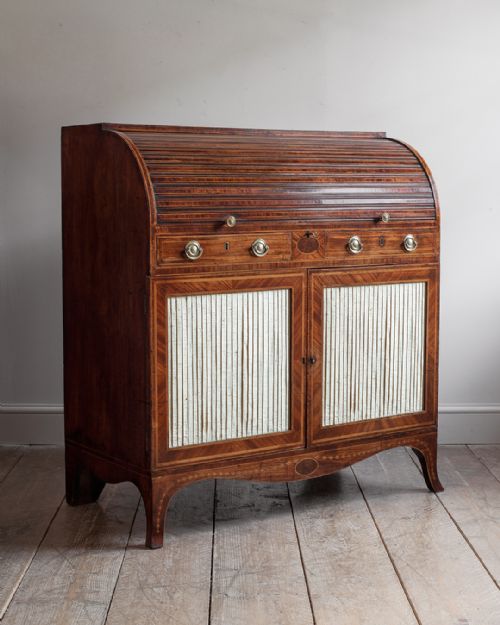
Mahogany and oak dominate the available selection, often accompanied by satinwood, walnut, and fruitwood. Buyers frequently encounter Edwardian and Victorian versions alongside 18th century examples featuring marquetry, tambour mechanisms, and fitted pull-out writing slides.
How They Were Made
Cabinetmakers constructed these desks using solid timbers and fine veneers like mahogany, walnut, and satinwood over secondary woods. Curved cylinder fronts and slatted tambour panels required precision joinery to glide smoothly along concealed tracks.
Decorative elements relied on floral marquetry, parquetry, ebony inlay, and brass ring handles. Structural stability came from traditional dovetail joints used in drawer construction and sturdy pedestal or bracket feet.
The selection includes 18th century examples alongside Georgian, Victorian, and Edwardian periods.
What Varies in Quality
The sophistication of internal fittings dictates much of the distinction between pieces, with secret compartments, fitted leather writing surfaces, and coordinated satinwood interiors marking out superior examples. Exterior craftsmanship shows in the seamless alignment of the cylinder or tambour mechanism and the crispness of inlaid floral marquetry.
Choice of timber grain and the retention of original brass hardware further elevate a piece. Heavier, solid oak or figured mahogany versions indicate robust construction compared to simpler utility models.
Maple & Co. London·Edwards & Roberts·Tudor & Burrey·Globe Wernicke
The Roll Top Writing Bureau Glossary
- Cylinder desk
- A writing desk featuring a quarter-circle or half-cylinder solid wooden roll top that conceals the writing surface when closed.
- Tambour
- A flexible shutter formed from narrow vertical strips of wood glued to canvas, allowing the roll top to slide around a tight curve.
- Marquetry
- Decorative veneer patterns formed from pieces of various coloured woods, ivory, or shell, creating pictorial designs on the exterior surfaces.
- Secretaire
- A cabinet or desk containing a drawer or compartment configured specifically for writing and storing stationery.
- Pedestal desk
- A heavy, freestanding desk supported by two separate columns of drawers rather than four traditional legs.
Roll Top Writing Bureau: Frequently Asked Questions
How does a tambour mechanism work?
A tambour utilises narrow strips of wood affixed to a flexible fabric backing. This construction allows the roll top to curve smoothly along internal tracks when opened or closed.
Such engineering kept writing materials concealed while taking up minimal operational space compared to traditional folding desk flaps.
Where were these bureaus placed historically?
These pieces sat in private libraries, studies, and drawing rooms of large homes. They provided a secure place to manage correspondence and financial records.
Compact Edwardian versions also appeared in bedrooms or smaller writing boudoirs for personal letter writing.
How do I care for the roll top?
Keep the sliding mechanism clean and lightly waxed to ensure the slats move freely along their tracks without sticking. Avoid placing heavy items on top that might warp the curved enclosure.
Maintain stable room humidity to prevent the solid wood and veneers from expanding or contracting.
How do I distinguish Victorian from Edwardian pieces?
Victorian examples generally feature darker, heavy timbers like solid mahogany or walnut with substantial proportions. They often emphasise utility and deep, rich wood tones.
Edwardian pieces frequently display lighter satinwood influences, delicate marquetry, and Sheraton revival styling designed to brighten smaller living spaces.