

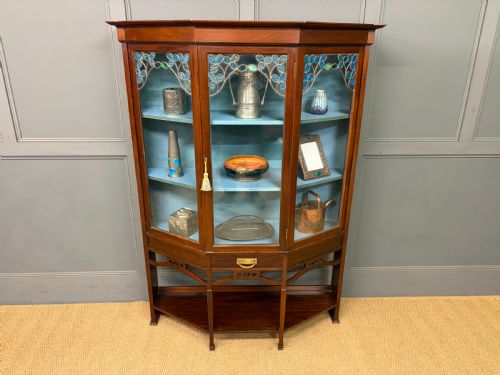


Art Nouveau Glazed Bookcase
These art nouveau glazed bookcase pieces bring sinuous floral lines and timber warmth into a room, offering both display and storage.
Art Nouveau Glazed Bookcase
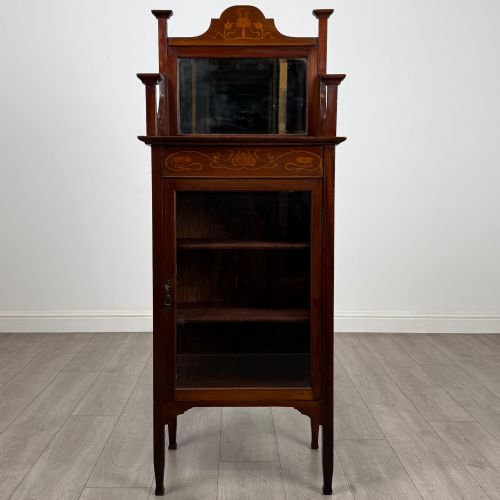
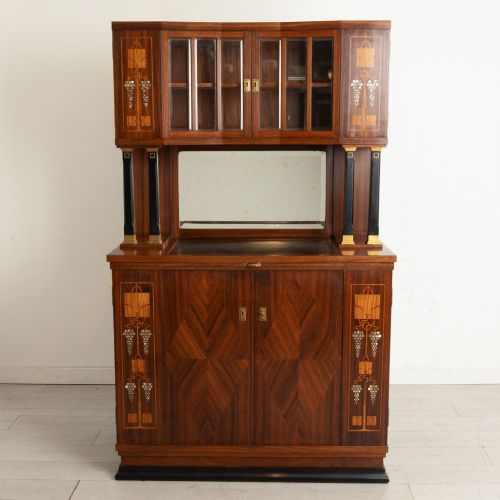
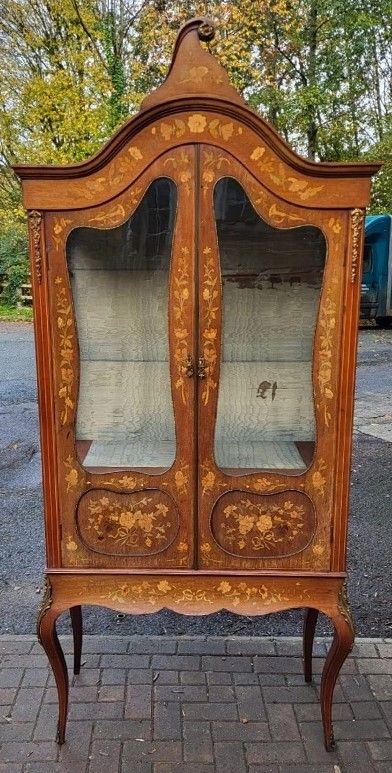
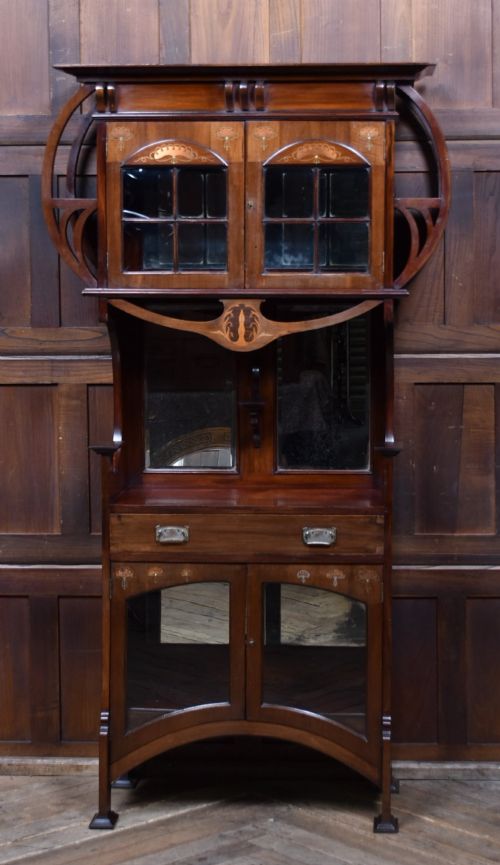
When you search for an art nouveau glazed bookcase, you are looking at tall storage and display furniture produced primarily around the turn of the twentieth century. The examples met on this page span the Victorian era, the Edwardian period, and the nineteen-twenties, often combining glazed upper doors with enclosed lower compartments or open shelving.
The dominant material format seen here is mahogany, frequently enriched with wood inlay, brass mounts, and mirror backs. Many pieces function simultaneously as display cabinets, china cabinets, or bureau bookcases, uniting domestic utility with the characteristic decorative motifs of the Arts and Crafts and Viennese Secessionist movements.
How they were made
Cabinet makers constructed these pieces predominantly using solid and veneered mahogany, along with oak and maple for specific regional variations. Timber framing was joined using traditional methods to support heavy glazed doors and internal shelving.
Decoration relied heavily on wood inlay, floral marquetry, and polished brass hardware. Glazing ranged from simple panes to astragal configurations and leaded glass, while fabric linings sometimes backed mirror panels inside display sections.
Listings feature mahogany, oak, and maple, paired with glass, brass, mirror, and fabric.
What varies in quality
The standard of an art nouveau glazed bookcase is determined by the precision of its timber inlay and the handling of its organic motifs. Finer pieces demonstrate meticulous marquetry work in woods like maple and mahogany, whereas simpler versions rely on plain timber surfaces without ornamental detailing.
Structural refinement also separates standard production from exceptional examples, seen in the choice of brass hardware, the execution of mirror backs, and the integration of specialised forms like secretaire drawers or roll tops.
August Ungethüm·Maple and Co
The Art Nouveau Glazed Bookcase Glossary
- Astragal glazed
- A method of dividing glass panes using narrow wooden or metal bars. These moulded strips form geometric or flowing patterns across the door front.
- Marquetry
- The art of applying decorative veneer pieces to a timber surface to create pictures or floral patterns. It frequently incorporates lighter woods like maple into a darker mahogany background.
- Secretaire bookcase
- A hybrid furniture form featuring a drop-front desk drawer combined with upper shelving. It allows a writing surface to pull down from the main bookcase body.
- Viennese Secessionist
- A stylistic branch associated with Austrian design that embraced cleaner geometric lines alongside traditional craft. Pieces from this movement often display restrained ornament compared to floral British equivalents.
Art Nouveau Glazed Bookcase: Frequently Asked Questions
How do I date an art nouveau glazed bookcase?
Dating relies on stylistic markers combined with timber choices and construction techniques. Pieces bridging the Victorian and Edwardian eras often feature distinctive floral marquetry alongside traditional framing.
Later examples from the nineteen-twenties show shifts toward simpler forms. Examining the brass hardware and mirror backing also helps place a piece within its proper decade.
Where should I place a glazed bookcase?
These cabinets suit libraries, studies, and living rooms where books and decorative objects require protection from dust. The glazed doors keep volumes visible while shielding delicate bindings from the room environment.
Positioning them away from direct sunlight helps preserve the polished mahogany surfaces and any inlaid wood details over time.
How do I care for inlaid mahogany furniture?
Maintenance involves regular dusting with a soft, dry cloth and avoiding silicone-based polishes that can damage historic finishes. Keeping the wood away from extreme temperature fluctuations prevents timber shrinkage and veneer lifting.
Applying a traditional wax occasionally helps nourish the mahogany and maintain its natural lustre.
What is the difference between an Edwardian and a Victorian bookcase?
Victorian examples often display heavier proportions and darker finishes, reflecting earlier nineteenth-century cabinet making traditions. Edwardian pieces tend to feel lighter, frequently incorporating maple inlay and brighter mahogany tones.
Arts and Crafts influences also emerged strongly during the Edwardian period, emphasising visible construction and simpler structural lines.