



Art Nouveau Bookcase
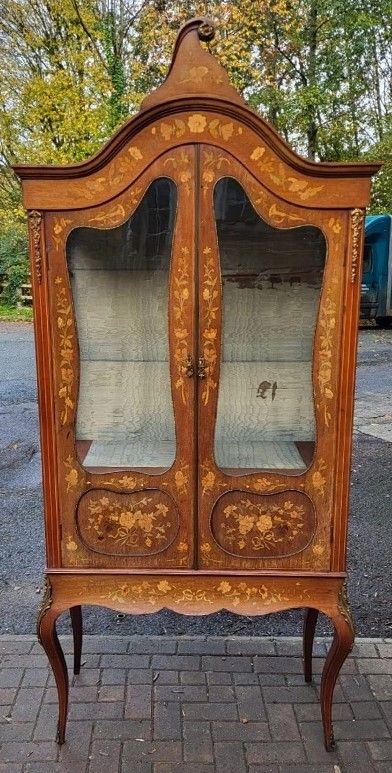
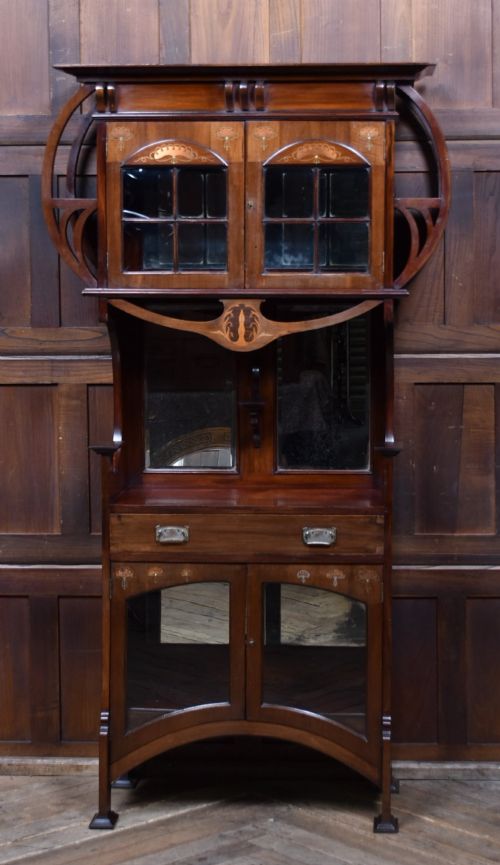
An art nouveau bookcase brings flowing lines and floral marquetry into a room, holding volumes behind glazed doors.
Art Nouveau Bookcase
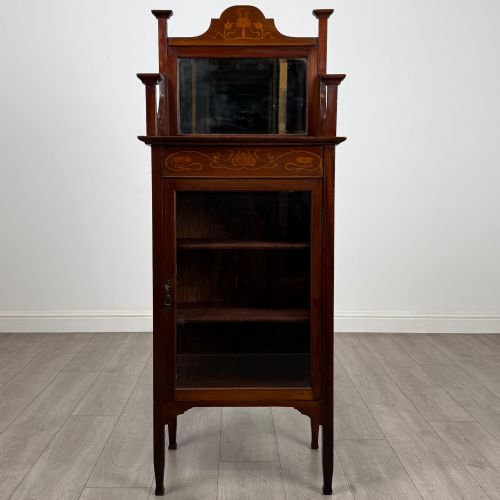
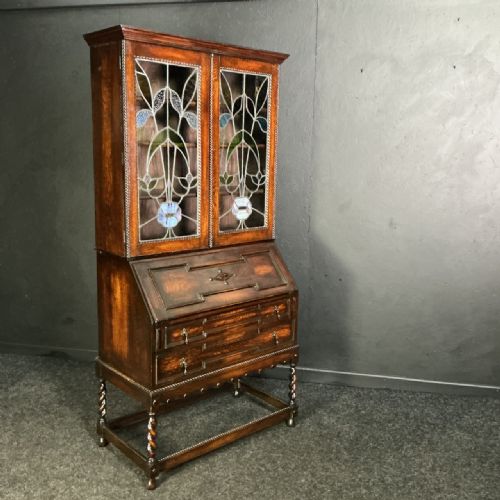
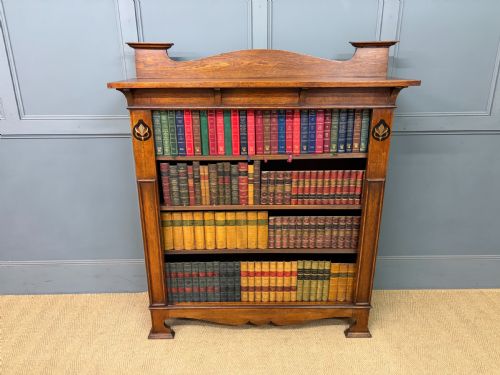
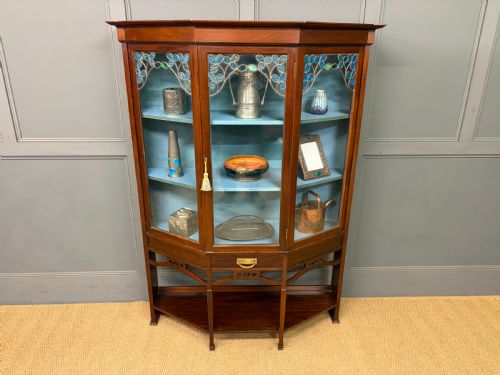
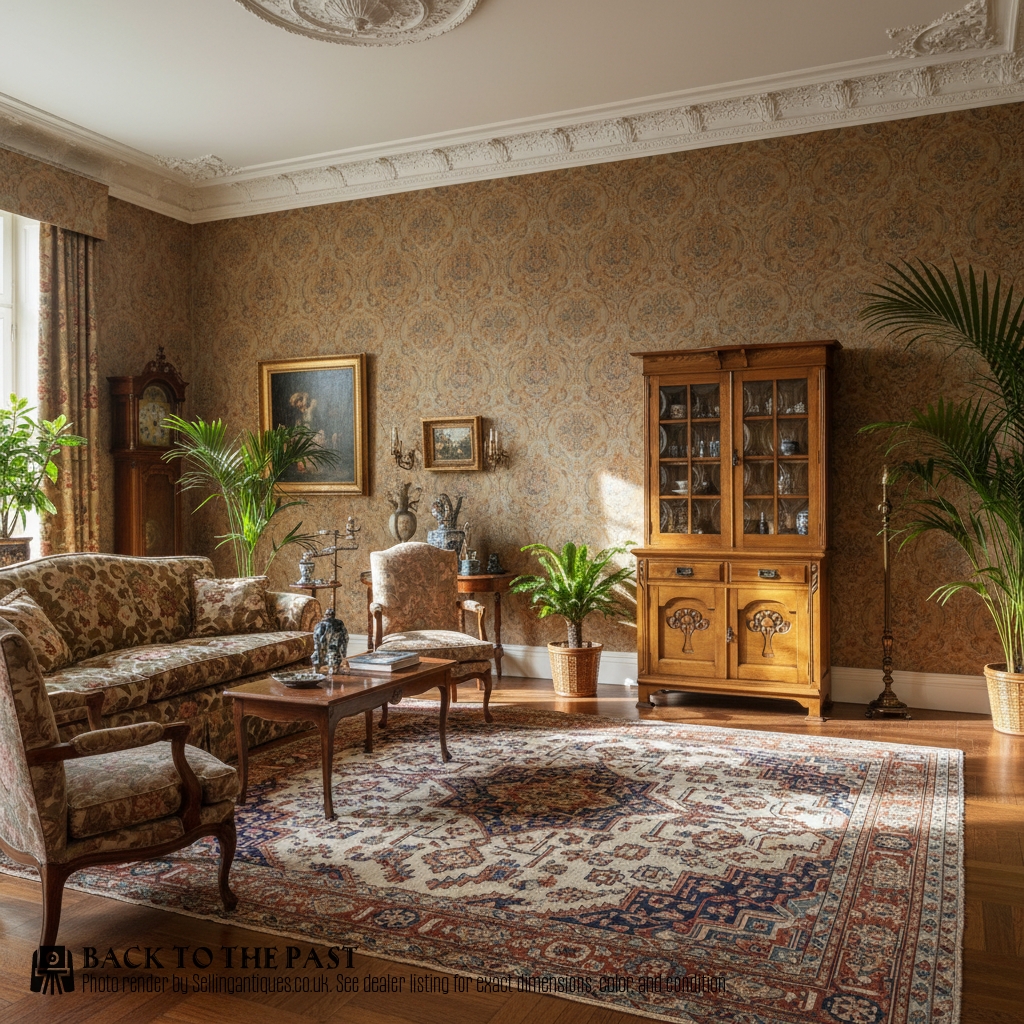
When you search for an art nouveau bookcase, you encounter upright storage pieces and display cabinets originating from the late nineteenth century through the Edwardian period and into the nineteen twenties. These pieces merge storage utility with decorative motifs drawn from nature, ranging from open shelves to glazed display cabinets and bureau bookcases.
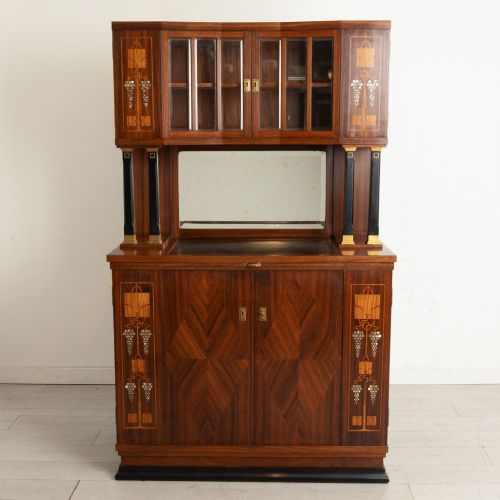
The version you meet most frequently on this page is constructed from mahogany, often enhanced with wood inlay, alongside sturdy oak variations linked to the Arts and Crafts movement. Forms span from standing cabinet bookcases and revolving table models to large breakfront configurations and mirror back display units.

Materials and construction
Cabinet makers utilised solid and veneered timbers, predominantly rich mahogany and pale or golden oak, complemented by walnut and maple. Structural integrity relies on traditional joinery, while visual enrichment comes from intricate wood inlay and floral marquetry.
Glazing takes the form of leaded or astragal glass panes set into doors to protect books and display items. Metalwork details in brass appear on handles, hinges, and cabinet hardware, echoing the organic curves characteristic of the period.
One wall-hung bookcase once contained the entire works of William Shakespeare.
Factors of quality
Quality rests in the precision of the cabinet work and the ambition of the design, distinguishing standard commercial production from bespoke studio pieces. Superior examples exhibit finely executed marquetry, well-figured timber selection, and integrated hardware.
The integrity of original glass panels, working locks with keys, and balanced proportions elevate a piece. Maker attribution, through stamps or known workshop styles, also defines the upper echelon of surviving specimens.

August Ungethüm·Shapland and Petter·Maple and Co·G.W. Hicks and Sons
The Art Nouveau Bookcase Glossary
- Bureau bookcase
- A combination furniture piece featuring a sloping writing flap that drops down to reveal internal compartments, positioned beneath upper bookshelves or a display cabinet.
- Revolving bookcase
- A compact shelving unit mounted on a rotating spindle or base, designed to sit on a tabletop or floor for easy access to volumes from any angle.
- Marquetry
- Decorative veneer patterns assembled from thin pieces of wood and other materials to form pictorial floral and organic motifs characteristic of the style.
- Astragal glazed
- Glass doors divided into smaller panes by narrow wooden mouldings or bars, creating a geometric or grid pattern across the front.
- Secretaire
- A desk form incorporating a fitted drawer with a drop-front writing surface, often integrated into the middle section of a tall bookcase.
Art Nouveau Bookcase: Frequently Asked Questions
What is an art nouveau bookcase?
An art nouveau bookcase is a storage unit for books or display items characterised by organic curves, asymmetrical designs, and natural motifs.
These pieces date primarily from the late nineteenth century into the early twentieth century and incorporate woods like mahogany and oak.
How do I identify the period?
Period identification relies on timber choices, construction techniques, and stylistic markers such as floral inlay and leaded glass.
Earlier pieces often align with Victorian and Arts and Crafts aesthetics, while Edwardian examples favour lighter inlaid mahogany.
How should I care for the wood?
Maintenance involves keeping the timber away from direct sunlight and extreme temperature fluctuations to prevent veneer splitting.
Applying occasional appropriate wax preserves the finish and nourishes the natural grain of mahogany and oak.