

Regency Secretaire Desk
A regency secretaire desk combines a working writing surface with hidden drawers behind a drop-down front, offering practical storage alongside formal elegance.
Regency Secretaire Desk
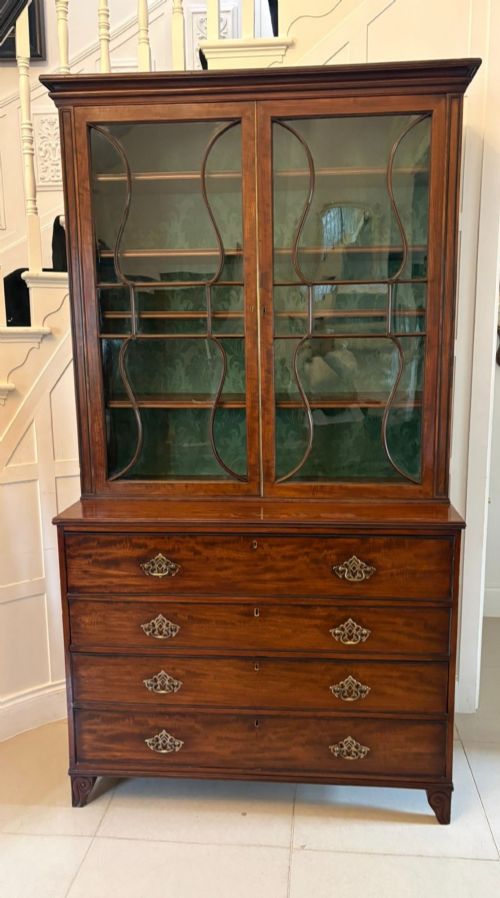
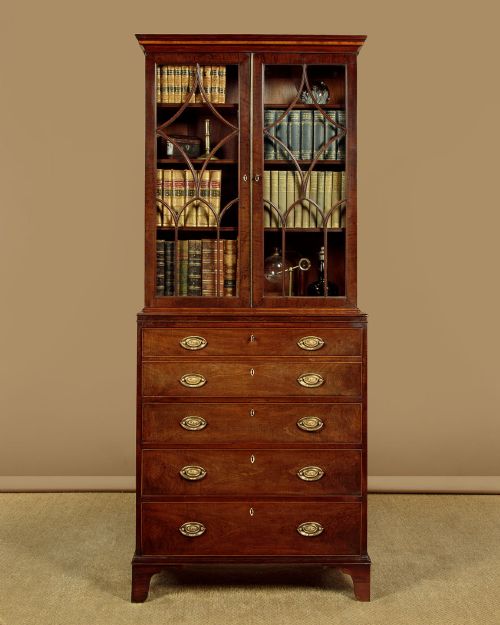
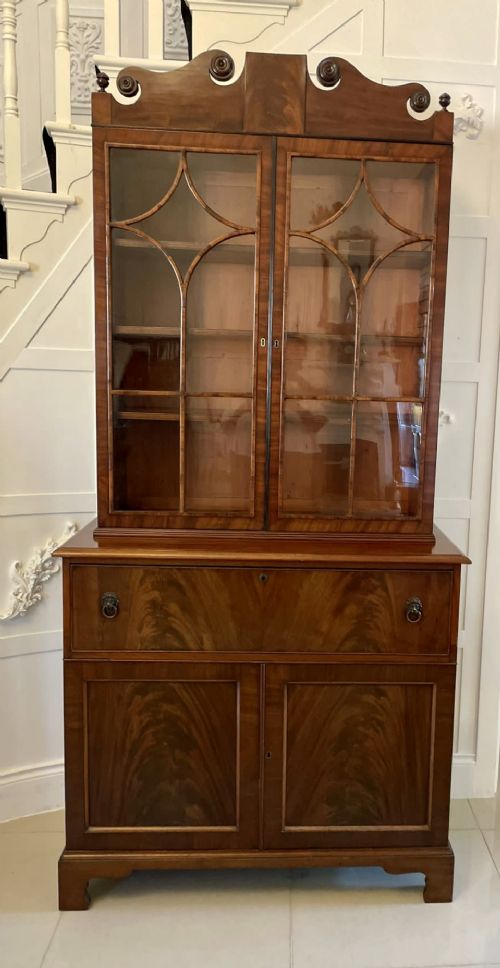
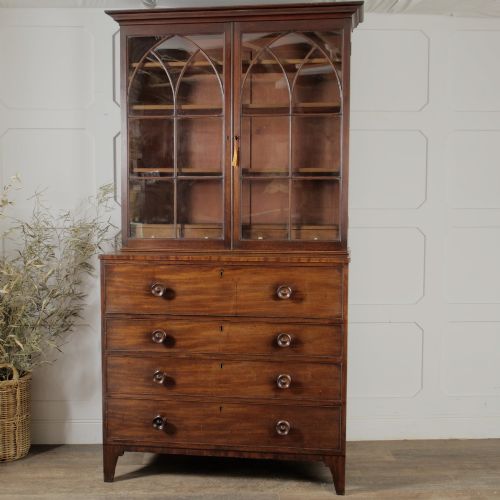
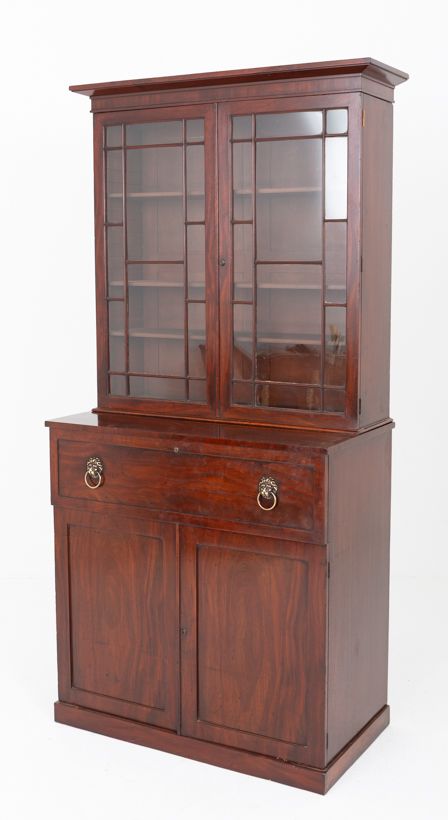
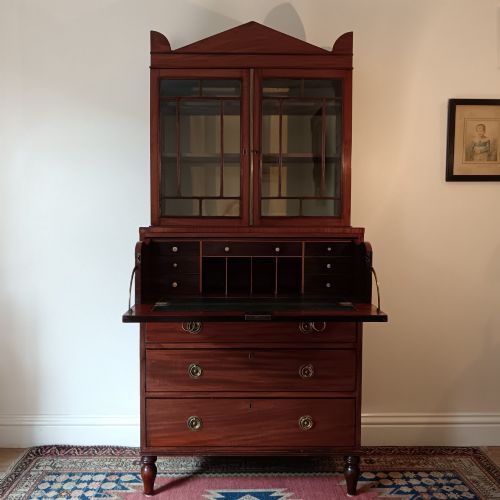
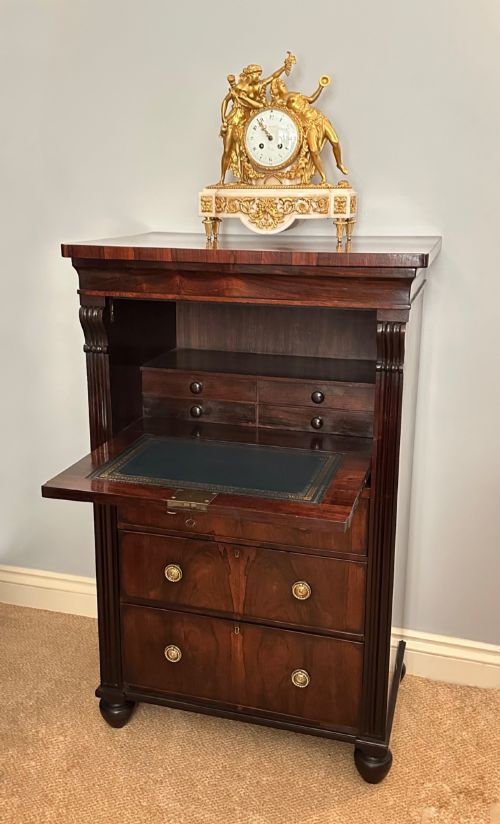
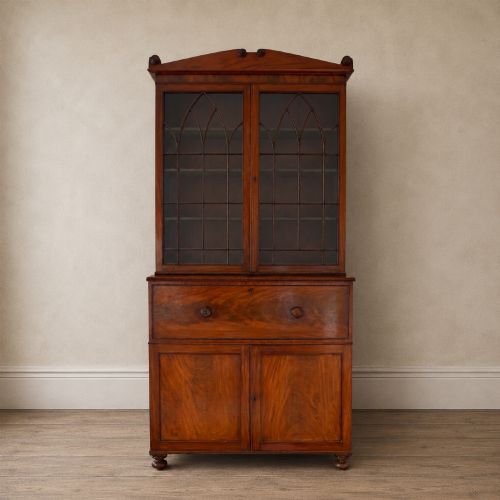
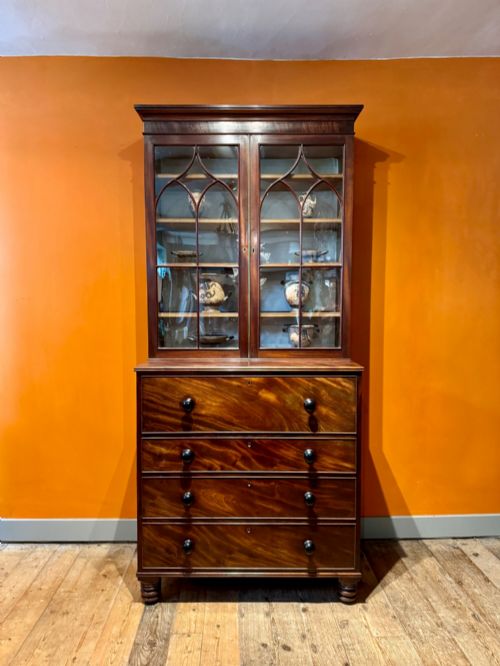
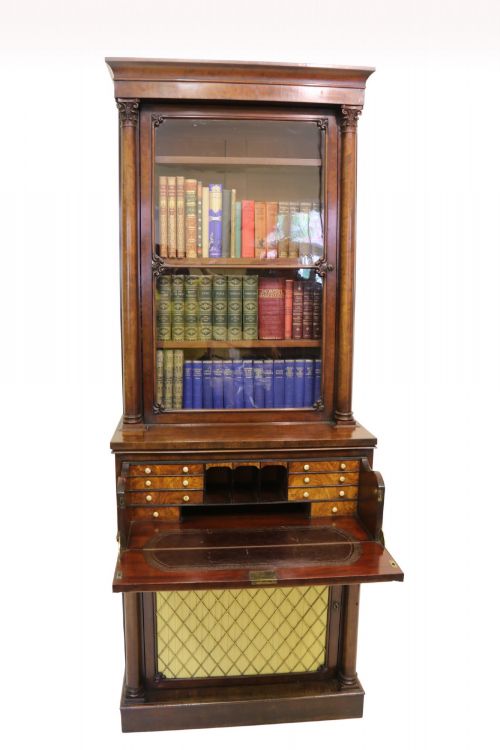
A regency secretaire desk typically takes the form of a tall bookcase with glazed upper doors or a lower chest of drawers fitted with a clever writing drawer. The drop-front panel opens to reveal an internal arrangement of small pigeonholes, satinwood compartments, and miniature drawers.
The pieces on this page span the late Georgian, Regency, and William IV periods, extending into the early Victorian era. Mahogany predominates, often selected for its figured or flame grain, alongside rosewood and satinwood details.
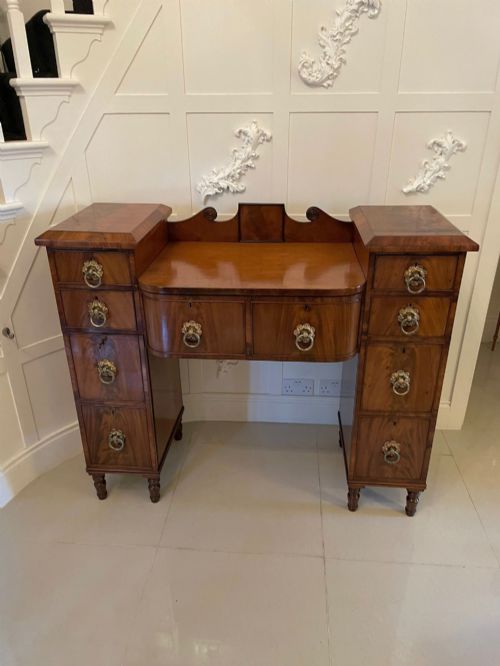
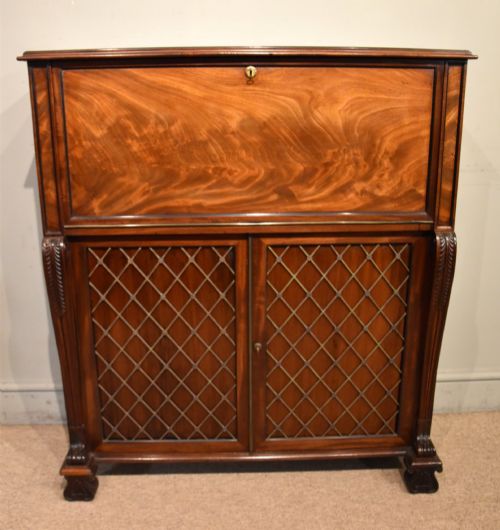
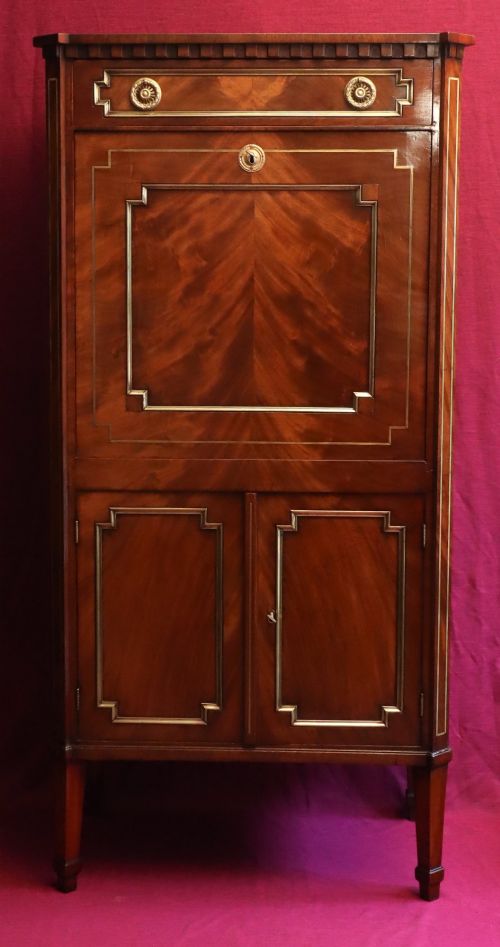
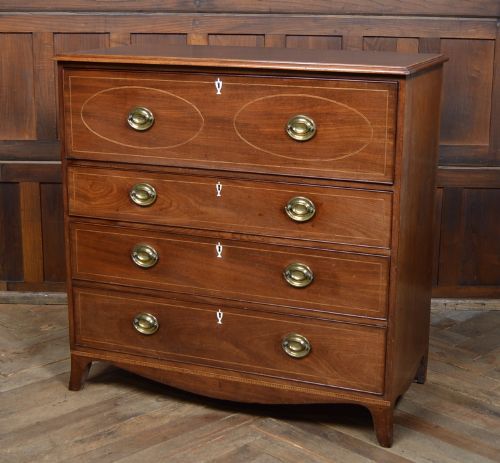
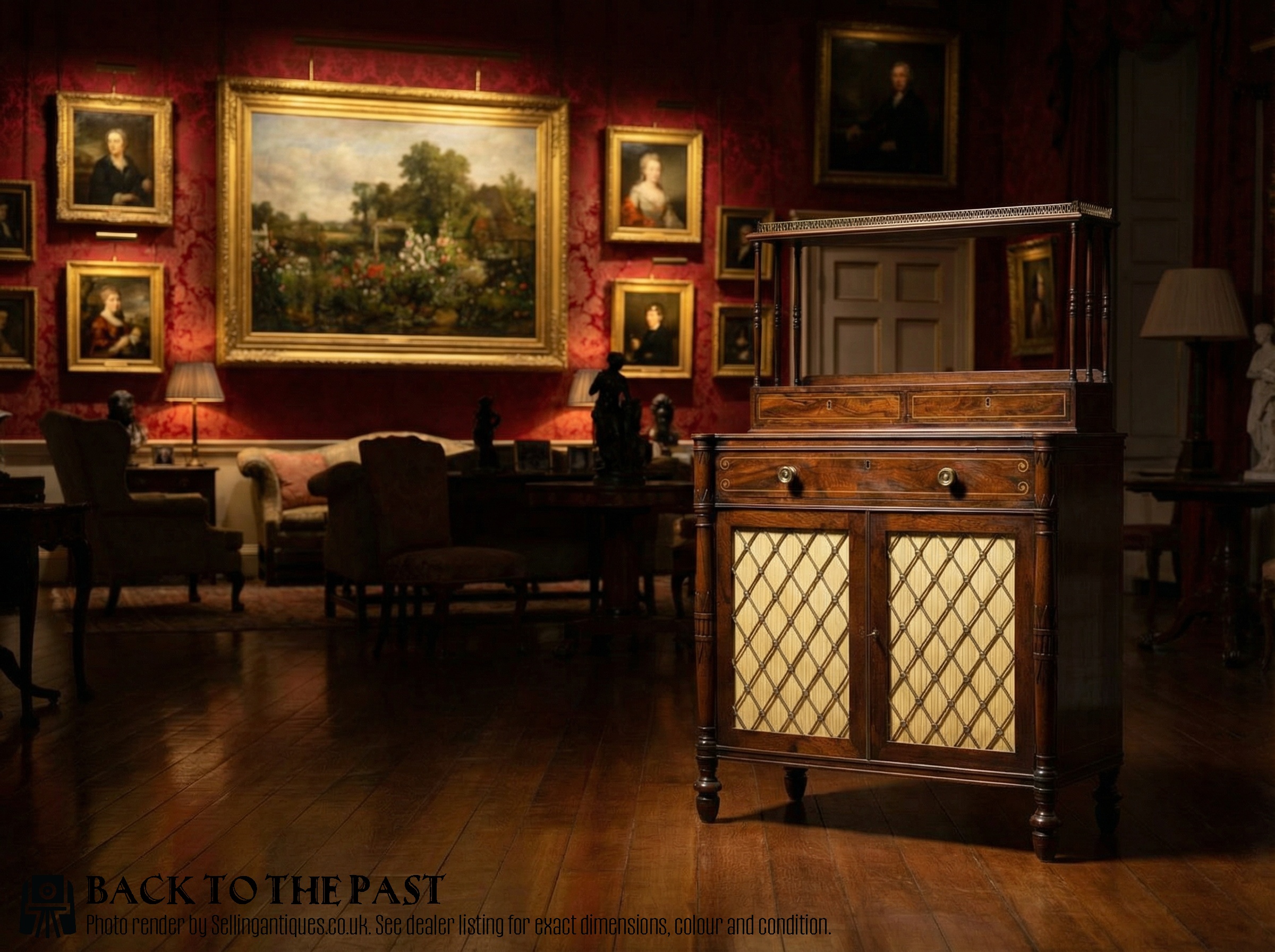
Beyond the standard bookcase hybrid, buyers encounter compact writing cabinets, sideboards, and Wellington chests incorporating the characteristic fall-front mechanism. These forms originate from workshops working within the neoclassical and Regency idioms of the early nineteenth century.
Materials and Construction
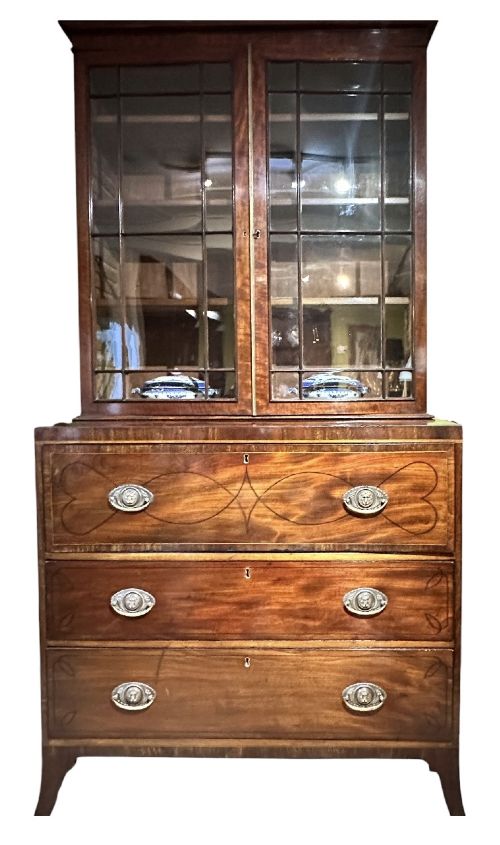
Cabinetmakers utilised solid timbers and dense mahogany veneers applied to secondary woods such as oak and pine. Flame mahogany and figured veneers create dramatic patterns across the principal drawer fronts and fall-front panels.
Brass inlay, delicate stringing, and glazed astragal doors provide architectural decoration on finer examples. Interiors often incorporate lighter contrasting timbers like satinwood for the small drawers and central cupboards of the fitted desk section.
Regency Secretaire Desk Retail Price Guide 2026
Typical asking prices for regency secretaire desk among the pieces listed under this phrase on Sellingantiques today, from the lower quarter to the upper quarter. They describe what is for sale here now, not the wider market.
The listings on this page span the Georgian, Regency, and William IV periods, showcasing both freestanding desks and tall bookcase combinations.
Judging the Standard of Execution
The quality of a regency secretaire desk rests upon the selection of timber figures and the precision of the internal cabinetwork. Superior examples display carefully matched grain across consecutive drawer fronts and intricate internal arrangements with numerous pigeonholes and hidden compartments.
Structural integrity of the drop-front mechanism dictates daily utility and lasting value. Well-made pieces rely on robust drawer linings in oak, clean dovetailing, and original brass fittings that operate smoothly without sagging under the weight of the fall-front.
George Oakley·Gillows of Lancaster
The Regency Secretaire Desk Glossary
- Secretaire
- A desk or cabinet featuring a pull-down or fall-front writing flap that conceals a fitted interior of small drawers and pigeonholes.
- Astragal
- A moulding used to hold the glass panes within the upper bookcase doors in a grid pattern.
- Fall-front
- A hinged writing flap that drops to a horizontal position for use and closes vertically to conceal the desk interior.
- Flame mahogany
- A veneer cut from the branch junction of a mahogany tree, showing a characteristic flickering flame pattern.
- Escritoire
- An alternative term for a writing cabinet or desk, often applied to taller upright forms with drop-front writing surfaces.
Regency Secretaire Desk: Frequently Asked Questions
How do I use a secretaire desk daily?
Lower the drop-front panel to access the internal writing surface and stationary compartments. Push the panel back into place and secure the lock when finished to restore the neat appearance of a chest or cabinet.
Keep the writing leather conditioned and avoid placing excessive weight on the open flap. Most drop-fronts rely on internal brass arms or side friction to support the writing pressure.
How can I tell a Regency piece from a Victorian one?
Regency furniture tends to show restraint, classical proportions, and finer timber selection such as figured mahogany or rosewood with subtle brass inlay. Victorian examples from later in the nineteenth century often display heavier proportions and denser, darker finishes.
Examine the secondary woods inside the drawers and the style of the glazing bars on the bookcase doors for further clues to the manufacturing date.
Where should I place a secretaire bookcase?
Position the piece against an interior wall away from direct sunlight and strong heat sources to protect the mahogany veneer and polish. Ensure there is adequate clearance in front of the unit for the drop-front to open fully.
Tall bookcase variants require stable floor surfaces and may benefit from discrete wall fixings to prevent tipping when the upper and lower doors are open.