

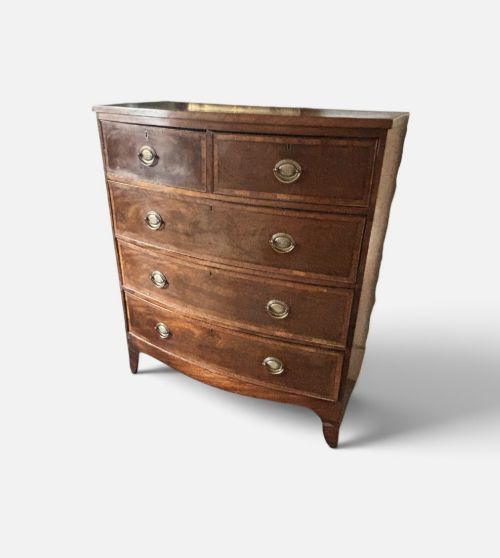
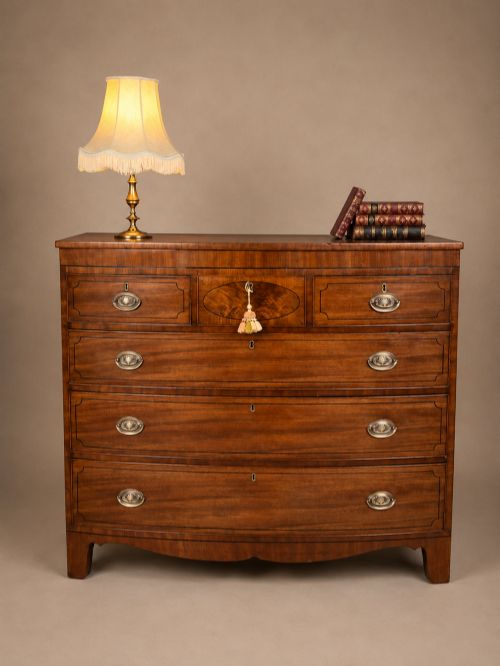
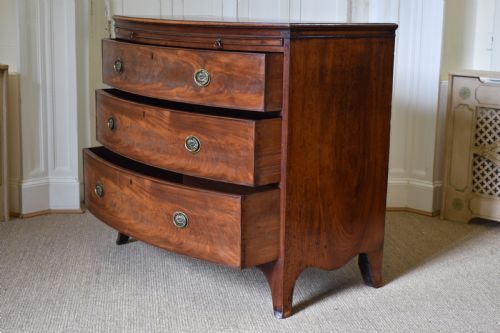
Regency Mahogany Dresser
A regency mahogany dresser unites deep timber and classic proportion, offering substantial storage that anchors a room with understated authority.
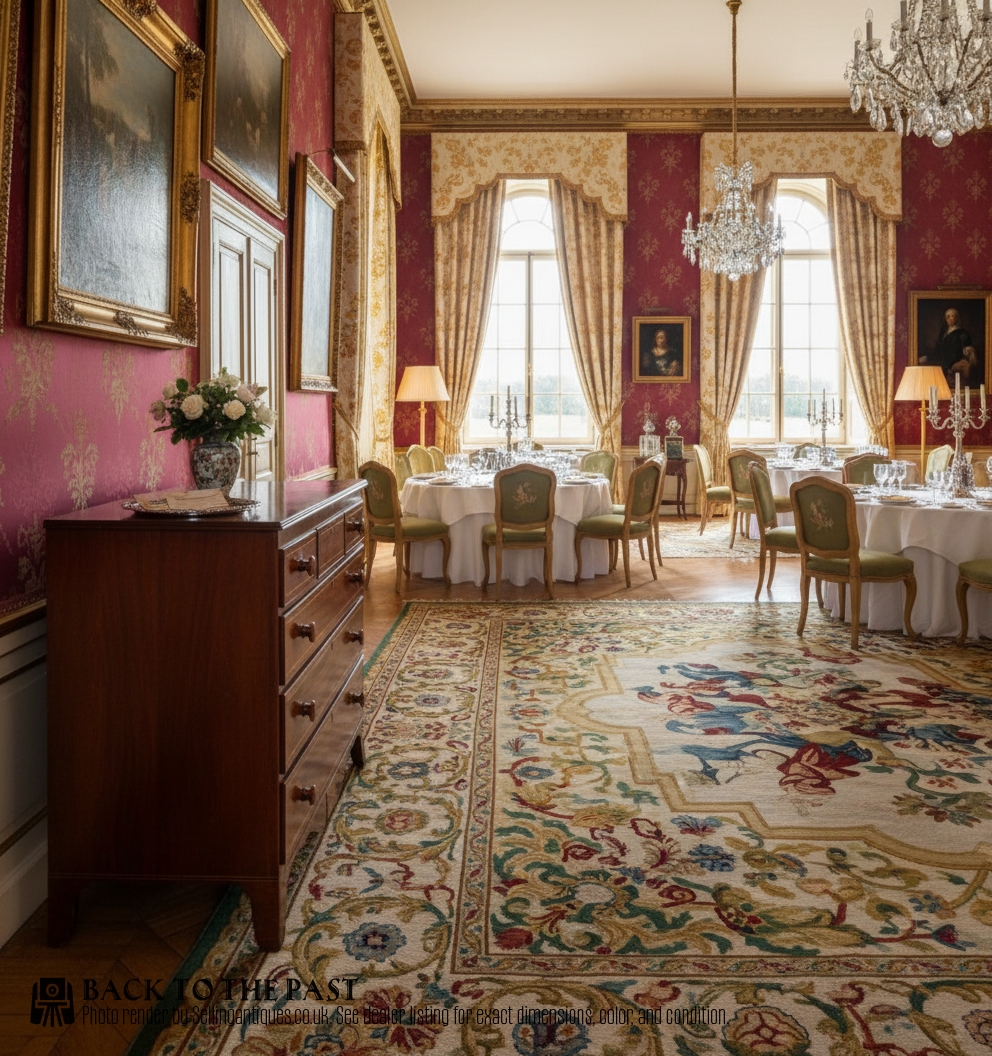
Identifying a regency mahogany dresser
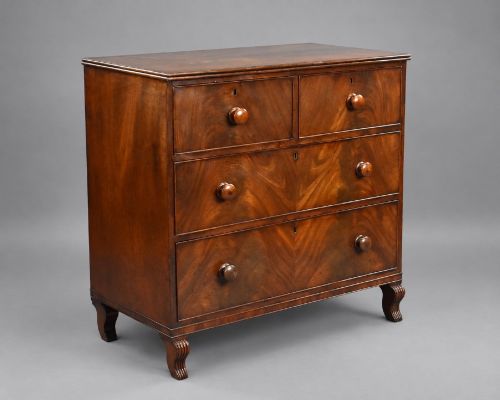
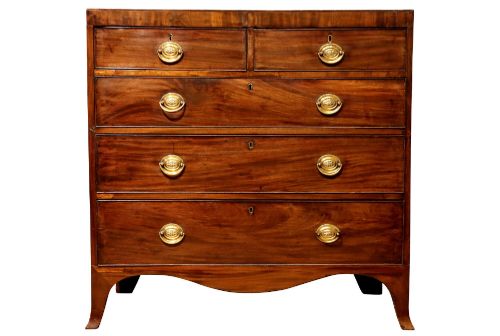
A regency mahogany dresser encompasses the classic forms of chests of drawers and pedestal sideboards seen across the nineteenth century and Georgian eras. These pieces serve as functional storage units with generous drawer capacities, designed to bring both utility and warm timber tones to domestic spaces.
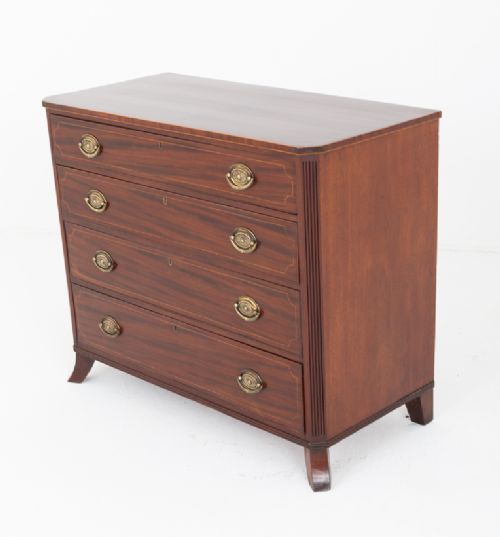
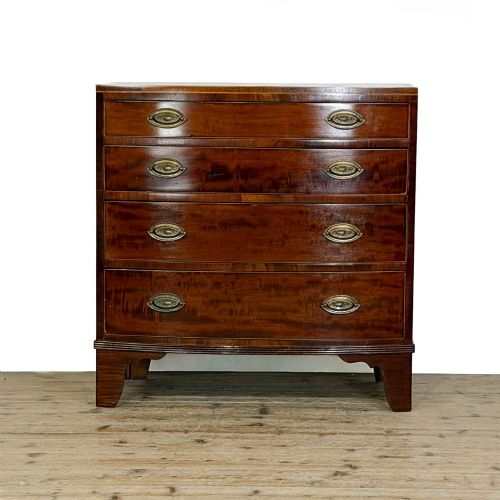
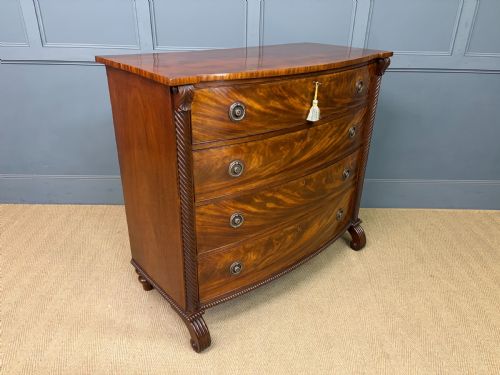
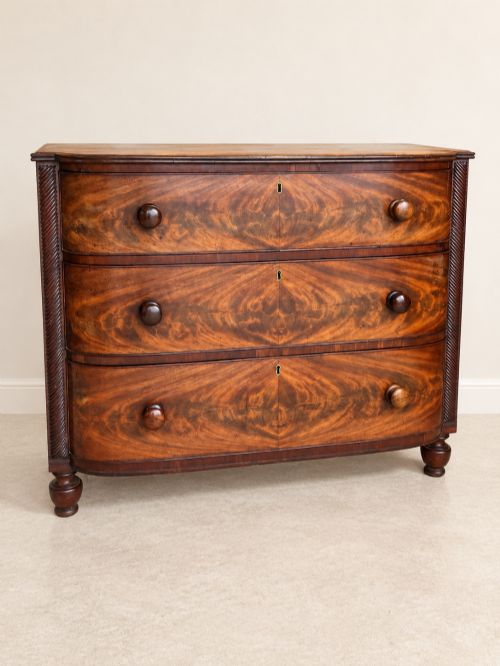
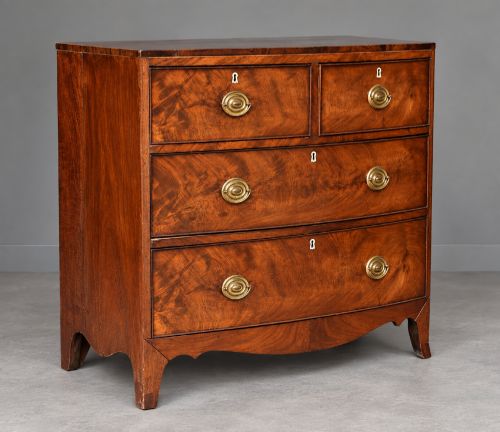
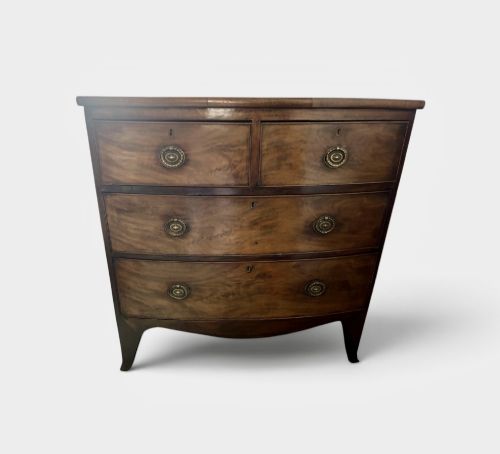
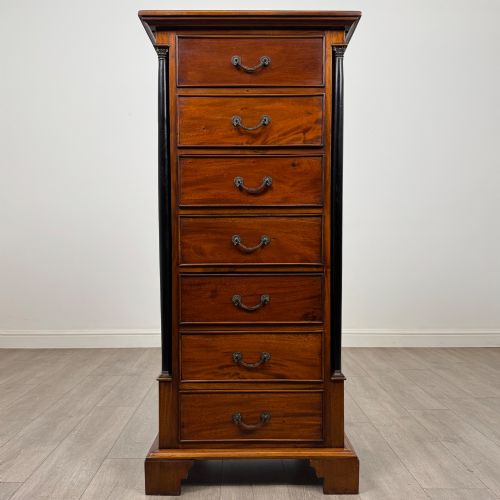
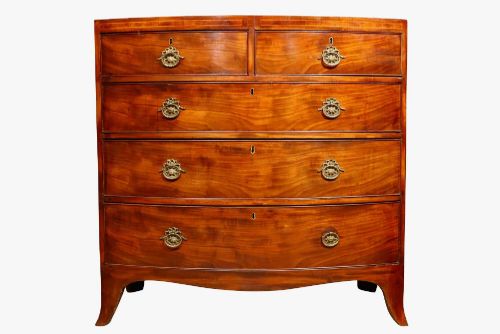
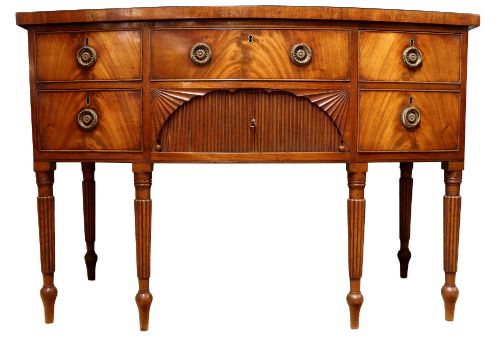
The versions most commonly met on this page are bowfront chests and pedestal sideboards dating from the early nineteenth century. These forms display the characteristic curved fronts or structured pedestals that define the period's cabinet work.
Makers from this era utilised rich timbers and disciplined lines to create furniture that remains both practical and visually striking in modern interiors.
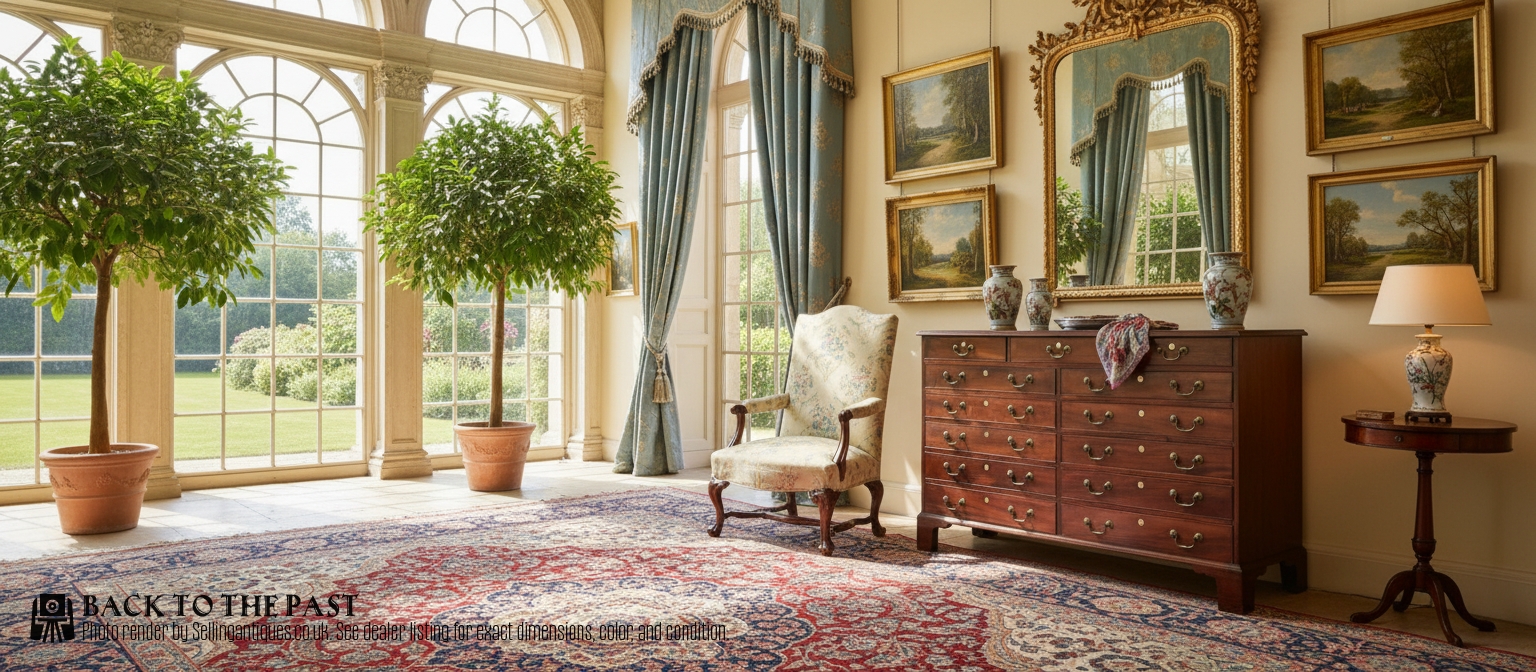
Construction and materials
Cabinet makers of the period relied primarily on mahogany, frequently selecting flame mahogany veneers to create vibrant, figured drawer fronts and surfaces. Secondary woods provide structural stability behind the polished exterior, while satinwood stringing sometimes adds linear contrast.
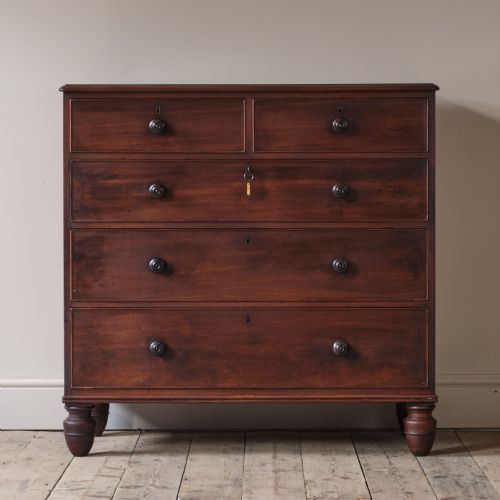
Hardware details such as brass handles and occasional marble inserts complement the timber construction. Bracket feet or pedestal bases anchor these heavy pieces firmly to the floor.
Joinery techniques standard to the nineteenth century ensure the robust construction of each drawer and carcase, allowing these items to survive centuries of daily use.
Retail Price Guide 2026
Typical UK retail prices for regency mahogany dresser, calculated from the Sellingantiques database of over a million retail prices indexed since 2003. This retail price guide relies exclusively on Sellingantiques data; no external sources or auction records are used, so the figures do not describe the wider market.
Current listings feature pieces spanning the nineteenth century and the Georgian era, constructed predominantly from mahogany with brass and satinwood details.
Assessing quality
The finest examples distinguish themselves through the choice of timber and the precision of the veneer matching. Flame mahogany with exceptional grain movement commands attention, whereas plainer stock yields a more utilitarian appearance.
Proportion and foot design also dictate standing within the range. Bracket feet executed with crisp angles or pedestals with balanced proportions elevate a piece far above simpler, heavier constructions.
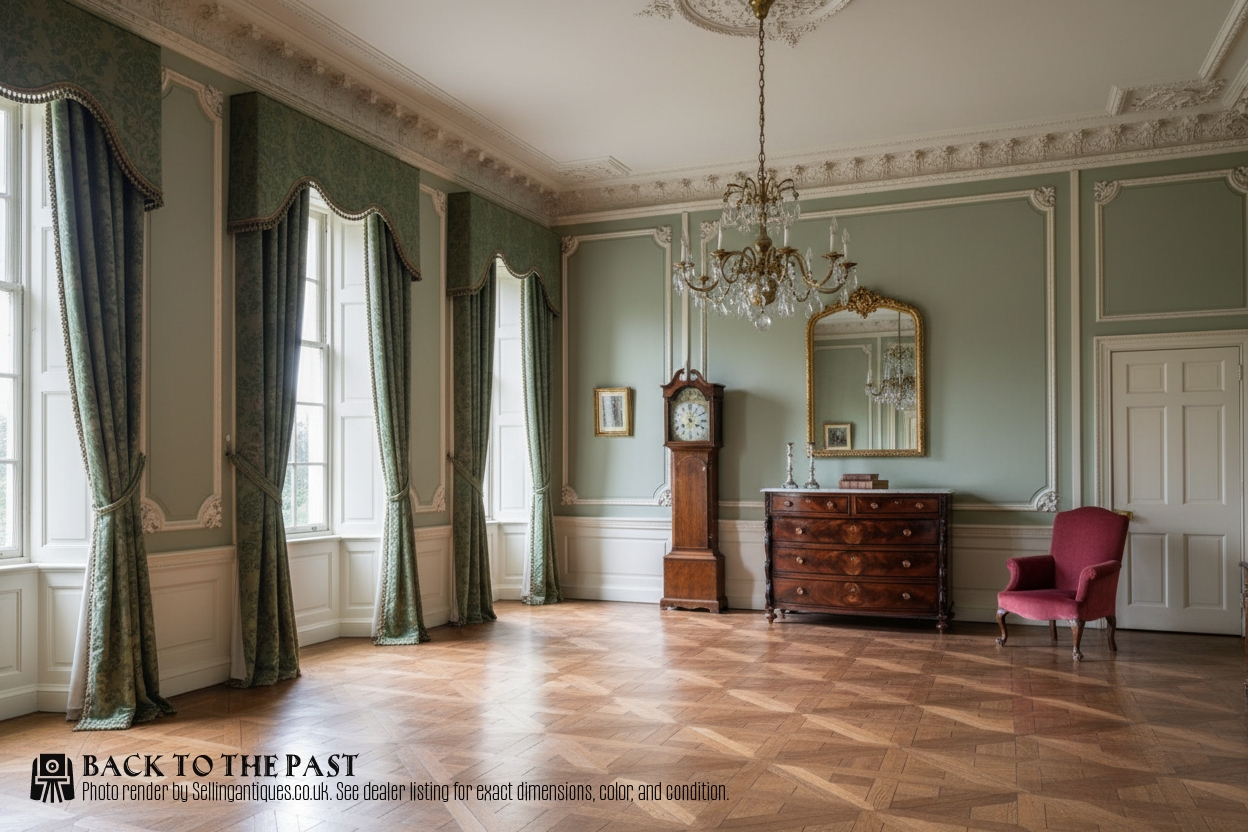
The Regency Mahogany Dresser Glossary
- Bowfront
- A convex curved front characteristic of many nineteenth-century chests. This shape softens the profile of the furniture.
- Flame mahogany
- Timber cut to reveal a fiery, undulating grain pattern. Cabinet makers used this veneer on primary display surfaces.
- Bracket foot
- A corner foot shaped like a bracket, supporting the base of the chest. It lifts the carcase slightly off the floor.
- Pedestal sideboard
- A heavy sideboard form featuring central storage flanked by pedestals. These items date from the early nineteenth century.
Frequently Asked Questions
How do I clean a mahogany chest?
Dust regularly with a soft, dry cloth to prevent grit accumulation on the polished surface. Avoid silicone sprays or modern polishes that can build up and dull the timber over time.
Feed the dry wood periodically with a traditional wax to maintain its moisture and subtle sheen. Keep the piece away from direct heat sources and strong sunlight to prevent the mahogany from fading or splitting.
Are these drawers suitable for daily use?
These pieces were built for practical domestic storage and remain fully functional for clothing and linens. The substantial drawer capacity handles everyday items with ease.
Take care not to overload deeper drawers to protect the original nineteenth-century runners and joints. Smooth operation relies on regular, gentle use rather than heavy packing.
How do I date a Georgian chest?
Examine the timber selection, construction methods, and hardware styles to determine the likely era of manufacture. Early nineteenth-century examples often feature figured veneers and distinct bracket feet.
Compare the secondary woods inside the drawers and the dovetail joints with known period pieces. Subtle shifts in proportion and foot design help separate Georgian work from later nineteenth-century interpretations.
Where should I place a pedestal sideboard?
Position the piece against a substantial dining room or hallway wall where its length and depth can be appreciated. Ensure there is adequate clearance for drawers and doors to open fully.
Balance the visual weight of the timber by pairing it with simpler surrounding furniture. Avoid damp or overly dry walls that might stress the antique wood.