
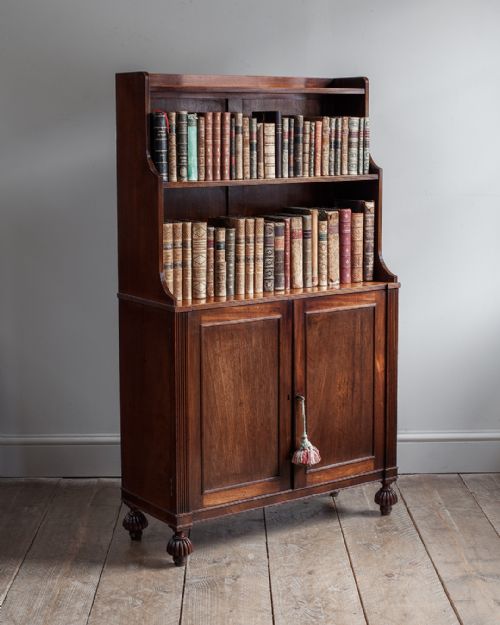
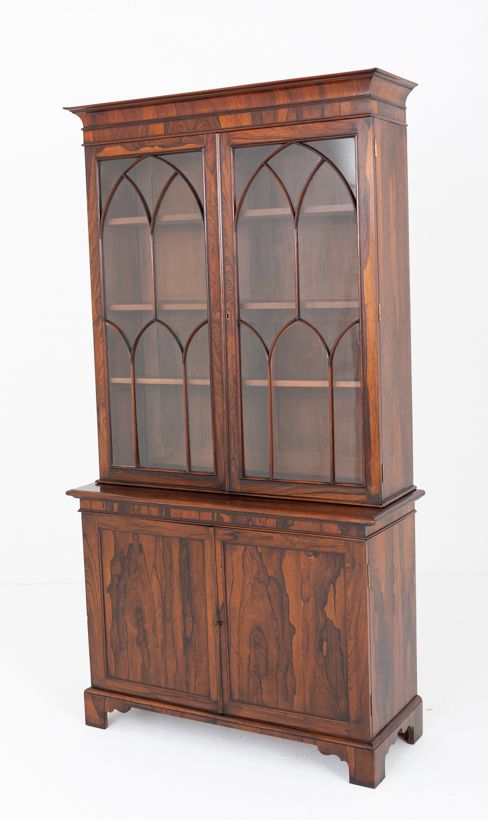
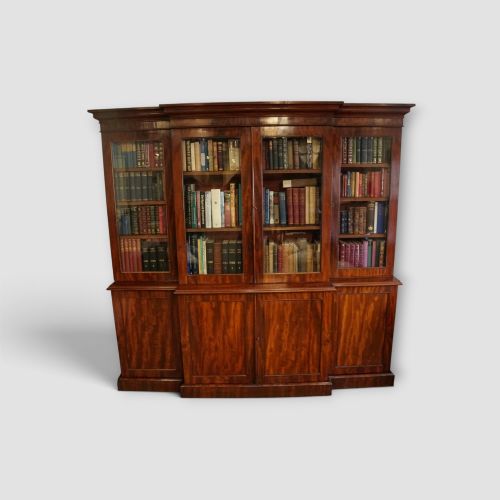
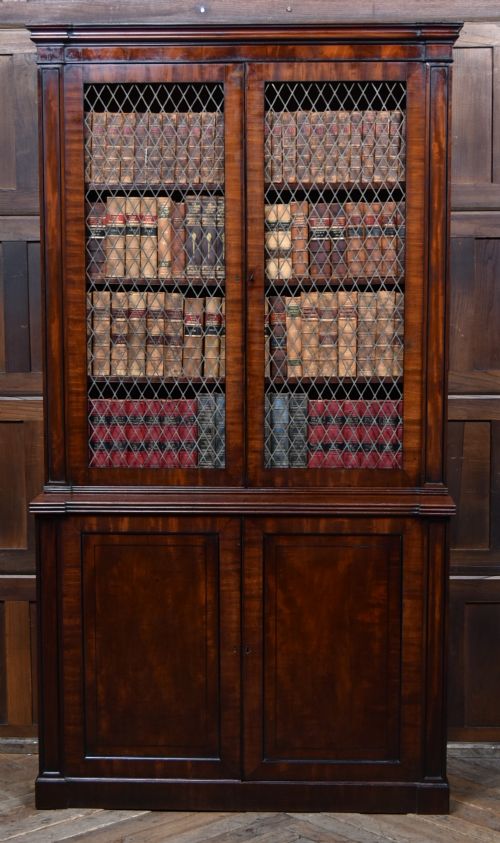

Regency Display Cupboard
A regency display cupboard brings architectural dignity to a room, offering glazed shelving and refined timber work to showcase books or porcelain.
Regency Display Cupboard
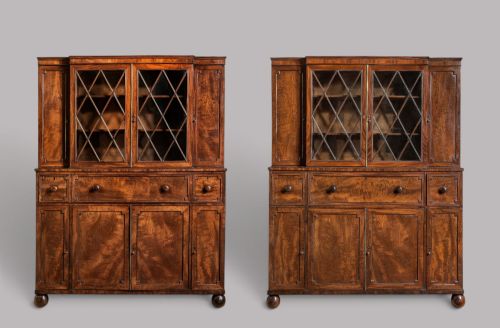
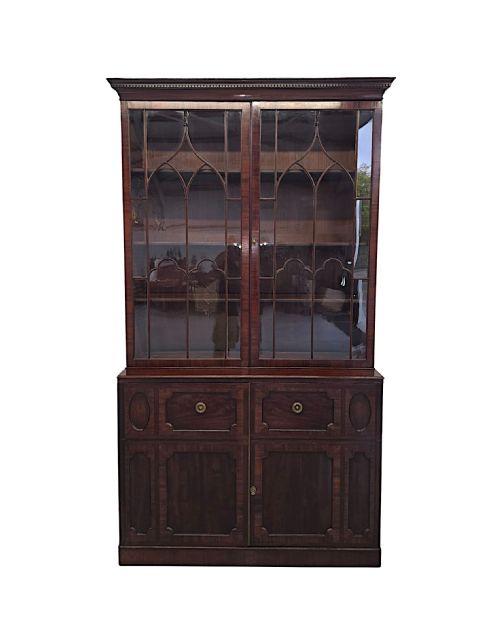
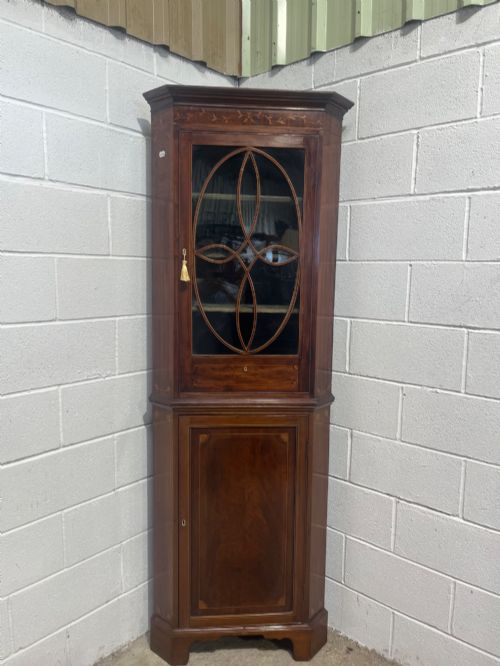
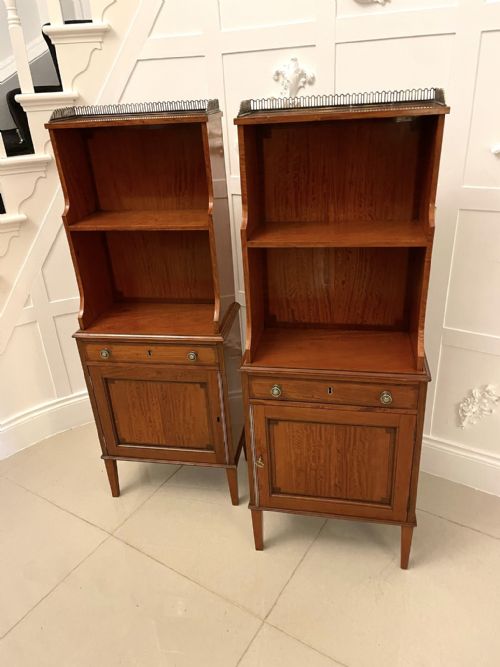
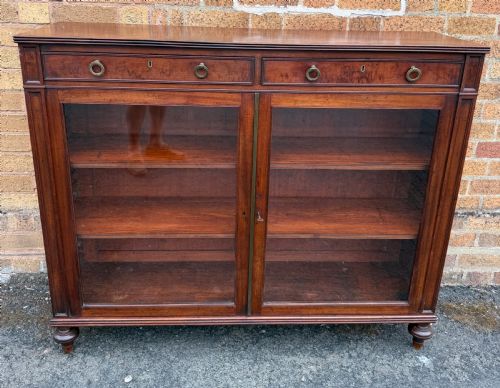
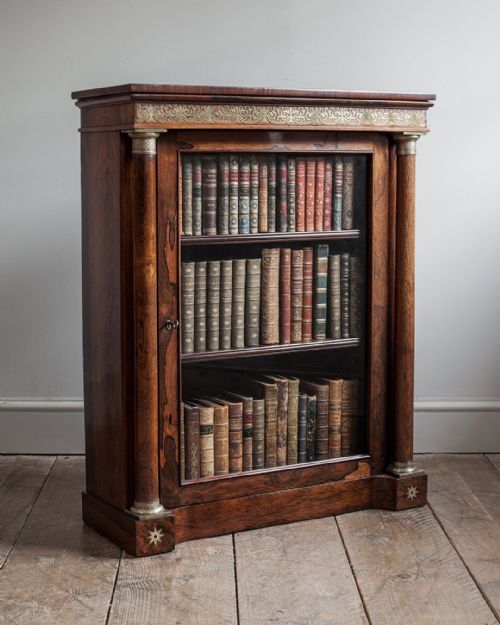
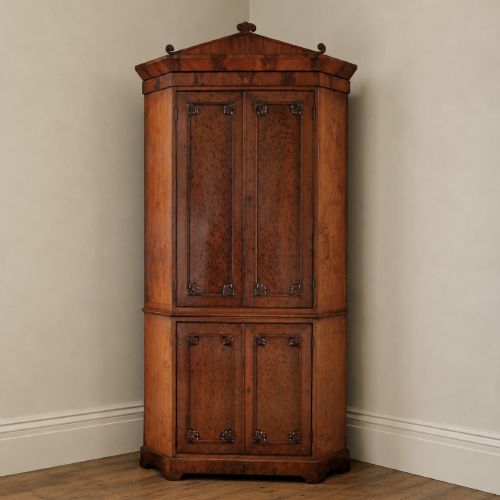
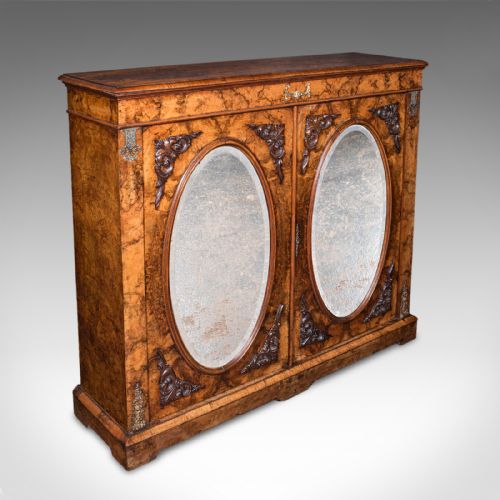
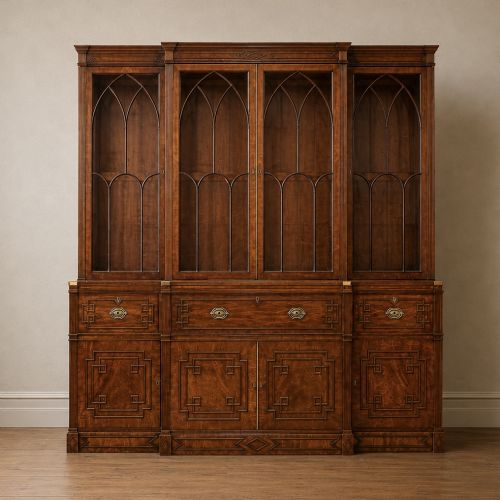
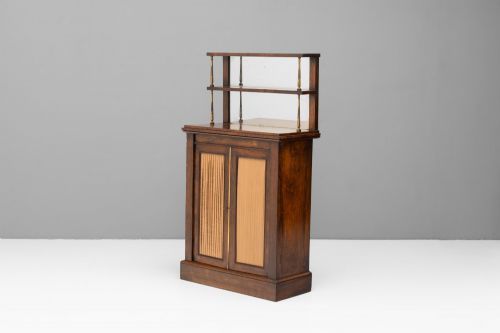
When you search for a regency display cupboard, you encounter a selection of nineteenth-century bookcases, pier cabinets, side cabinets, and corner cupboards. These pieces originate predominantly from the Georgian, Regency, William IV, and Victorian periods.
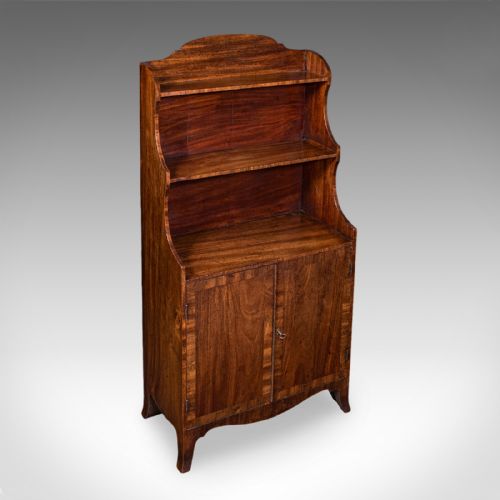
The objects combine upper display sections with lower enclosed cupboards, taking forms such as breakfront libraries, tall waterfall bookcases, and low pier cabinets. Mahogany and rosewood dominate the selections, alongside satinwood and walnut.
Makers and workshops of the era utilised classical proportions and fine timber grains, producing functional furniture that served both storage and display purposes in formal rooms.
What varies in quality
The distinction between tiers rests upon the choice of timber and the precision of the cabinet work. Pieces featuring book-matched flame mahogany veneers or intricate brass inlay demonstrate superior workshop output.
Proportion and scale dictate the success of the design, with neat proportions and original glass panes elevating the standing of a side cabinet or bookcase within its period.
Gillows
The Regency Display Cupboard Glossary
- Astragal
- A moulding profile used to divide panes of glass in glazed cabinet doors. These thin wooden bars form geometric patterns across the front of bookcases.
- Breakfront
- A cabinet design where the central section projects forward from the flanking wings. This layout creates depth and architectural presence in large library bookcases.
- Pier cabinet
- A low cabinet designed to fit against the wall space between windows. They frequently feature glazed doors for the display of porcelain and small objects.
- Waterfall bookcase
- A set of open shelves diminishing in depth from bottom to top. These pieces often incorporate a small cupboard section at the base.
- Flame mahogany
- A timber veneer cut from the branch junction of the mahogany tree, showing a distinctive flickering flame pattern. Cabinet makers used this figure on prominent drawer fronts and door panels.
Regency Display Cupboard: Frequently Asked Questions
Where were these cupboards placed?
These pieces found places in libraries, morning rooms, and formal drawing rooms to house book collections and display decorative porcelain.
Their architectural forms suited the grand proportions of nineteenth-century interiors, anchoring the walls alongside large windows and fireplaces.
How do I identify a Regency period piece?
Regency furniture exhibits classical revival motifs, including clean architectural lines, brass inlay, and dark imported timbers like rosewood.
Proportions remain restrained and balanced, drawing inspiration from ancient Roman and Greek design rather than heavy Victorian ornamentation.
What is the difference between a chiffonier and a pier cabinet?
A chiffonier is typically a low sideboard fitted with enclosed cupboards below and sometimes small shelves above. It served utility in dining and morning rooms.
A pier cabinet is a narrower piece designed specifically for narrow wall spaces between windows, usually featuring glass doors for display.
How should I care for rosewood and mahogany?
Maintain these timbers by keeping them away from direct sunlight and sudden temperature shifts that cause veneer to split.
Apply traditional beeswax occasionally and buff gently with a soft cloth to nourish the grain without building up heavy chemical residues.