
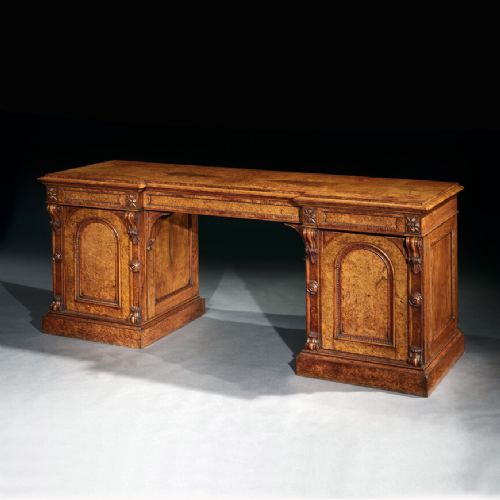


Carved Pollard Oak Cabinet
A carved pollard oak cabinet brings a rich, mottled grain and deep figure into a room, offering both storage and a striking focal point.
Carved Pollard Oak Cabinet
When you search for a carved pollard oak cabinet, you encounter substantial storage furniture designed with highly figured timber. These pieces range from sideboards and buffets to large library bookcases and smaller fireside cabinets.
The versions you are most likely to meet on this page hail primarily from the Victorian period and the nineteenth century, alongside a smaller number from the Regency era and earlier traditions. Forms include mirror-backed sideboards, credenzas, and secretaire bookcases.
Makers and craftsmen utilised the dense, knotty clusters of pollard oak to create dramatic visual movement across large surfaces. This timber transforms standard storage items into ornate statement pieces suited for grand interiors.
How they were made
Cabinetmakers constructed these pieces using solid oak and pollard oak, often accenting the timber with burr oak, ebony inlay, and specimen wood inlay. The distinctive mottled patterning comes from pollarding trees, which produces dense clusters of small knots.
Joinery techniques supported large forms such as three-door buffets, library bookcases, and mirror-backed sideboards. Brass hardware and glass panels frequently complemented the dark, figured wood.
Carving was applied to structural elements and panel surrounds, enhancing the architectural weight of the Victorian, Gothic Revival, and Regency designs.
Even coal made a grand appearance when stored inside a dedicated pollard oak fireside purdonium.
What varies in quality
The intensity and placement of the grain figure dictate much of the visual success of a carved pollard oak cabinet. Timber selected for maximum contrast and distributed evenly across doors and panels elevates the piece.
The complexity of the construction also separates examples, moving from simple fireside cabinets to massive library bookcases with drop-front secretaire drawers and mirror backs. The integration of secondary materials like ebony and specimen wood inlay further distinguishes finer works.
William Trotter
The Carved Pollard Oak Cabinet Glossary
- Pollard oak
- Timber harvested from trees that were cut back close to the trunk to encourage dense branch growth. This pruning creates the characteristic clustered knots and swirling grain patterns seen on these cabinets.
- Burr oak
- Wood taken from a tree growth where grain has swirled around a knot or bud. It provides highly decorative figuring used alongside pollard oak.
- Credenza
- A large side cabinet or sideboard used for storage and display. Victorian examples in pollard oak offer grand proportions.
- Purdonium
- A specialised cabinet designed to hold coal near a fireplace. These compact units occasionally feature pollard oak construction.
- Secretaire bookcase
- A tall storage piece incorporating a writing drawer with a drop-front panel. Several listings combine this form with library shelving.
Carved Pollard Oak Cabinet: Frequently Asked Questions
What is pollard oak?
Pollard oak is timber taken from trees that were periodically pruned near the trunk to promote dense, knotty growth. This process creates a heavily mottled and swirling grain pattern.
Cabinetmakers prized this decorative wood for the dramatic visual texture it brought to large furniture surfaces like sideboard doors and bookcase panels.
How were these cabinets used?
These pieces served practical storage and display functions in formal rooms throughout the nineteenth century. Sideboards and buffets stored dining silver and linens, while library bookcases housed bound volumes.
Larger credenzas and mirror-backed sideboards also acted as display surfaces for decorative objects, reflecting light and adding weight to the interior.
How do I identify a Victorian piece?
Victorian examples often display heavy proportions, rich pollard and burr oak veneers, and sometimes Gothic Revival architectural details. Mirror backs and complex multi-door configurations are common hallmarks of this era.
Makers during this period frequently combined the figured timber with contrasting ebony or specimen wood inlay.
How do I care for pollard oak furniture?
Keep pollard oak cabinets away from direct sunlight and extreme temperature fluctuations to protect the veneer and polished finish. Regular dusting with a soft, dry cloth preserves the surface.
Avoid using harsh chemical polishes that can degrade the historic finish over time.