





Victorian Gothic Credenza
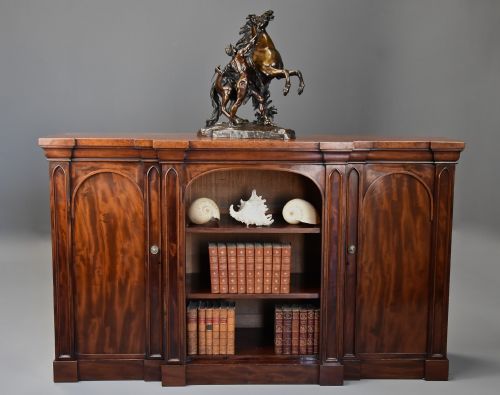
A victorian gothic credenza combines heavy architectural presence with dark timber, bringing substantial nineteenth-century design straight into a modern room.
Victorian Gothic Credenza
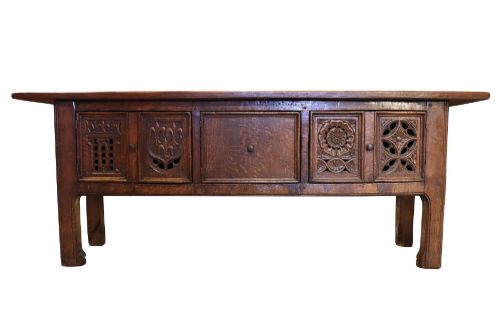
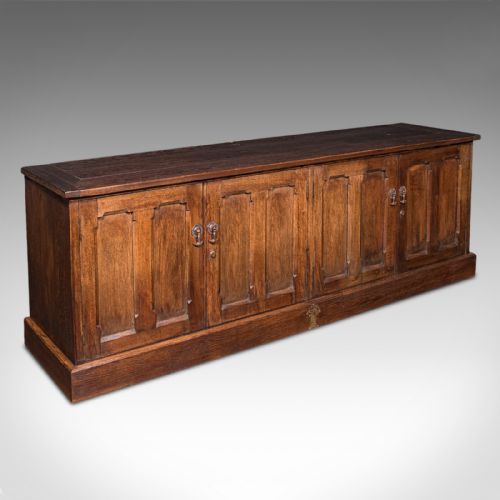
When searching for a victorian gothic credenza, buyers examine large storage furniture sharing medieval architectural motifs. The selection centres on heavy sideboards, dresser bases, and side cabinets built during the nineteenth century.
Most pieces encountered here date from the Victorian period, spanning the mid to late nineteenth century. They appear predominantly in oak, with walnut, mahogany, and ebonised wood also represented.
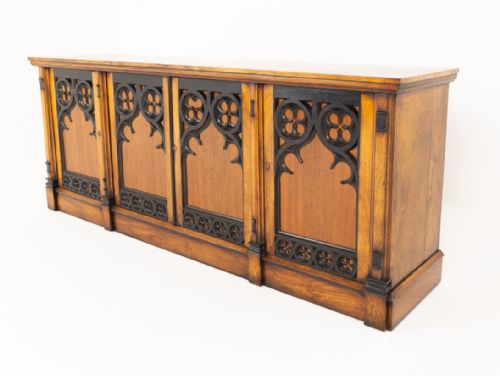
The aesthetic draws heavily on Gothic Revival styles, incorporating pointed arches, tracery, and carved details. Forms range from narrow dresser bases to grand mirror-backed sideboards and breakfront cabinets.
Materials and construction
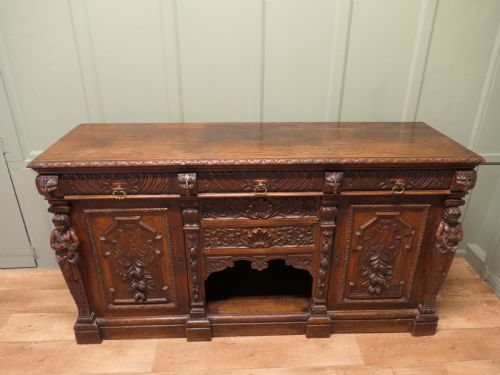
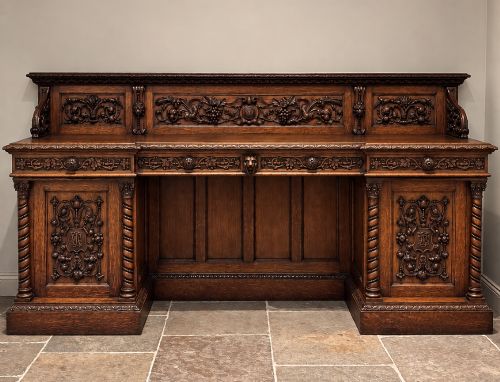
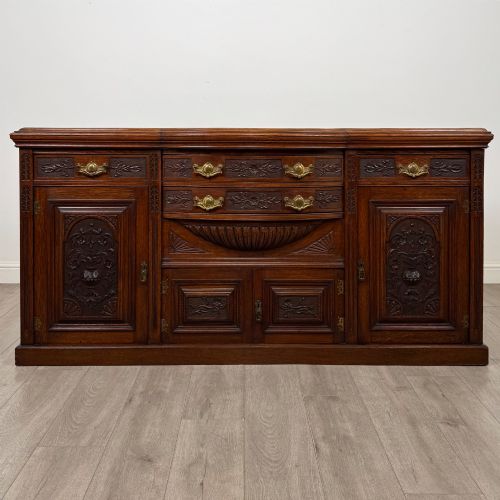
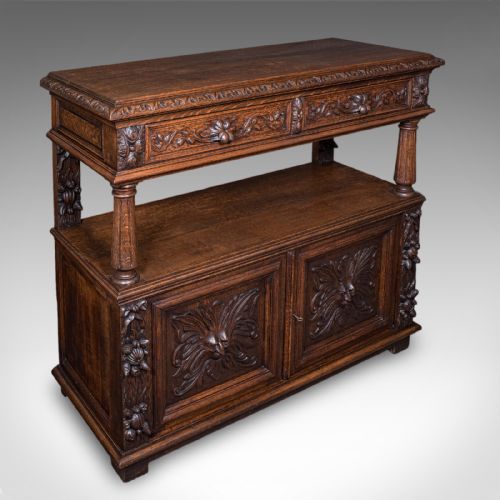
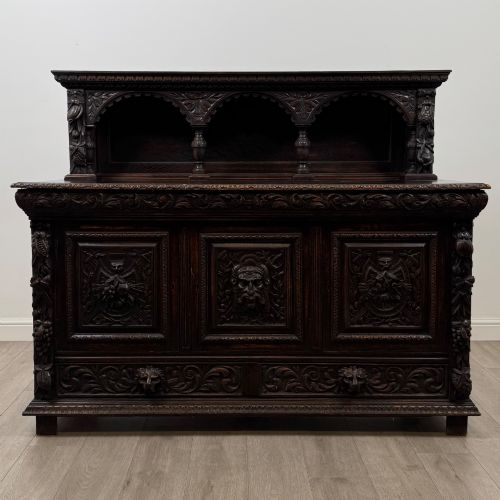
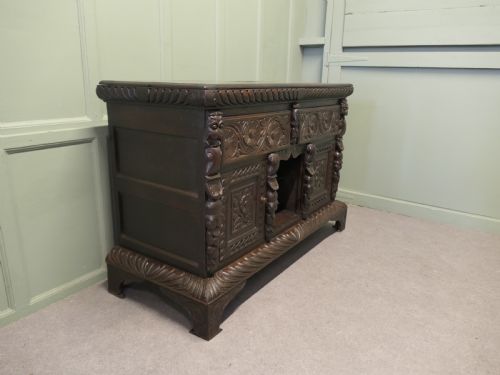
Makers relied heavily on solid oak, frequently carving the timber with deep relief work, Green Man motifs, and panelled doors. Walnut and mahogany also appear, sometimes enhanced with flame veneers or specialist inlays like Tunbridgeware.
Structural hardware utilises brass and iron for hinges, handles, and locks, supporting heavy timber doors and drawers. Glass panels are integrated into glazed display cabinets and bookcases, framed by architectural mouldings.
A watchful Green Man peers out from the oak leaves, guarding the sideboard dinner service with medieval sternness.
Evaluating the craftsmanship
Quality rests upon the depth and crispness of the timber carving, distinguishing master craftsmanship from standard workshop production. Elaborate mirror backs, specialised timbers such as pollard oak, and integrated specimen wood inlays elevate the status of a piece.
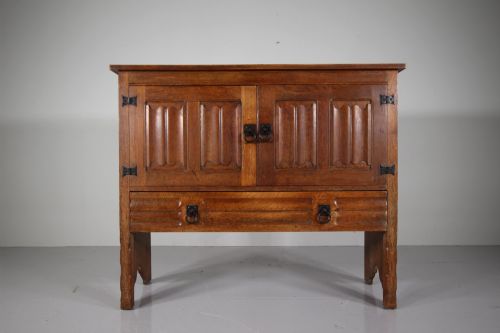
Proportion and scale dictate the success of the design, with narrow proportions or grand mirror-backed proportions showing deliberate architectural planning. The handling of Gothic elements, from tracery to linenfold panelling, reveals the maker's adherence to historical design principles.
The Victorian Gothic Credenza Glossary
- Gothic Revival
- An architectural and decorative style drawing on medieval forms like pointed arches and heavy tracery. This aesthetic defined much of nineteenth-century cabinet making.
- Dresser Base
- A low sideboard or cupboard used for storage and serving, often fitted with drawers and panelled doors. These pieces form a significant portion of the available inventory.
- Green Man
- A sculptural motif depicting a face carved from leaves and foliage, frequently appearing on nineteenth-century oak furniture. It symbolises rebirth and spring.
- Breakfront
- A piece of furniture where the central section projects forward from the flanking cabinets. This configuration creates visual depth and architectural rhythm.
- Pollard Oak
- Timber taken from trees that were cut back to promote dense branch growth, producing a highly figured, swirling grain. Cabinet makers utilised this for decorative panels.
Victorian Gothic Credenza: Frequently Asked Questions
How do I place a large oak sideboard in a room?
These substantial pieces require a dedicated wall where their architectural scale can anchor the space without overwhelming smaller furniture.
Pair them with neutral backgrounds to let the dark timber and deep relief carving stand out clearly.
Are these cabinets suitable for modern media storage?
The deep cupboards and wide proportions of nineteenth-century sideboards easily accommodate contemporary media equipment and household items.
Internal shelving may require minor adjustment depending on the exact depth and internal configuration of each specific cabinet.
How do I identify Gothic Revival features?
Look for pointed arch motifs, trefoils, tracery work, and heavy chamfered framing echoing medieval stone architecture.
Carved strapwork and deep linenfold panelling further distinguish pieces influenced by this historical aesthetic.