





Carved Oak Umbrella Stand
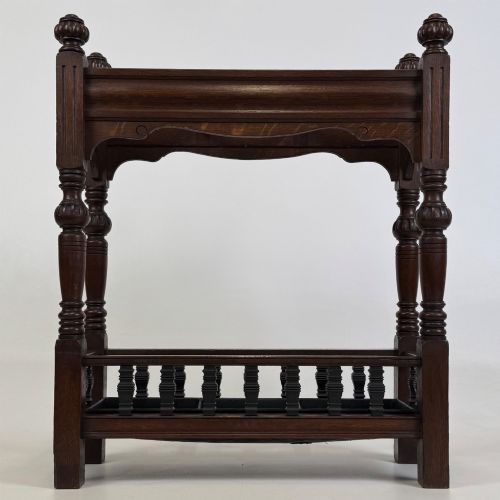
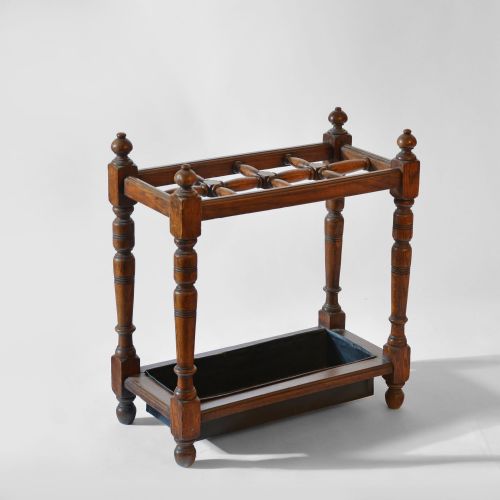
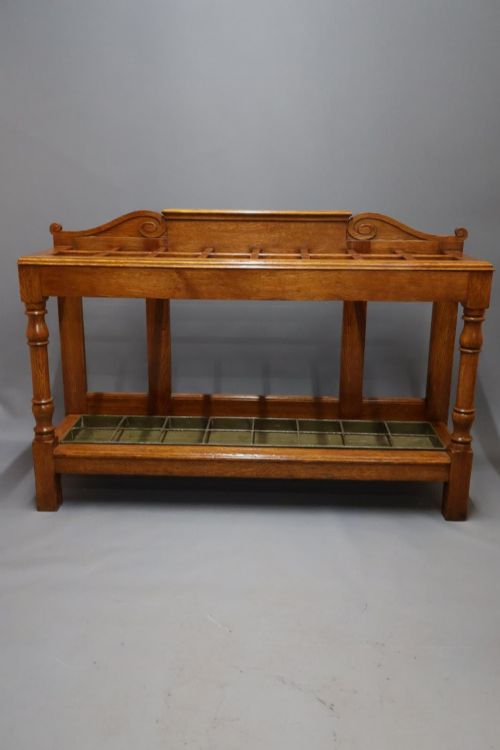
A carved oak umbrella stand brings robust utility and rich carved detail to the hallway, offering a sturdy place for wet walking gear.
What carved oak umbrella stands are
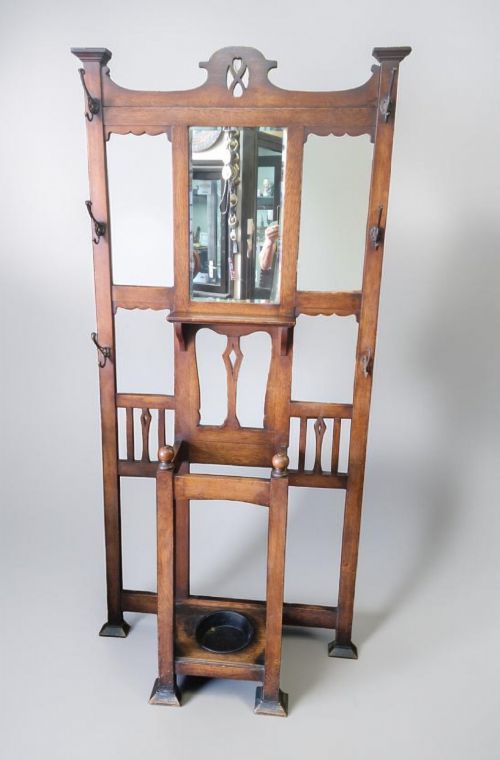
When searching for a carved oak umbrella stand, buyers encounter functional hallway furniture designed to store sticks and wet rain gear. The examples seen here span the Victorian, Edwardian, and early twentieth-century periods, alongside nineteenth-century pieces.
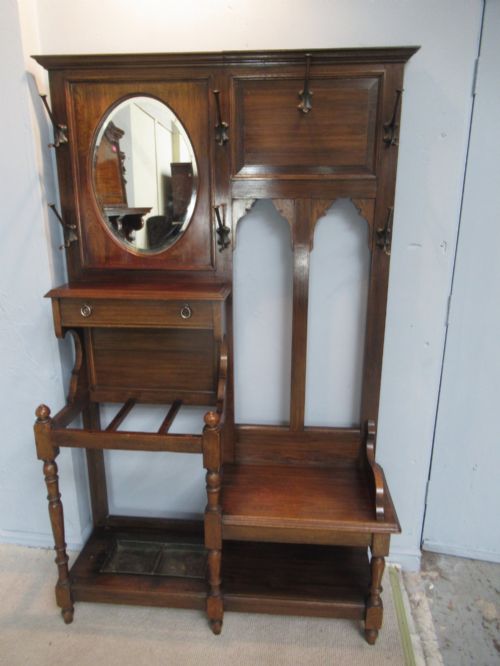
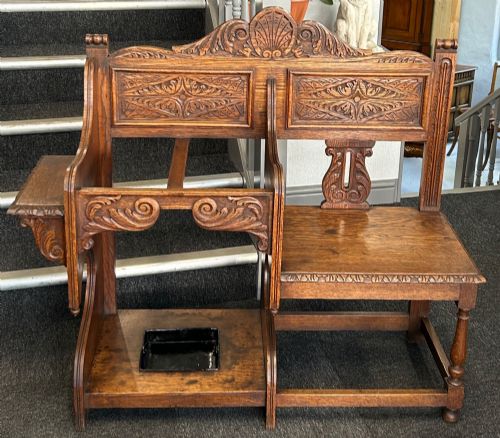
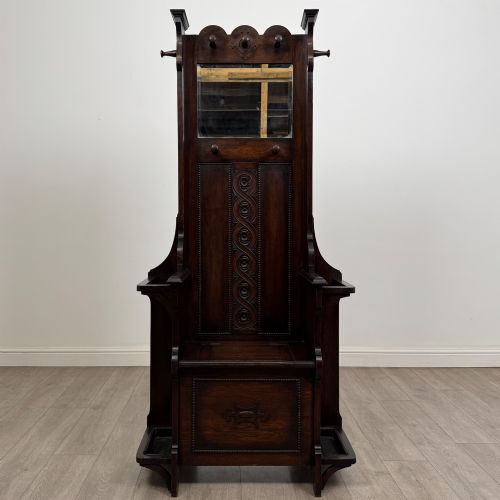
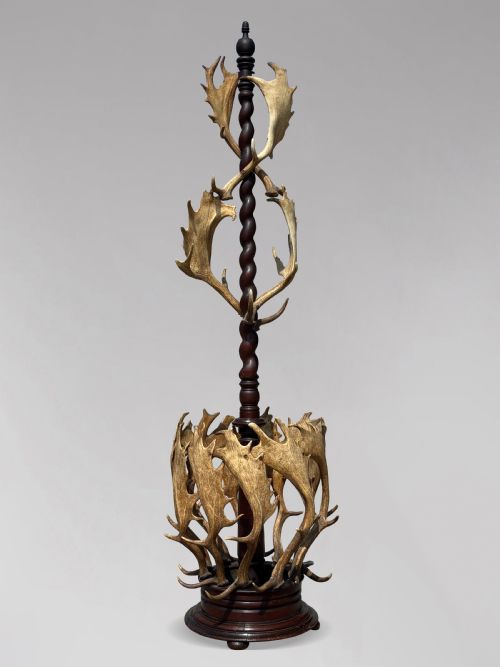
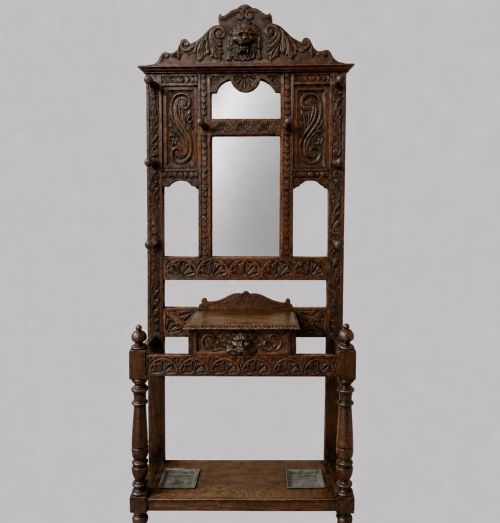
Most items function purely as umbrella and stick stands, whilst larger forms combine the stand with hall seats, hall cupboards, or coat and hat storage. Styles range from plain utilitarian timber to elaborate Gothic Revival, Aesthetic Movement, Black Forest, Jacobean Revival, and Art Nouveau designs.
Origins represented in the archive include English and Breton workshops, demonstrating how regional carvers applied local motifs to standard hall furniture. Buyers typically choose between compact umbrella stands and expansive hall tree combinations depending on hallway space.
How they were made
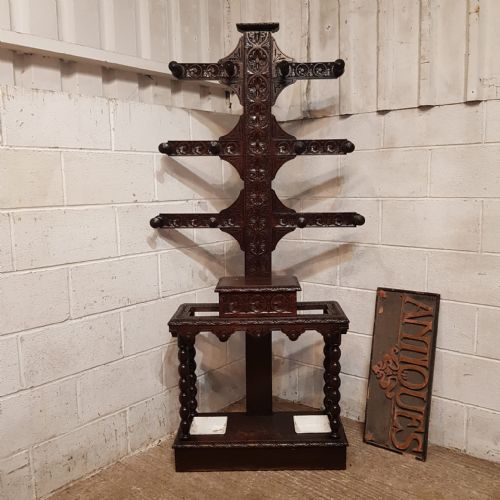
Construction relies heavily on solid oak timber, frequently shaped through hand carving to produce relief panels, foliage, or mythological motifs like the Green Man. Metal elements appear in structural fixtures, hinges, and crucially as drip trays to catch rainwater from wet sticks.
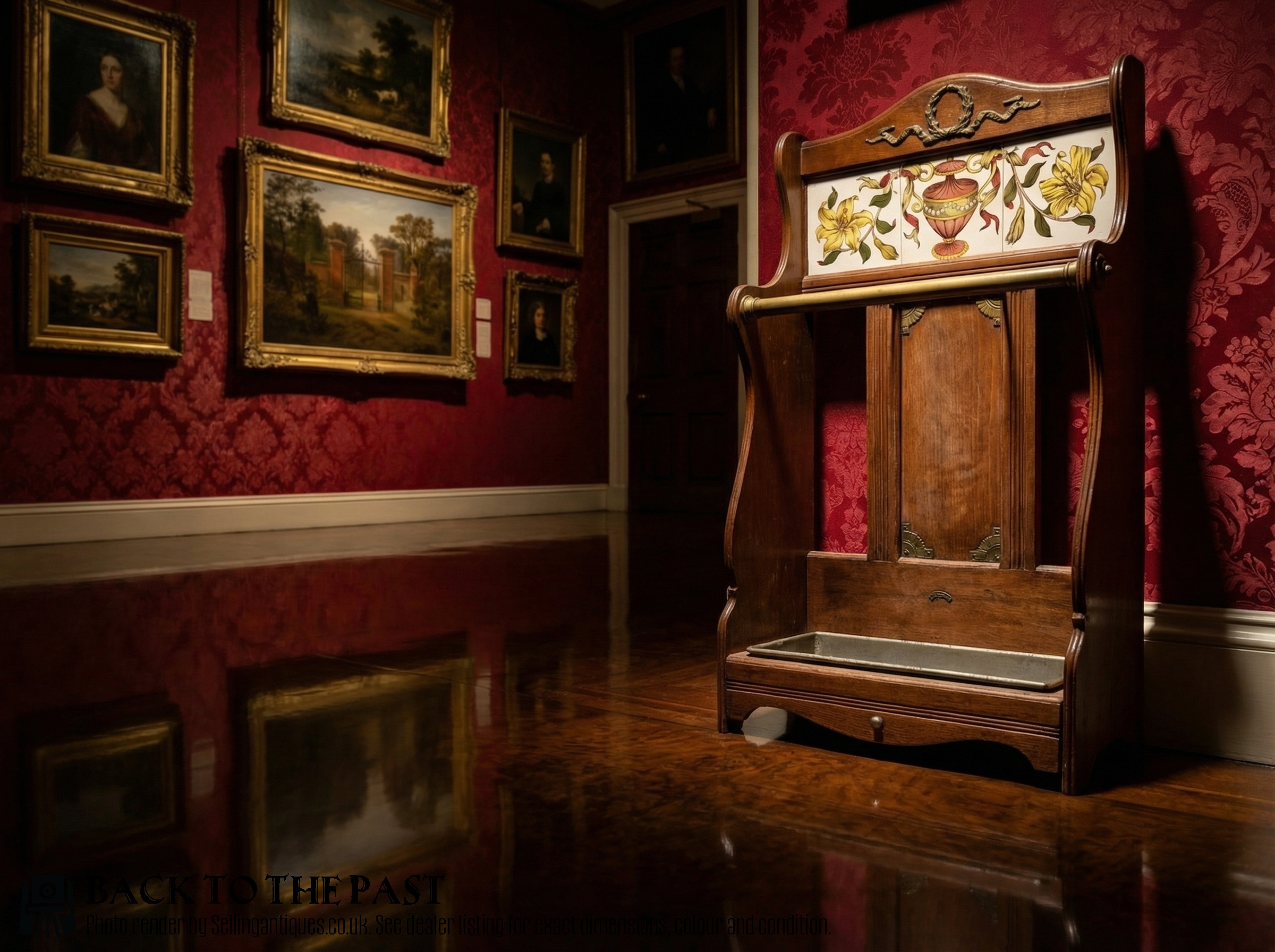
Makers integrated brass and iron components alongside cast metal fittings, sometimes incorporating patent mechanisms or mounting pieces on castors for mobility. Ceramic tiles also feature in some back panels, providing a wipe-clean surface behind wet umbrella tips.
Retail Price Guide 2026
Typical UK retail prices for carved oak umbrella stand, calculated from the Sellingantiques database of over a million retail prices indexed since 2003. This retail price guide relies exclusively on Sellingantiques data; no external sources or auction records are used, so the figures do not describe the wider market.
Several stands include patent numbers, proving that nineteenth-century inventors took the business of wet umbrellas very seriously.
What varies in quality
Quality separates simple production items from exceptional workshop output through the depth and crispness of the timber carving. Elaborate stylistic expressions, such as deeply undercut Black Forest foliage or detailed Green Man masks, require superior joinery and carving skill.
The integration of functional hardware, including removable metal drip trays and original brass or cast-iron hooks, defines the practicality of surviving pieces. The survival of secondary materials like ceramic tiles and patent mechanisms further distinguishes comprehensive hall furniture from standard stands.
William Whiteley
The Carved Oak Umbrella Stand Glossary
- Green Man
- A sculptural architectural ornament depicting a human face disgorged from or entwined with foliage. It appears frequently as a central carved motif on nineteenth-century hall furniture.
- Drip tray
- A removable metal basin fitted into the base of a stand to catch water from wet umbrellas. Its presence protects the timber floor from moisture damage.
- Gothic Revival
- An architectural and decorative style drawing inspiration from medieval forms. Pieces in this style often feature pointed arches, heavy linenfold panels, and ecclesiastical tracery.
- Aesthetic Movement
- A late nineteenth-century design approach emphasising visual beauty over narrative meaning. Furniture from this movement typically displays cleaner lines and stylized natural motifs.
- Hall tree
- A tall hallway furnishing combining umbrella stands with clothes hooks, mirrors, and sometimes a bench seat. It serves as a central storage hub for outerwear.
Frequently Asked Questions
What is a carved oak umbrella stand?
A carved oak umbrella stand is a piece of hallway furniture built to hold walking sticks, canes, and wet umbrellas. They are typically fashioned from solid oak with carved decorative panels.
These stands often include integrated metal drip trays at the base to catch water runoff. Some larger versions combine the umbrella storage with coat hooks, mirrors, or small benches.
How do I care for antique oak?
Antique oak benefits from occasional treatment with appropriate wax to maintain the finish and nourish the timber. Keeping the wood away from direct heat sources prevents splitting and warping.
It is equally important to empty and dry the metal drip trays regularly to stop moisture from damaging the internal base of the stand.
How do I identify a Victorian stand?
Victorian stands often display distinct stylistic markers such as heavy Gothic Revival motifs, deep relief carving, or Black Forest animal and leaf details. They frequently utilise robust solid oak construction with cast iron or brass hardware.
Many pieces from this era also incorporate patent numbers or manufacturer stamps into their metalwork or frame.
Where were these stands placed?
These pieces were designed for entrance halls and vestibules where household members and visitors removed wet outerwear. Their primary function was keeping dripping umbrellas contained near the front door.
Larger hall stands also provided a convenient spot for guests to leave hats, coats, and walking sticks upon entry.