

Hallway Umbrella Stand
A hallway umbrella stand keeps entryway floors dry and organises walking sticks, coming in robust cast iron, warm brass and carved oak.
What a hallway umbrella stand is
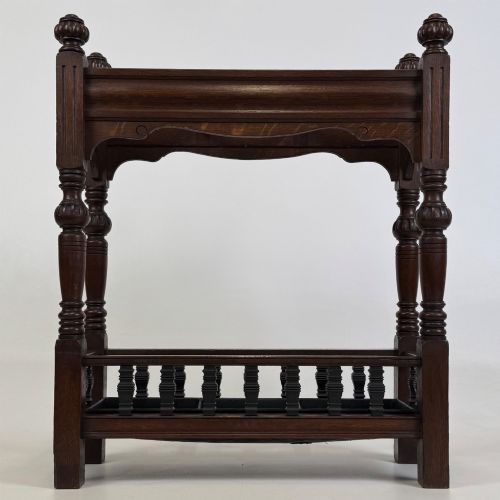
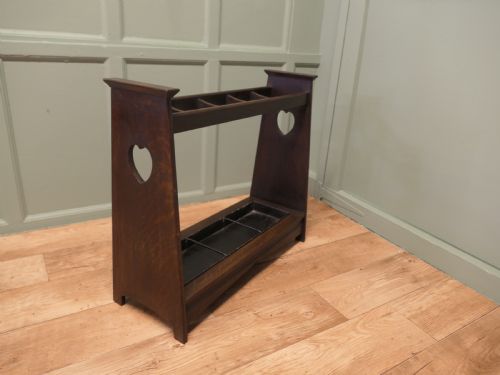
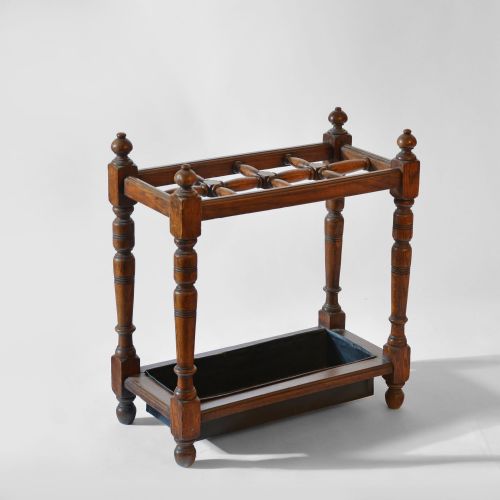
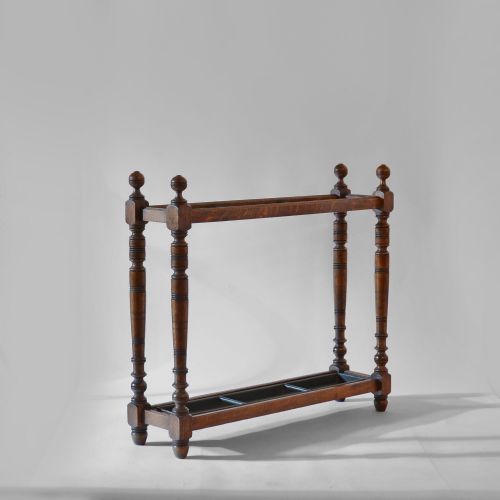
A hallway umbrella stand is a functional entryway furnishing designed to hold wet umbrellas and walking canes in domestic spaces. These pieces appear frequently in Victorian, Edwardian, and Art Nouveau styles, reflecting the period focus on orderly domestic transition spaces.
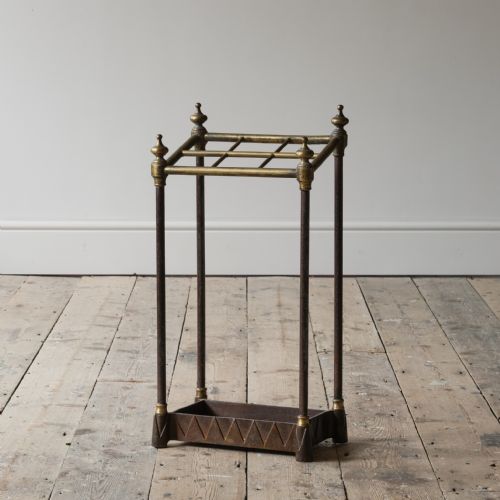
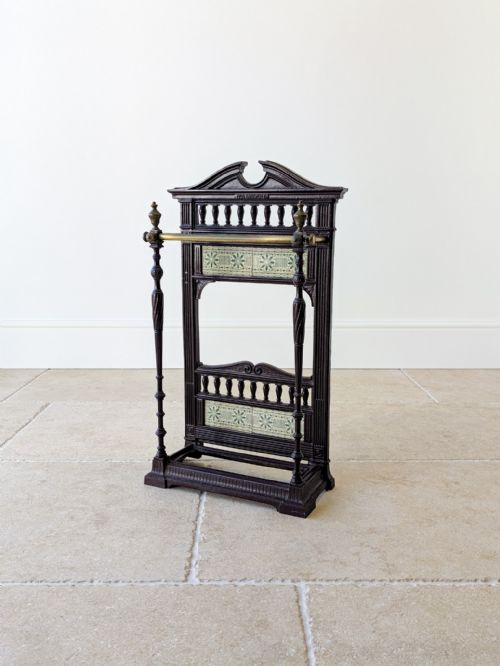
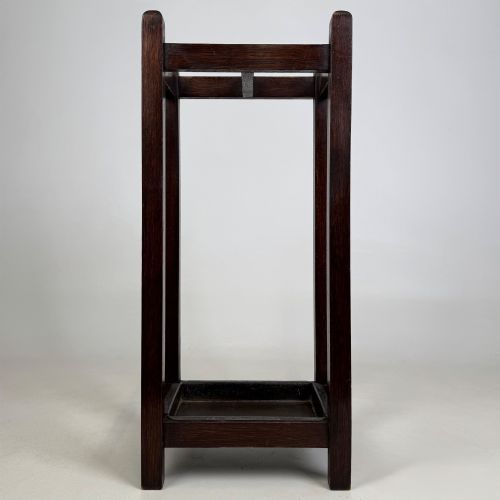
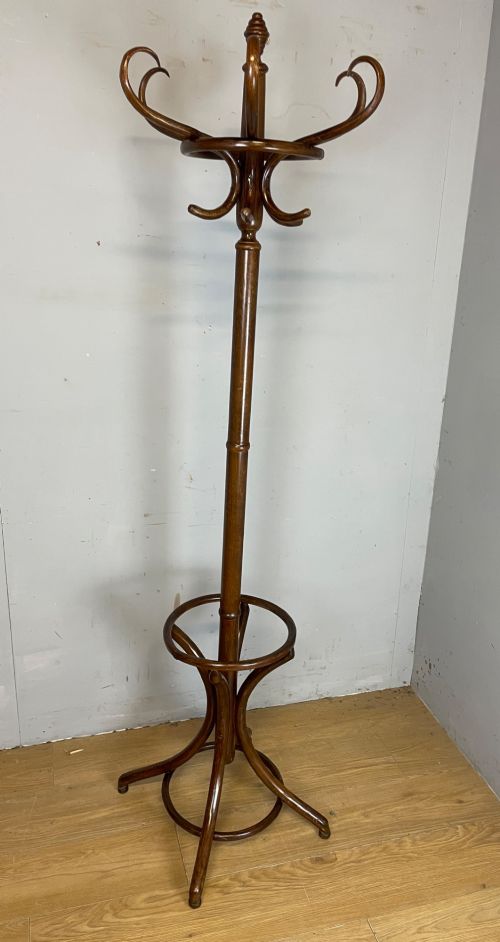
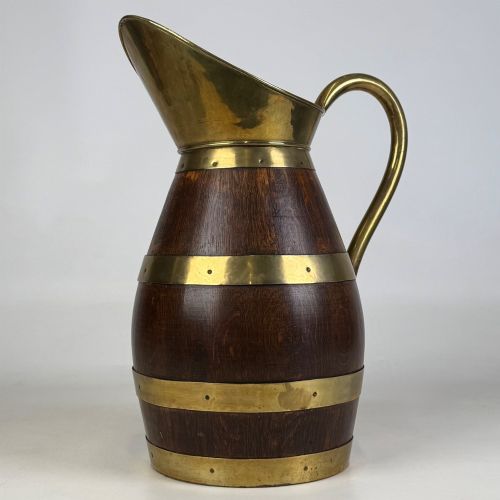
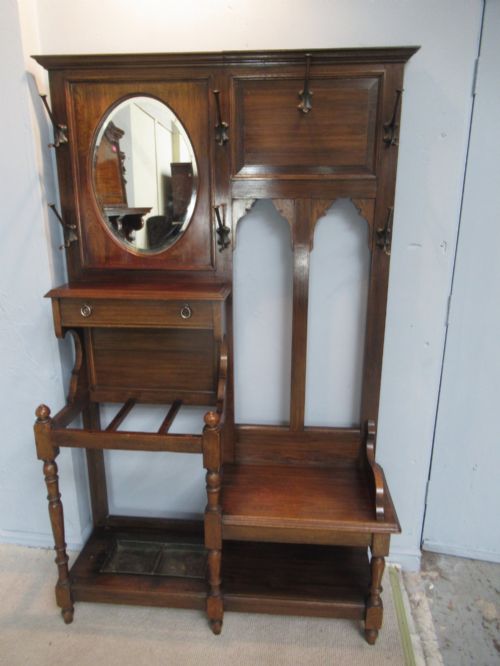
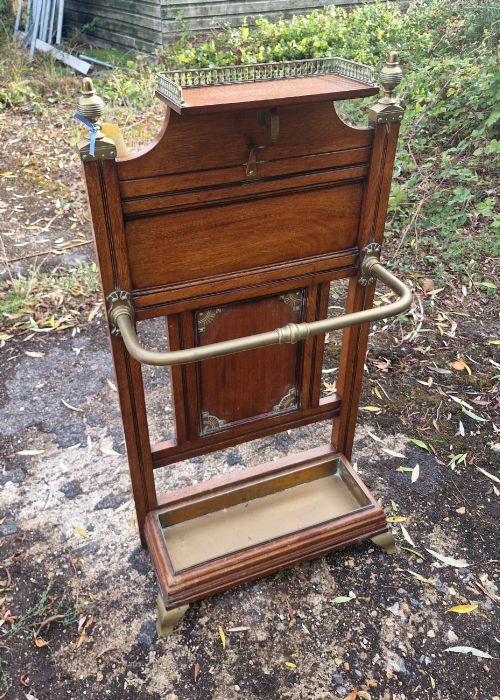
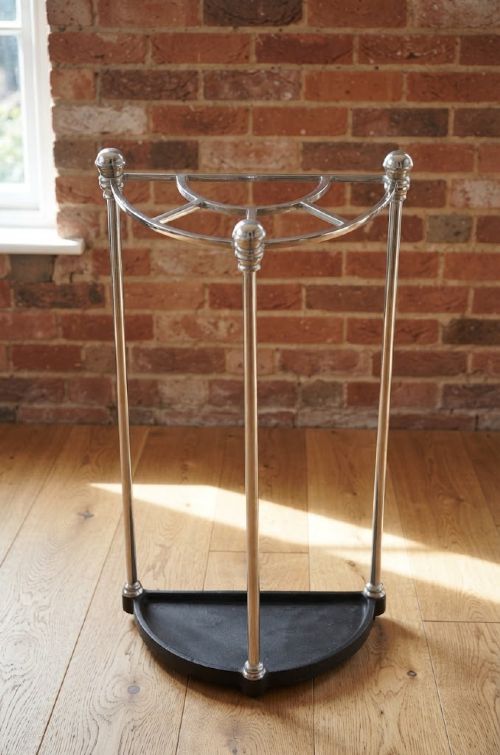
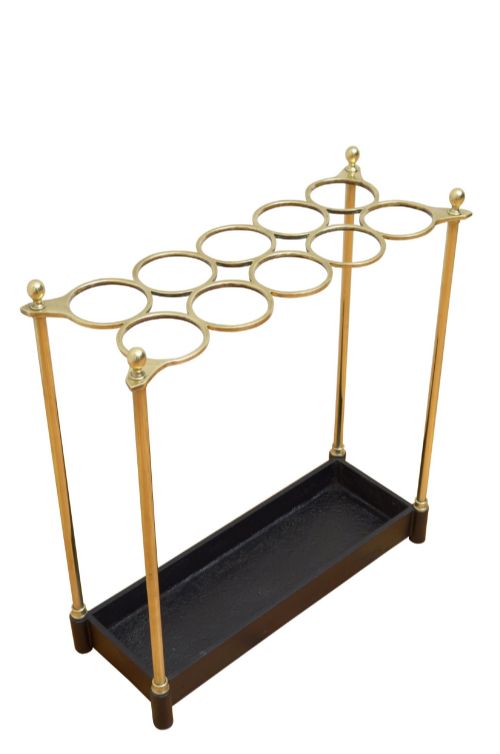
The most common versions met on this page are upright brass, cast iron, and oak frames featuring partitioned divisions or demi-lune shapes to catch water drips. Examples range from simple brass racks to substantial combination pieces that double as coat stands.
Origins span English, French, and Austrian workshops, encompassing both austere utility designs and decorative Arts and Crafts interpretations. Buyers encounter compact corner stands alongside large hall pieces built to serve busy household entries.
Materials and construction
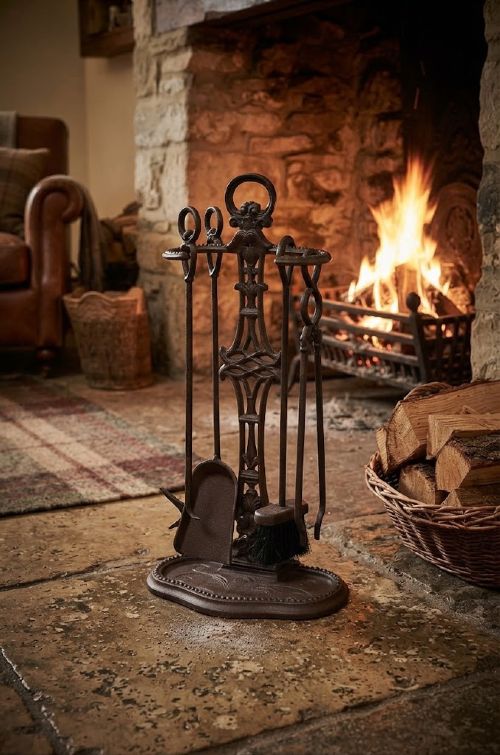
Construction relies heavily on durable metals like cast iron, brass, bronze, and copper, often paired with wooden elements such as oak, beechwood, and bentwood. Cast iron and brass components provide the necessary weight and moisture resistance required for holding damp sticks.
Techniques include foundry casting for iron frames, steam-bending for beechwood and Thonet bentwood structures, and hand-beating for copper panels. Many designs incorporate segmented wire loops, pierced metalwork, or removable drip trays to manage water runoff.
Retail Price Guide 2026
Typical UK retail prices for hallway umbrella stand, calculated from the Sellingantiques database of over a million retail prices indexed since 2003. This retail price guide relies exclusively on Sellingantiques data; no external sources or auction records are used, so the figures do not describe the wider market.
Listings feature brass, cast iron, oak, beechwood, bentwood, enamel, copper, and wrought iron.
What separates the tiers
Quality varies according to the ambition of the design and the integrity of the materials, distinguishing standard utility items from decorative showpieces. Heavier castings, intricate brass loop assemblies, and integrated drip pans mark out better examples.
Construction methods also set pieces apart, with robust joinery in carved oak and sophisticated steam-bending in bentwood indicating superior workshop execution. The presence of maker marks, such as Kenrick on cast iron bases, adds discernible provenance.
Thonet·Kenrick
The Hallway Umbrella Stand Glossary
- Demi-lune
- A half-moon shape allowing stands to sit flat against a hallway wall. This profile saves floor space in narrow entryways.
- Bentwood
- Wood shaped by steam under pressure. This technique creates curved frames seen in Austrian hallway stands.
- Faux bamboo
- Wood carved or painted to resemble bamboo stalks. This decorative finish appears on Victorian hall furnishings.
- Cast iron
- Molten iron poured into a mould to form rigid structures. It provides the heavy base needed for umbrella stands.
- Drip tray
- A removable metal or ceramic dish placed at the base. It catches water running off wet umbrellas.
Frequently Asked Questions
How do I stop rust?
Keep metal stands dry by emptying removable drip trays regularly and wiping down cast iron surfaces with a light oil.
Ensure umbrellas are reasonably shaken out before placing them inside the rack to minimise standing moisture.
Where should I place it?
Position the stand near the front door where wet gear enters the house, ideally on a hard floor surface that tolerates occasional water drips.
Demi-lune and corner shapes work well in narrow hallways where floor space is limited.
How do I date one?
Examine the materials, construction methods, and stylistic cues like Art Nouveau whiplash lines or Victorian aesthetic movement motifs.
Foundry marks and fastener types also offer clues to the manufacturing period.
Can they hold canes?
Most stands feature segmented rings or division loops designed specifically to keep walking sticks and canes upright and separated.
The height and spacing of these dividers accommodate various stick lengths without tipping.