


Vintage Stick Stand
These vintage stick stand designs provide practical organisation for hallways while bringing period character to your entrance space.
Vintage Stick Stand
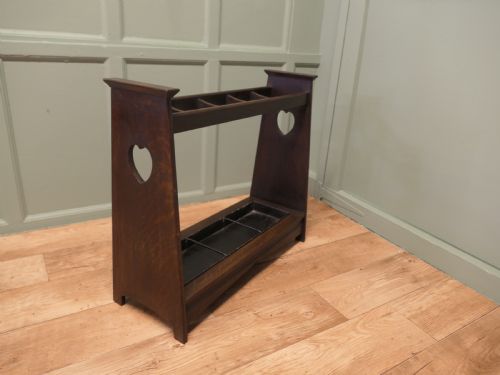
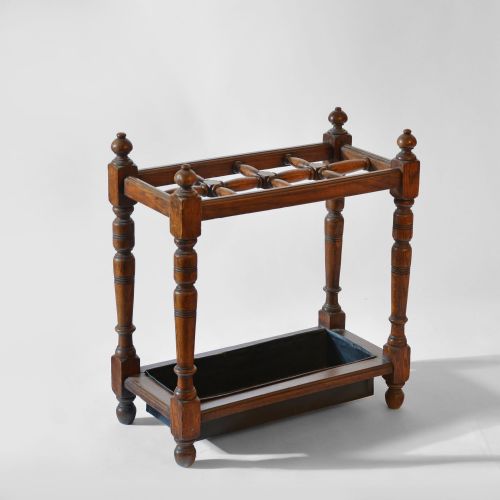
A vintage stick stand serves as a dedicated holder for walking sticks, umbrellas and parasols, keeping hallways tidy. The items you encounter range from compact hall furniture to freestanding vessels designed specifically for domestic entryway use.
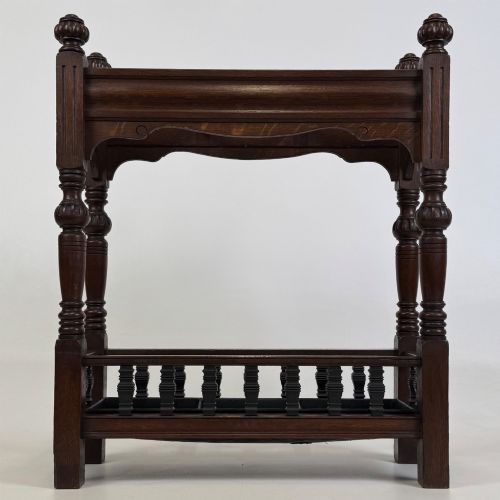
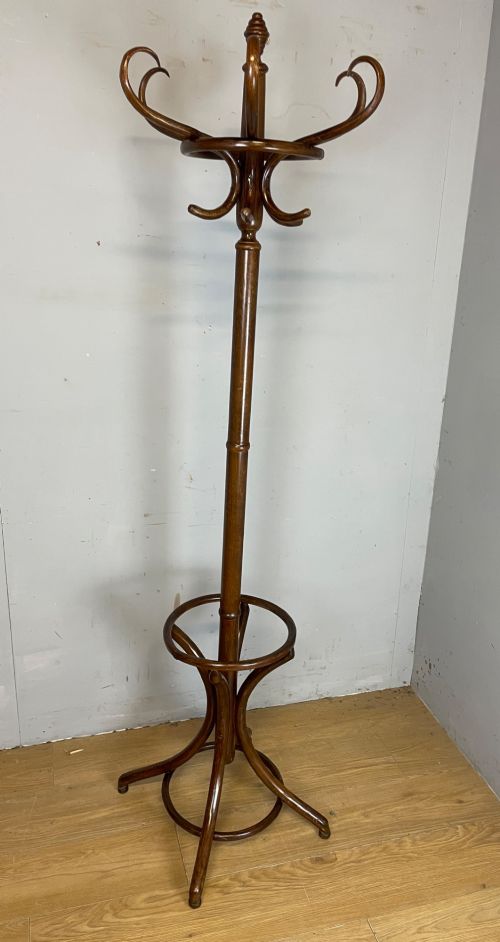
Oak and cast iron dominate the selections available, appearing alongside brass, mahogany and bentwood variants. Many pieces combine structural timber frames with metal drip trays to catch rainwater from wet umbrellas.
The aesthetic vocabulary spans the nineteenth and twentieth centuries, taking in Victorian, Edwardian, Arts and Crafts, Aesthetic Movement and Art Deco designs. You will frequently find pieces that double as hall stands incorporating coat hooks and mirrors.
Materials and Construction Methods
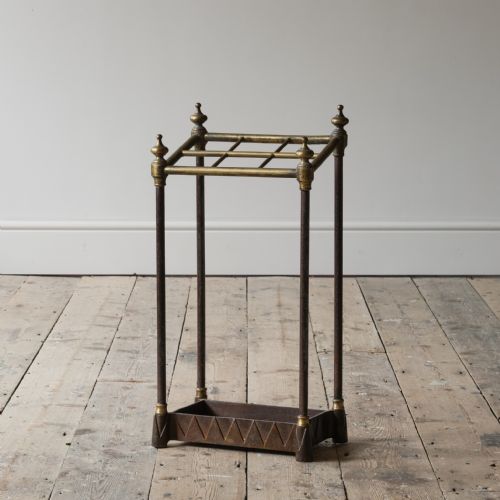
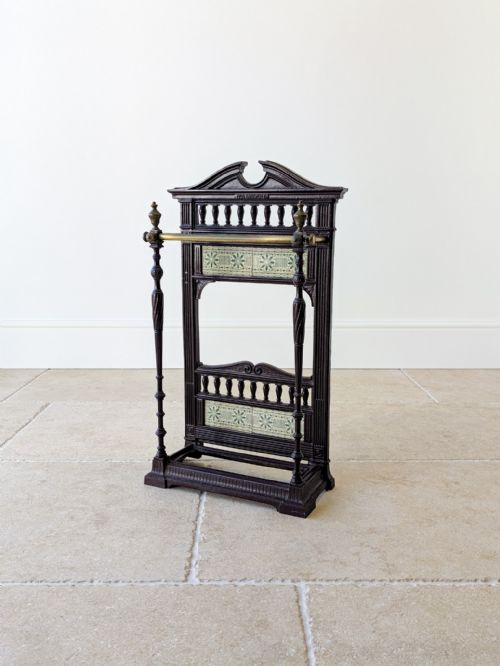
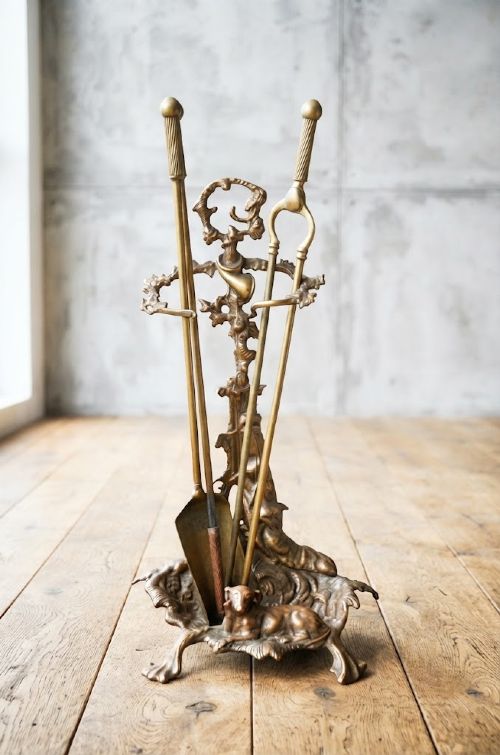
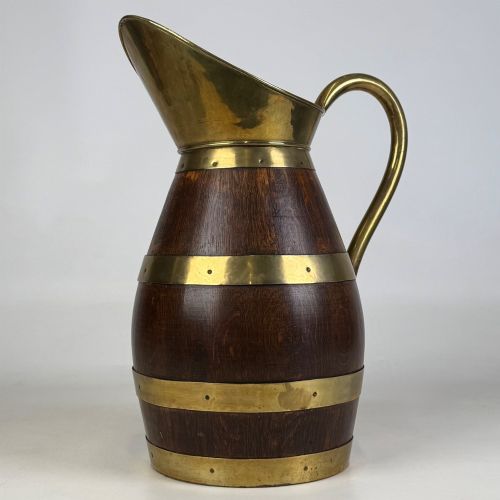
Foundry cast iron and brass form the structural backbone of metal examples, often utilising decorative pierced patterns or ball finials. Coopered oak barrels bound with brass or iron bands demonstrate traditional barrel-making techniques applied to domestic furniture.
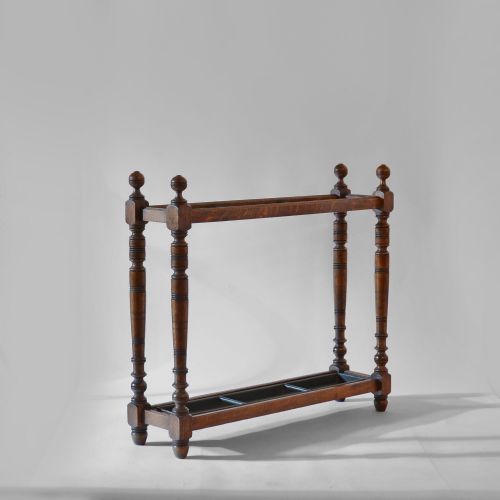
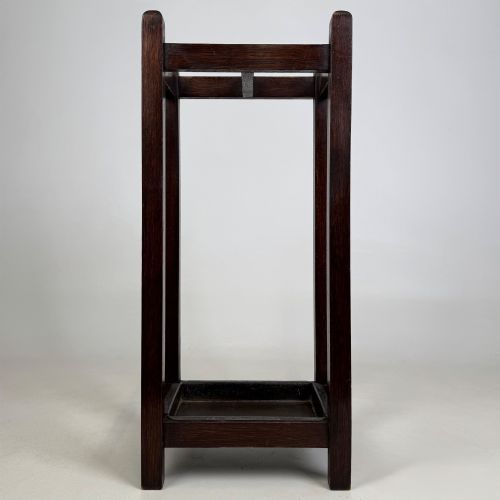
Timber versions employ solid oak, mahogany and bentwood, shaped and joined to support the daily weight of walking canes and heavy umbrellas. Original metal drip trays, fitted at the base, protect wooden floors from moisture damage.
Vintage Stick Stand Retail Price Guide 2026
Typical asking prices for vintage stick stand among the pieces listed under this phrase on Sellingantiques today, from the lower quarter to the upper quarter. They describe what is for sale here now, not the wider market.
Some Edwardian brass-bound oak barrels previously used for beer or water found a second life keeping hallways tidy.
Distinguishing Quality Across the Range
Quality reveals itself in the integrity of the original construction and the retention of integral components like drip trays. Finely cast ironwork displays crisp detail in foliage or figurative motifs, whereas lesser examples show softer, blurred casting lines.
The choice of timber and joinery methods separates standard utility items from more ambitious cabinet work. Presence of maker stamps or registered design numbers often signifies higher workshop standards.
Coalbrookdale·Liberty Design·Mappin & Webb
The Vintage Stick Stand Glossary
- Drip tray
- A removable metal dish placed at the base of a stand to catch water from wet umbrellas. It protects the floor beneath the piece from moisture damage.
- Coopered
- A method of construction using curved wooden staves bound together with metal hoops, identical to barrel-making techniques. This technique appears frequently in oak stick stands.
- Bentwood
- Wood softened by steam and bent into curved structural shapes, commonly utilised in lightweight nineteenth and twentieth-century stands. Beech is the timber most frequently treated this way.
- Demi-lune
- A half-moon shape used for the footprint of stands designed to sit flush against a hallway wall. This profile maximises floor space in narrow corridors.
- Aesthetic Movement
- A late nineteenth-century design style emphasising visual beauty over narrative meaning, often featuring simplified forms and Japanese-inspired motifs. Pieces from this movement display restrained ornamentation.
Vintage Stick Stand: Frequently Asked Questions
How do I protect my floor from wet umbrellas?
Most traditional stands feature a removable metal drip tray at the base designed specifically to catch water runoff. Ensure your chosen piece retains this original tray to protect wooden or carpeted flooring.
For pieces lacking a fitted tray, place a small waterproof mat or shallow dish inside the base to catch residual moisture.
Where should I place a stick stand in my hall?
Position your stand near the main entrance door for convenient access when arriving or leaving the house. Demi-lune and flat-backed designs sit flush against corridor walls, occupying minimal floor space in narrow entryways.
Keep wooden and iron stands away from direct heat sources to prevent timber from splitting or metal finishes from drying out.
How do I distinguish Victorian from Edwardian stands?
Victorian examples tend to feature heavier cast ironwork, darker carved oak or mahogany, and ornate ornamentation like Gothic or Aesthetic Movement motifs. Their construction emphasises substantial weight and dense, dark timbers.
Edwardian stands often display lighter golden oak finishes, simpler geometric lines, and sometimes simpler Arts and Crafts influences. The aesthetic shifts toward brighter domestic interiors and functional restraint.
Can these stands hold modern golf umbrellas?
Standard nineteenth and twentieth-century stick stands were built for walking canes, parasols and slender folding umbrellas. Oversized modern golf umbrellas may not fit comfortably into narrower divisional rings.
Check the diameter of the individual divisions or the overall opening width before purchasing if you intend to store bulky modern items.