


Wooden Cane Holder
A wooden cane holder brings order to the hallway, sorting walking sticks and umbrellas in solid oak, mahogany, and walnut.
Wooden Cane Holder
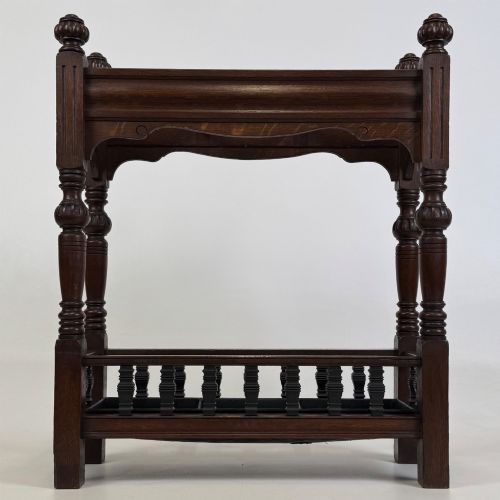
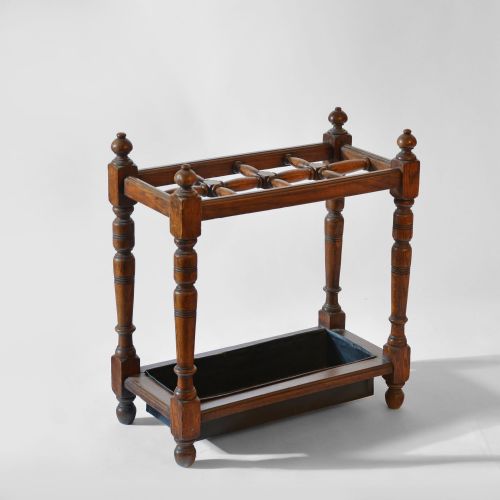
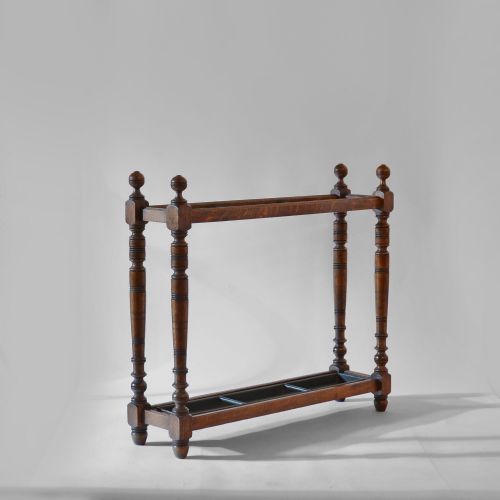
A wooden cane holder stands in the hallway to receive walking sticks, umbrellas, and parasols. These items appear primarily in Victorian and Edwardian iterations, spanning the nineteenth and early twentieth centuries.
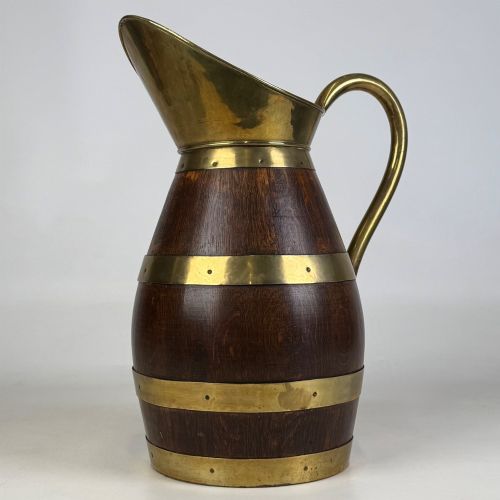
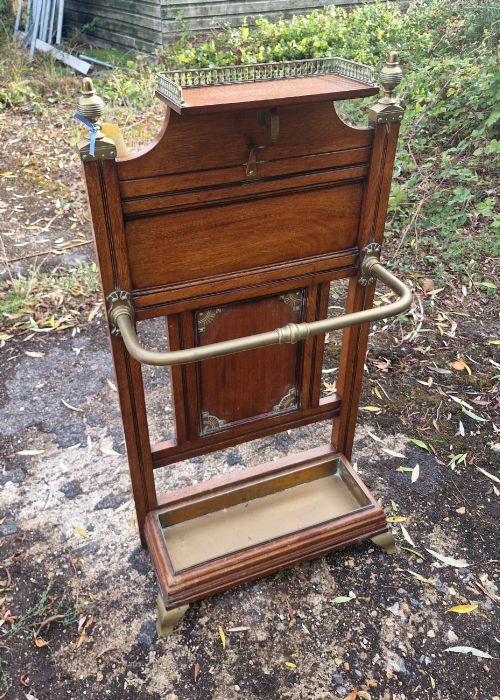
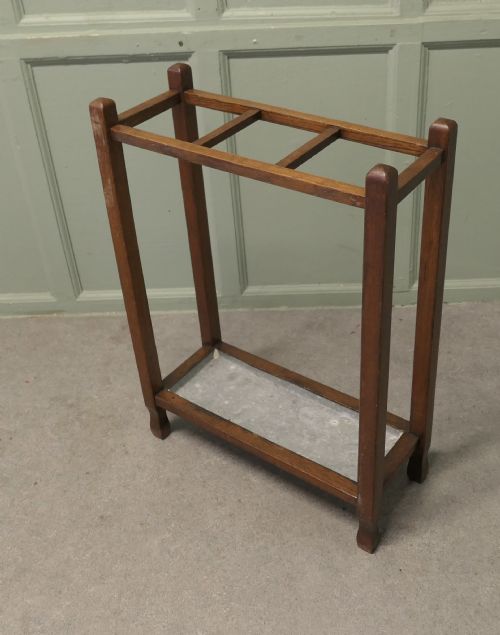
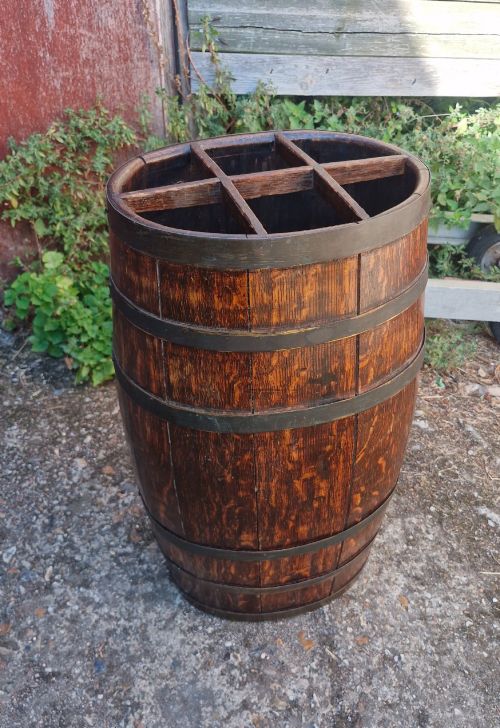
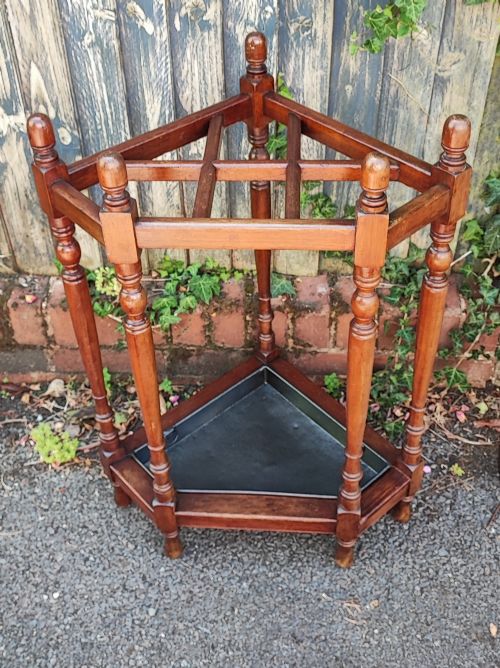
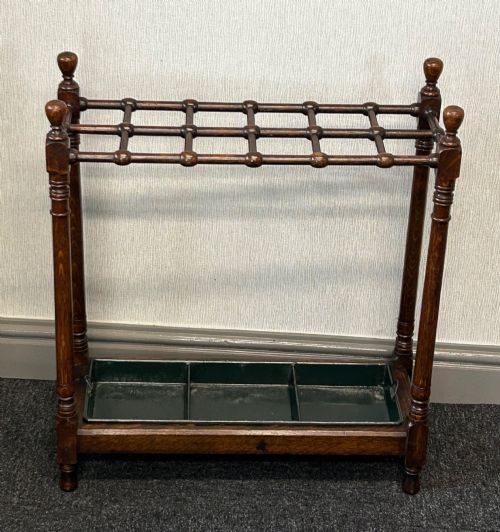
The form stretches from simple oak barrels to large hall racks with multiple divisions. Buyers encounter freestanding cylinder stands, corner units, and wall-anchored hall stands designed for domestic entranceways.
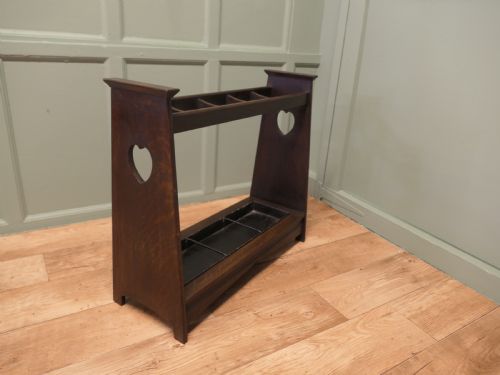
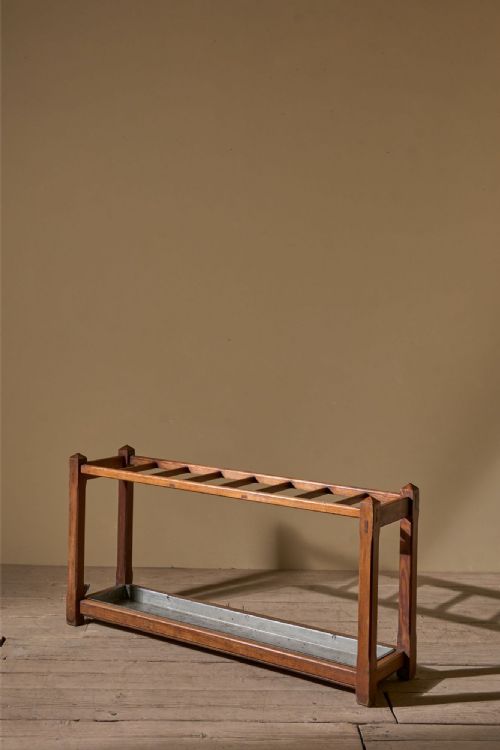
Makers shaped these pieces within distinct movements such as Arts and Crafts, Gothic Revival, and the Aesthetic Movement. English country house examples utilise sturdy timbers suited to daily household traffic.
How they were made
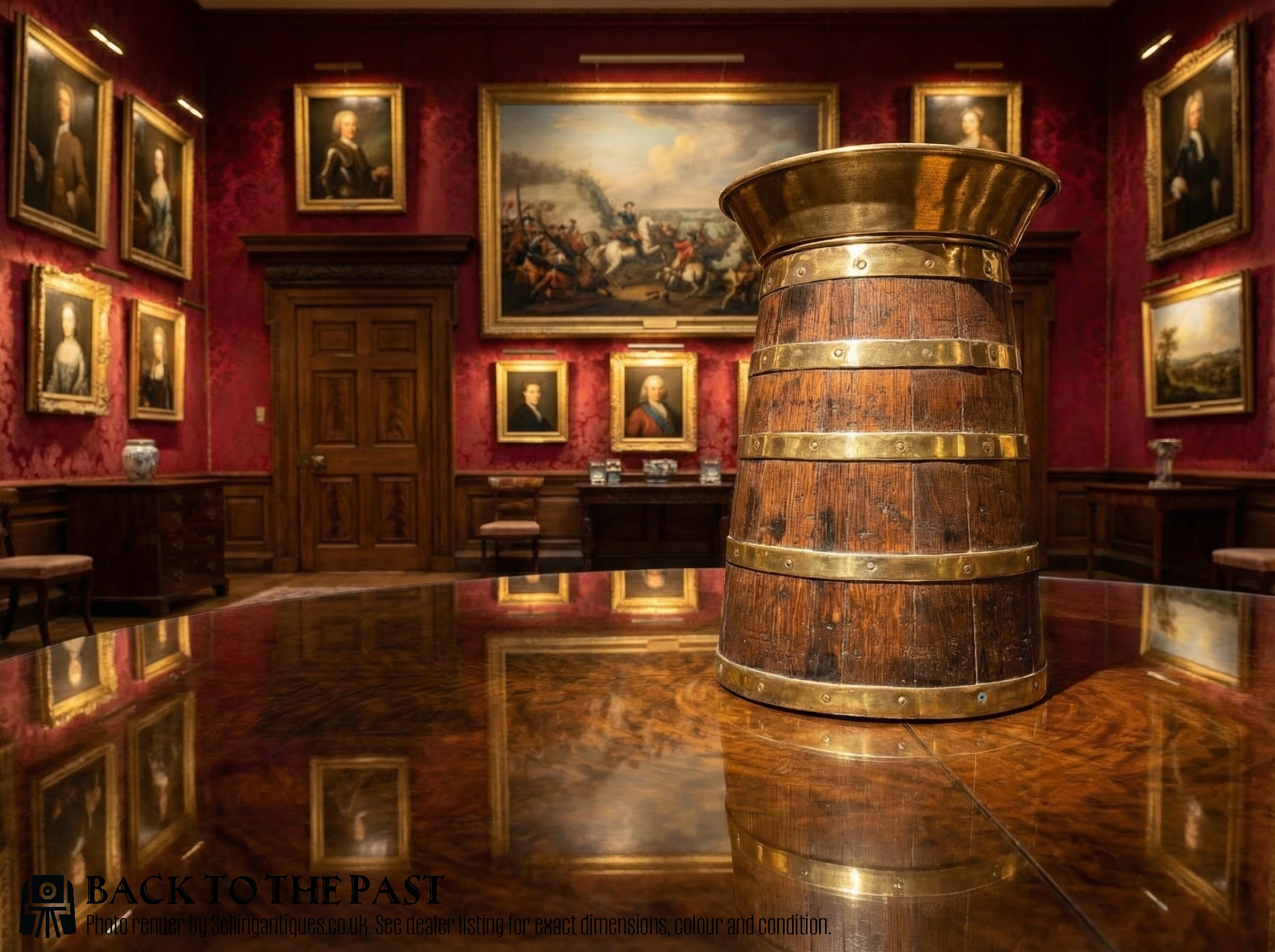
Carpenters constructed these holders using dense hardwoods like oak, mahogany, and walnut, often employing coopered barrel techniques with curved staves. Metal bands in brass, zinc, or iron bound the wood to provide structural reinforcement against damp umbrella tips.
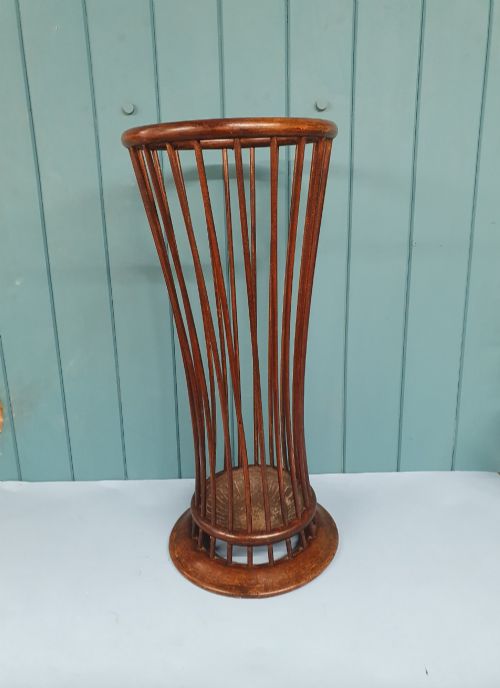
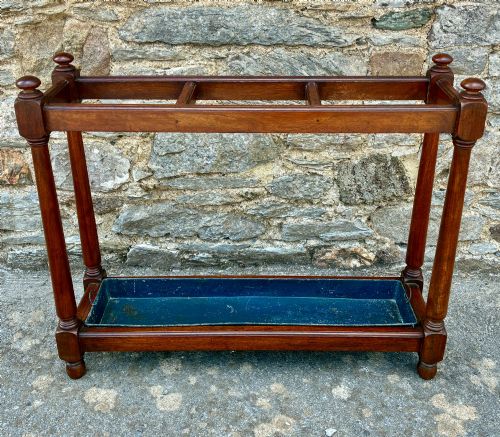
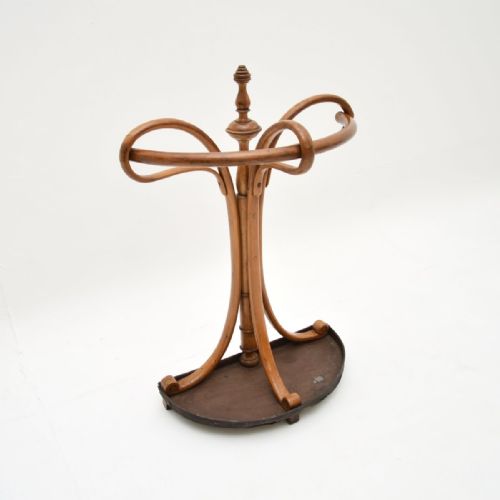
Carved detailing, bentwood framing, and applied brass mounts distinguish various regional English and continental workshops. Internal metal drip trays captured rainwater, protecting the wooden base from rot and water staining.
Wooden Cane Holder Retail Price Guide 2026
Typical asking prices for wooden cane holder among the pieces listed under this phrase on Sellingantiques today, from the lower quarter to the upper quarter. They describe what is for sale here now, not the wider market.
The documented pieces span the nineteenth century through the nineteen-twenties, incorporating Edwardian and Victorian aesthetic standards.
What varies in quality
The distinction between standard utility items and finer pieces lies in timber selection and joinery execution. Quarter-sawn oak with prominent medullary rays or finely figured mahogany indicates a higher grade of manufacture intended for prominent reception rooms.
Construction methods reveal the maker's intent, from heavy brass hoops and cast iron liners to simple nailed joints. The presence of original metal drip trays and crisp hand-carved detailing elevates a piece above basic utilitarian production.
Thonet·Heals of London·Liberty Design
The Wooden Cane Holder Glossary
- Coopered
- Built like a wooden barrel with curved staves joined tightly together. This method allowed makers to form rounded umbrella stands from individual strips of oak.
- Drip tray
- A metal liner placed at the bottom of the stand to catch water from wet umbrellas. Original trays prevent moisture damage to the internal wooden floor.
- Bentwood
- Timber heated and bent into curved shapes using steam. This technique produced flowing, lightweight frames seen in specialised umbrella stands.
- Arts and Crafts
- A design movement prioritising traditional craftsmanship and simple forms over mass production. Pieces from this era often display honest oak construction with minimal ornament.
- Demi-lune
- A half-moon shape designed to sit flush against a hallway wall. This profile saved floor space in narrow entrance passages.
Wooden Cane Holder: Frequently Asked Questions
Where should I place a cane holder?
These pieces belong in a hallway, entrance lobby, or boot room where outdoor gear accumulates. Their slim profiles allow them to sit neatly against walls or fit into unused corners.
Position the holder away from direct radiator heat to prevent the timber from drying out and splitting over time.
How do I protect the wood from wet umbrellas?
Most antique stands include a metal drip tray at the base to catch rainwater from wet umbrellas. Ensuring this liner remains intact protects the surrounding timber from rot.
Empty and dry the metal insert regularly to maintain the integrity of the base.
What woods were used for these holders?
Cabinetmakers relied on durable hardwoods such as oak, mahogany, and walnut to withstand heavy daily use. Oak appears most frequently in country house and Arts and Crafts examples.
Pine and bentwood also surface across nineteenth and twentieth-century designs.
How do I date a wooden cane holder?
Stylistic clues such as carved oak foliage point towards Victorian and Edwardian periods. Arts and Crafts pieces often feature plain quartersawn oak with exposed joinery.
Materials like zinc linings and brass hoops help narrow the timeline to the late nineteenth or early twentieth century.