



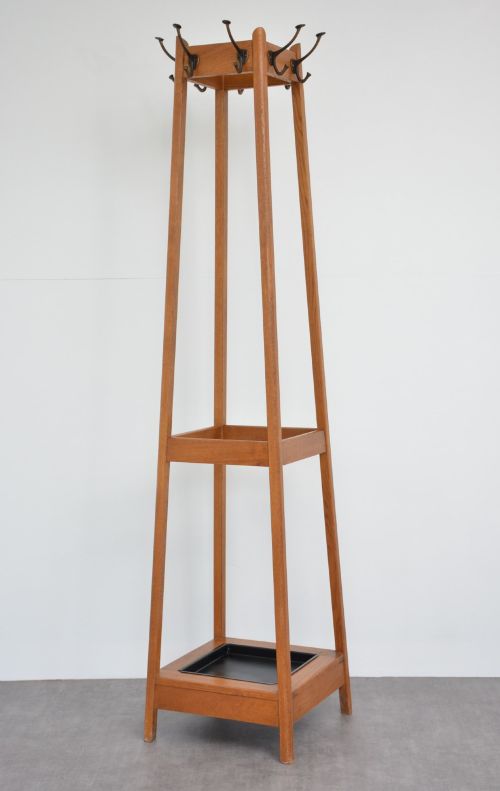
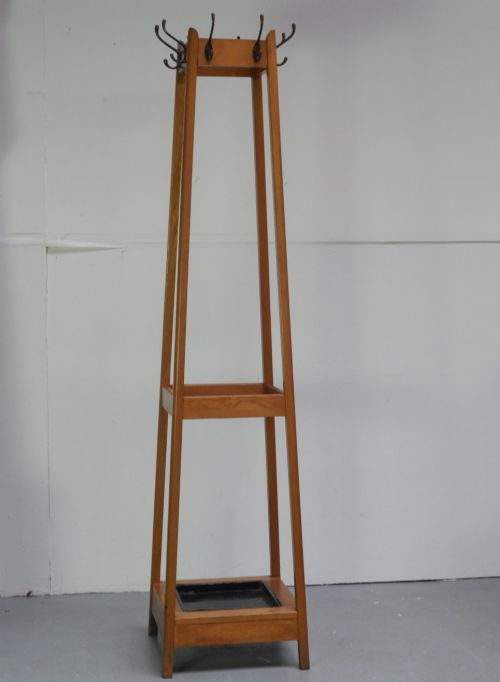
Arts and Crafts Hall Stand
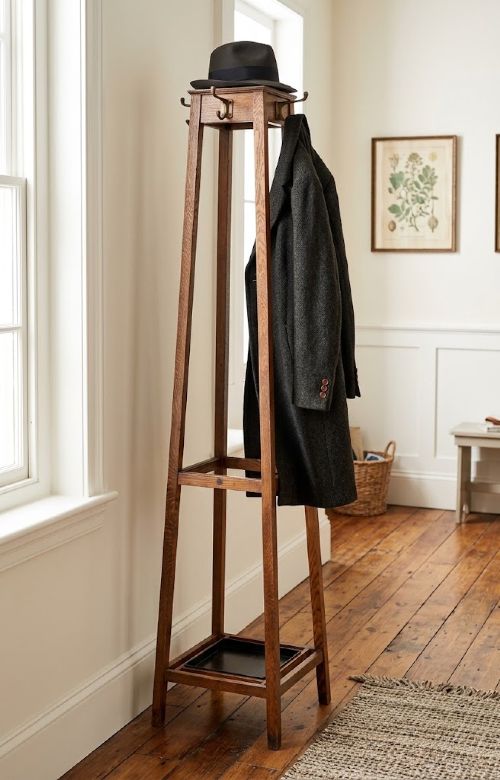
An arts and crafts hall stand greets visitors with honest timber and utility, combining hat hooks, umbrella trays and mirrors in a single piece.
Arts and Crafts Hall Stand
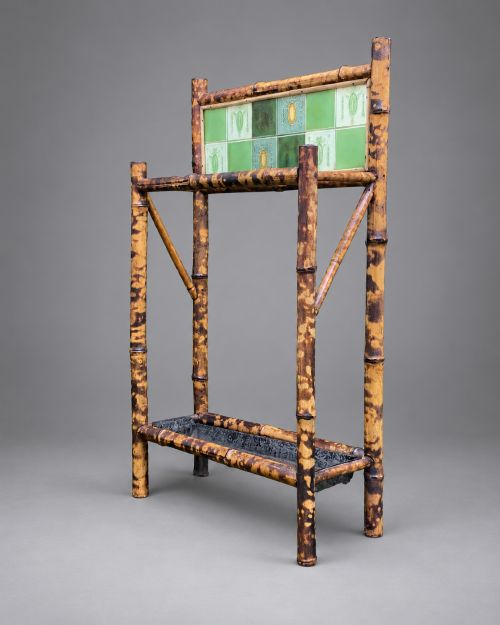
When you examine an arts and crafts hall stand, you encounter a purposeful entranceway furnishing designed to hold coats, hats, sticks and umbrellas. These pieces emerge from the late nineteenth century and extend through the Edwardian period, spanning the 1890s to around 1910.
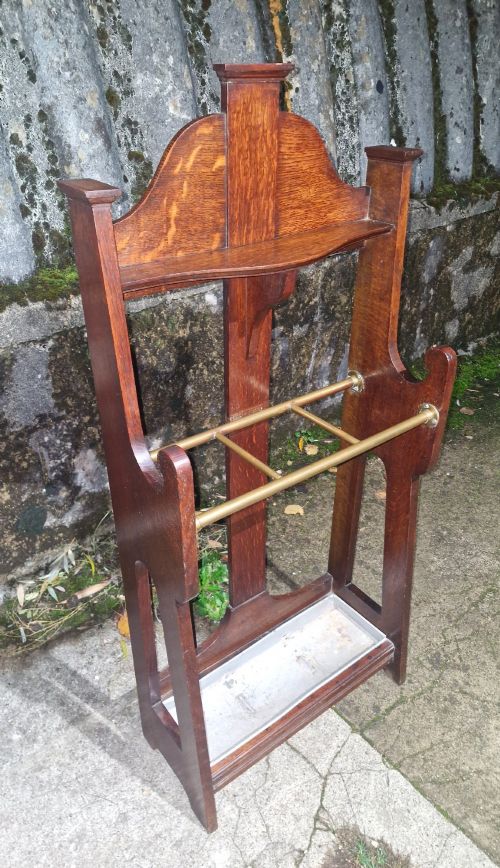
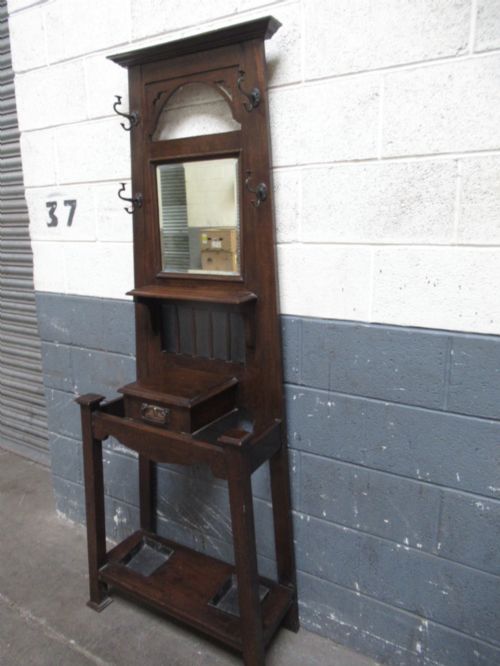
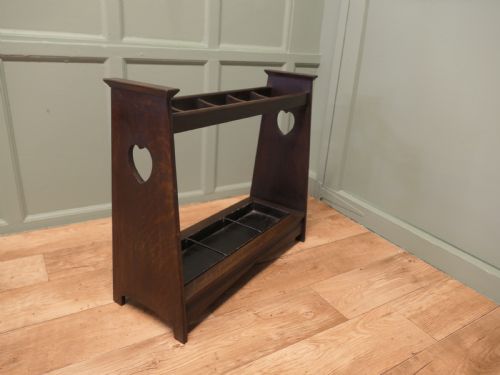
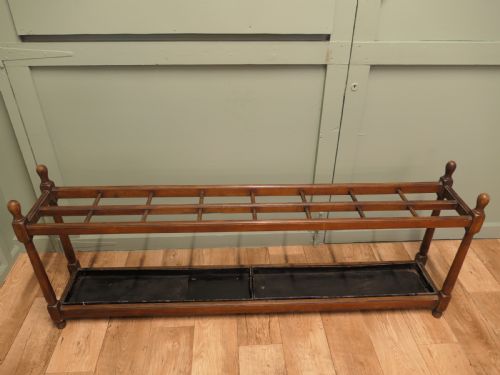
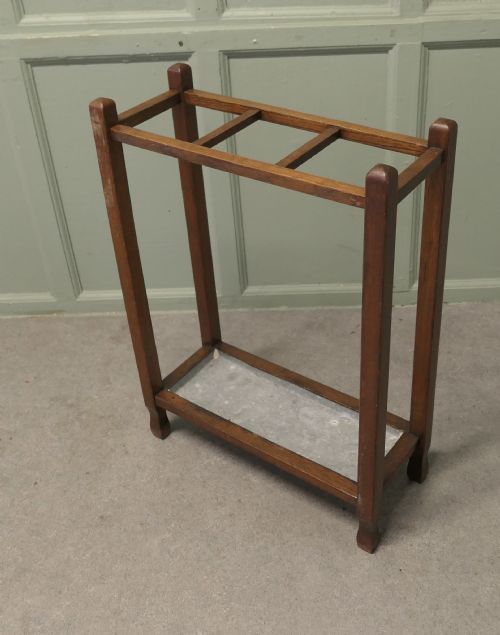
The version you are most likely to meet on this page is constructed from oak, often featuring integrated stick wells with metal drip trays, coat hooks and occasionally a mirror or seated storage. While oak predominates, walnut and mahogany examples also appear within the wider record.
These furniture items serve the practical demands of a hallway while displaying the structural honesty championed by the movement. Every element from the coat pegs to the umbrella racks fulfills a distinct domestic function.
Materials and construction
Makers built these pieces primarily using solid oak, alongside golden oak, mahogany and walnut timbers. Metal components such as brass, cast iron and copper appear as hooks, panels, strap hinges and umbrella drip trays.
Glass is utilised for mirrors integrated into the back panels, reflecting light in narrow entrance spaces. Construction methods rely on visible joinery and straightforward assembly, prioritising durability and structural clarity over hidden fixings.
Arts and Crafts Hall Stand Retail Price Guide 2026
Typical asking prices for arts and crafts hall stand among the pieces listed under this phrase on Sellingantiques today, from the lower quarter to the upper quarter. They describe what is for sale here now, not the wider market.
Listings feature oak predominantly, supplemented by walnut and mahogany, with metal accents in brass, copper and cast iron.
Distinctions in quality
The division between standard production and superior work rests upon the selection of timber and the integration of decorative metalwork. Pieces featuring hammered copper panels, substantial brass fittings and figured oak distinguish themselves from simpler utilitarian examples.
Makers such as Shapland and Petter or retailers like Liberty and Co introduced refined design details and higher standards of cabinetwork. The presence of fitted seats, cupboards and revolving sections further separates more ambitious pieces from basic hat and coat racks.
Shapland and Petter of Barnstaple·Liberty and Co
The Arts and Crafts Hall Stand Glossary
- Hall stand
- A piece of hallway furniture combining coat hooks, hat racks and umbrella storage. Many examples also incorporate mirrors and small compartments.
- Stick stand
- The lower section of a hall stand dedicated to housing walking sticks and umbrellas. These often include removable metal trays to catch rainwater.
- Golden oak
- A bright, warm timber tone frequently selected by makers of this period. It highlights the natural grain of the wood under clear finishes.
- Drip tray
- A metal tray placed at the base of the umbrella section to protect the wooden floor from moisture. They are typically fashioned from brass, copper or zinc.
- Strap hinge
- An elongated metal hinge fixed to the surface of doors or panels. These exposed fixings are characteristic of the movement's aesthetic.
Arts and Crafts Hall Stand: Frequently Asked Questions
How do I use a hall stand?
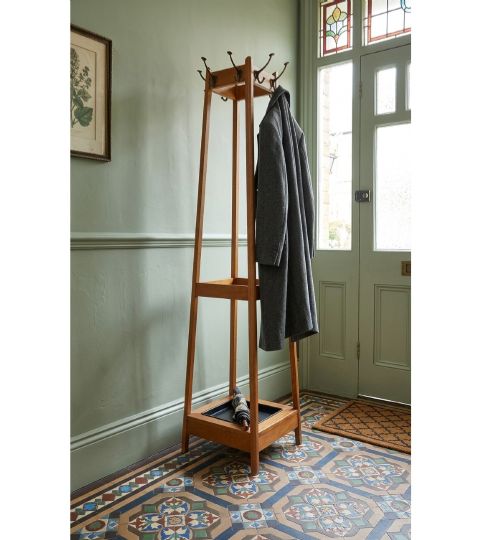
These pieces organise entranceways by holding daily outerwear and accessories. Coats and hats hang from the upper hooks while walking sticks and umbrellas rest in the lower wells.
Some variants include built-in seating or small cupboards for gloves and keys, keeping the hallway tidy.
Where should I place one?
Hall stands suit entrance halls, boot rooms and corridors with adequate clearance. They require sufficient wall space and floor depth to accommodate the projecting hooks and umbrella trays safely.
Positioning them near the main entrance allows visitors to deposit wet coats and umbrellas immediately upon entering.
How are periods identified?
Dating relies on stylistic markers, construction methods and timber choices. Pieces from the 1890s often exhibit heavier proportions and distinct copper or brass detailing.
Edwardian examples from around 1910 frequently incorporate lighter golden oak and more compact forms suited to smaller suburban hallways.
Are mirrors original?
Mirrors were commonly integrated into the backboards of these stands from the outset. Bevelled glass held within wooden frames is standard for pieces produced during this era.
Checking the silvering and the fit within the rebate helps confirm whether the glass has remained undisturbed since manufacture.