

Antique Oak Stick Stand
An antique oak stick stand brings practical storage and solid timber craftsmanship to a hallway.
What They Are
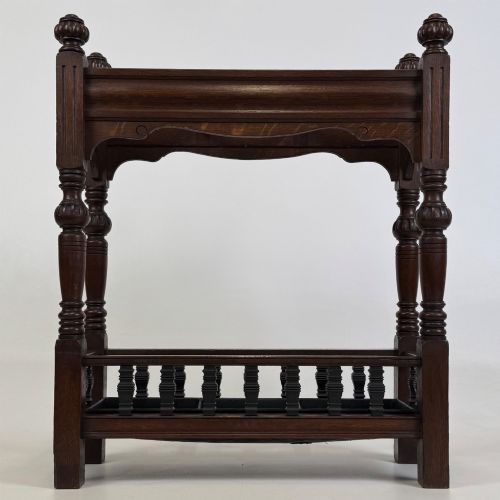
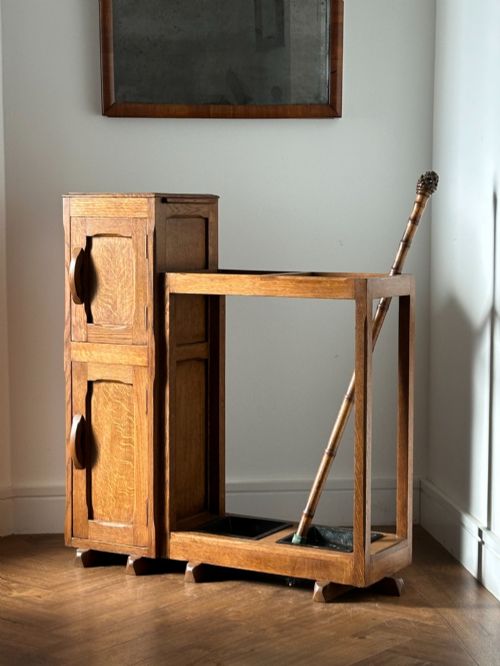
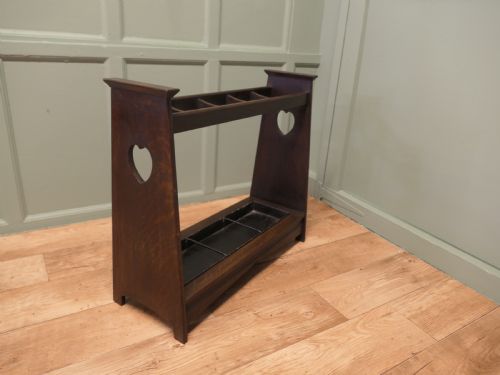
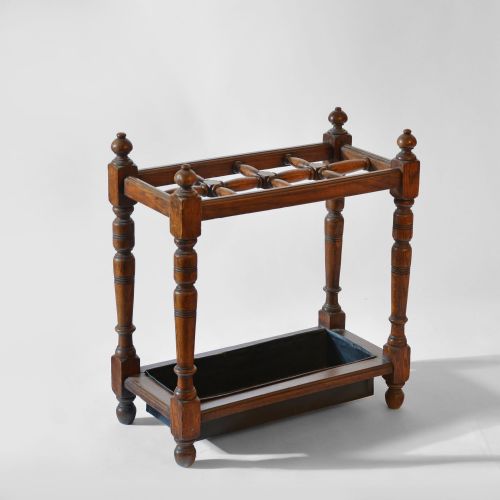
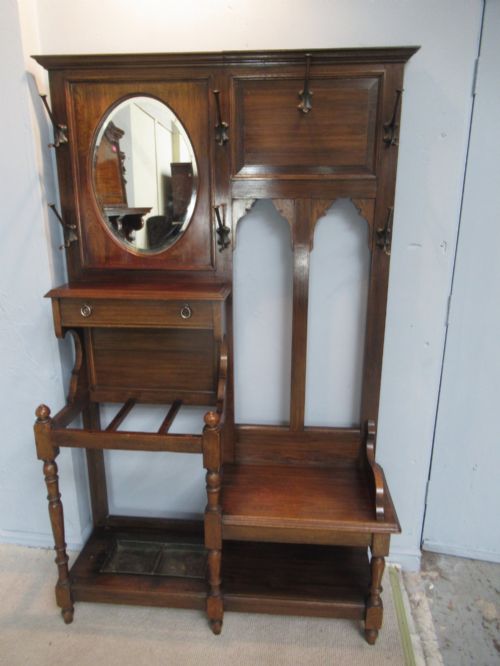
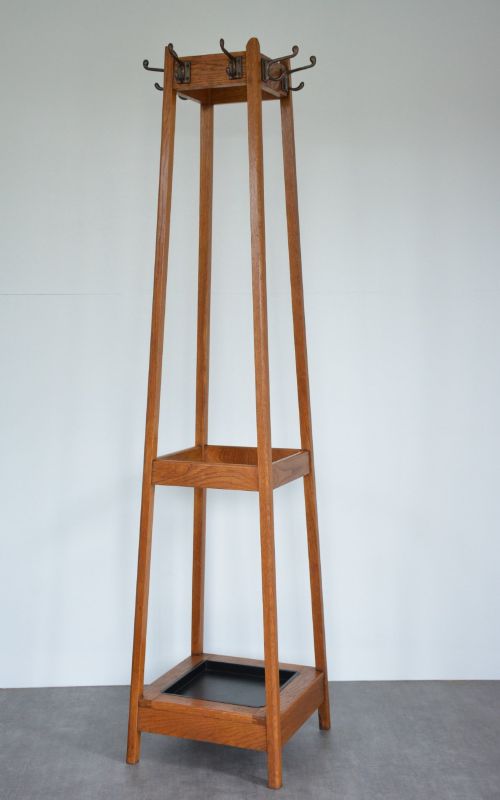
An antique oak stick stand provides a dedicated place for walking canes, umbrellas and hall essentials. The pieces gathered here range from tall barrel designs to combined hall stands with hooks and mirrors.
The versions most commonly met on this page date from the Victorian and Edwardian eras, alongside pieces from the Arts and Crafts movement. These utilitarian furnishings were made for country houses, town residences and reception halls.
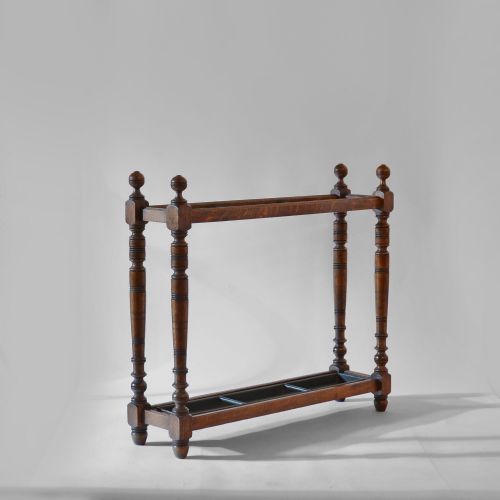
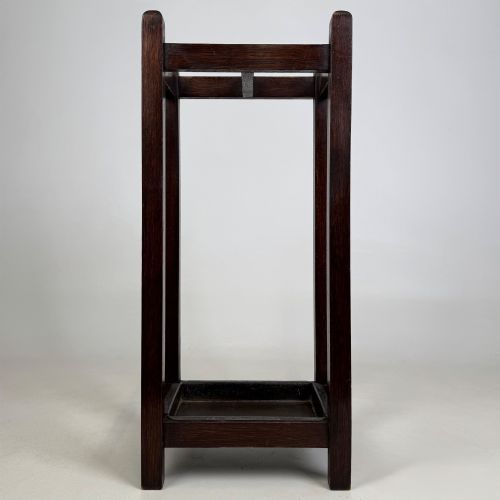
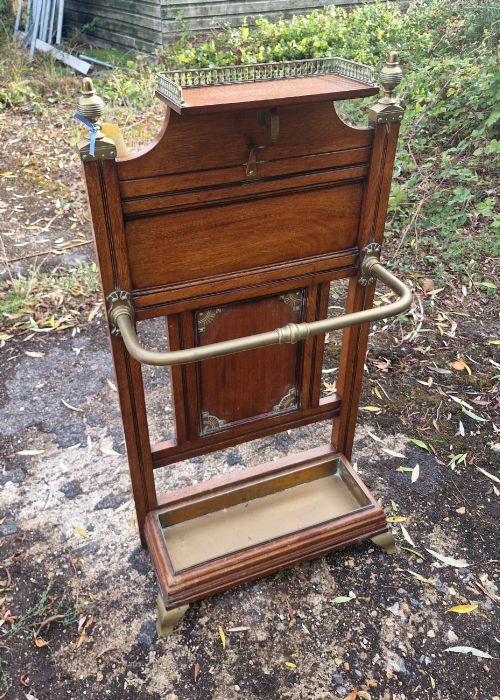
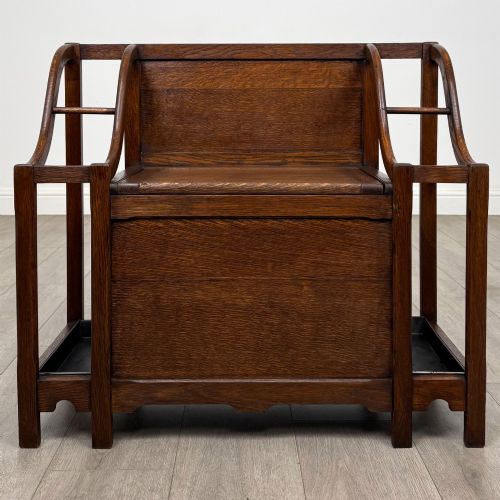
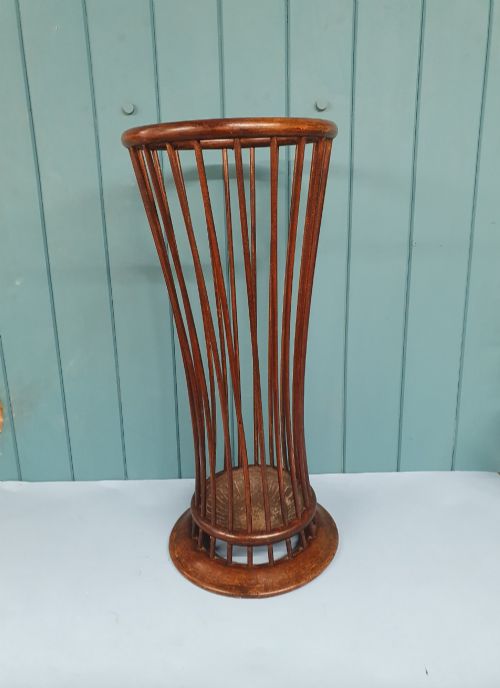
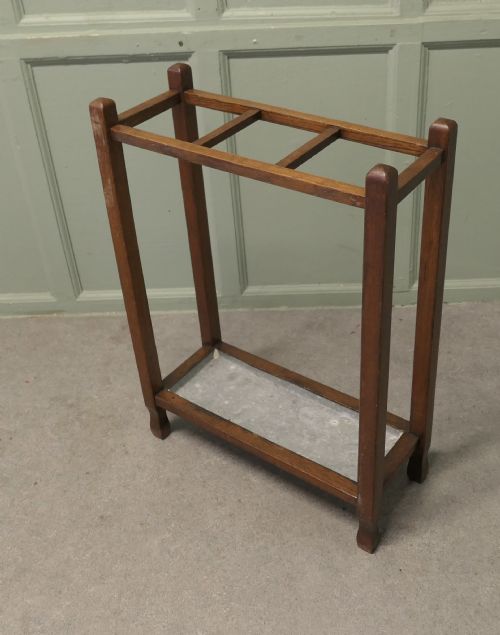
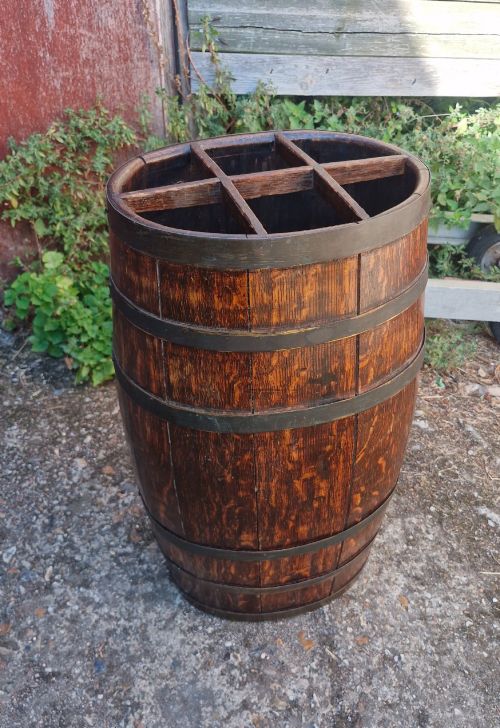
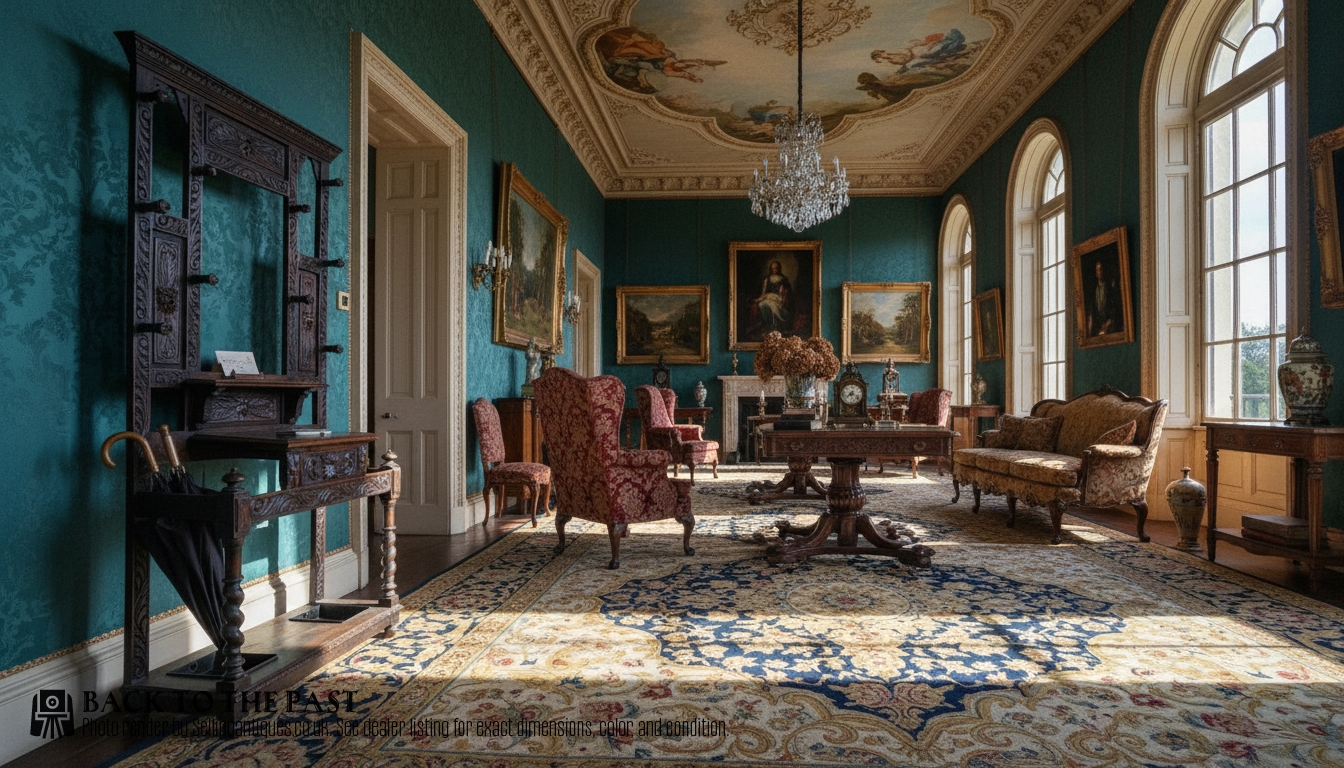
Forms vary from cylindrical coopered barrels bound in brass or copper to rectangular quadrant stands and larger hall furniture incorporating carved panels. Oak predominates as the primary timber, often paired with metal drip pans.
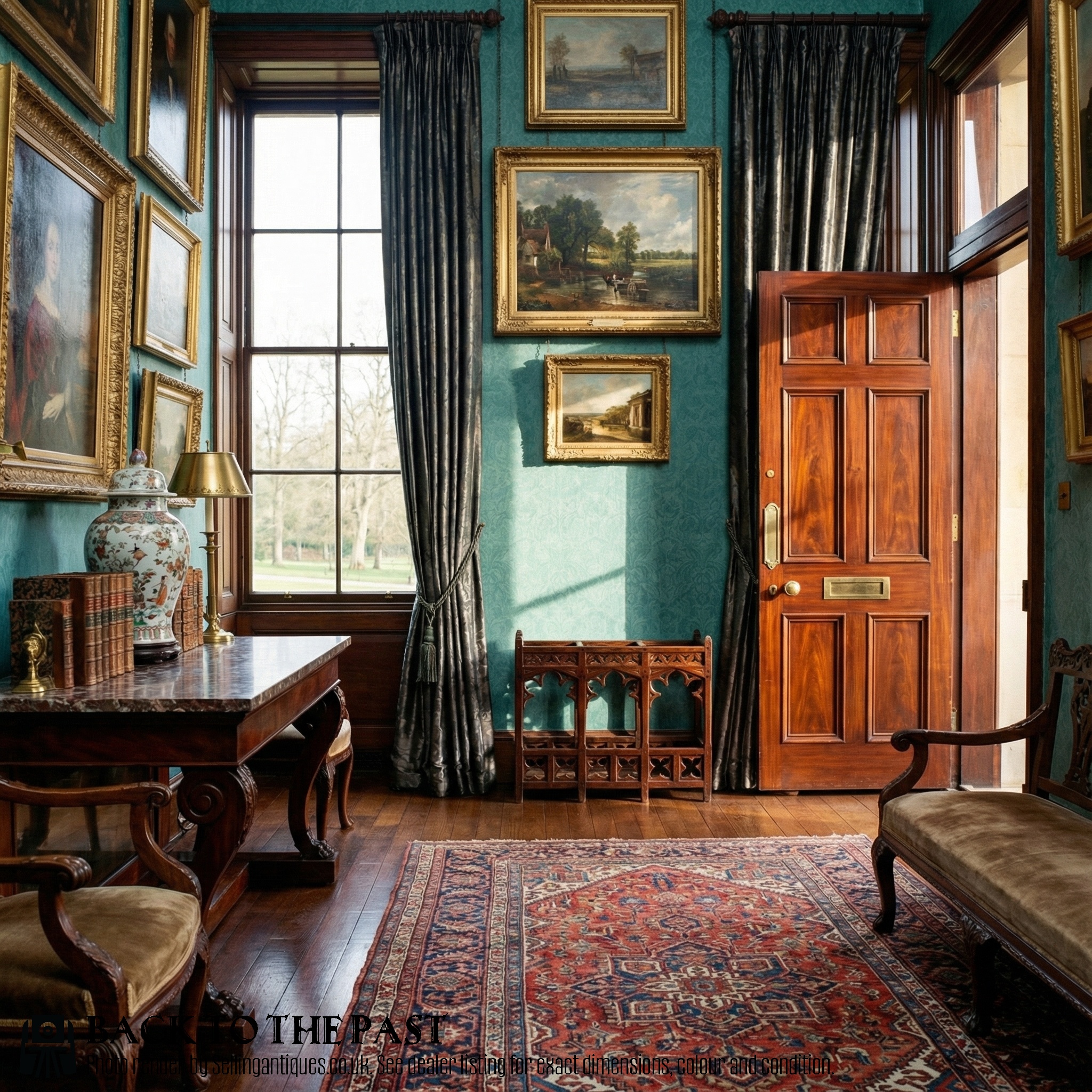
How They Were Made
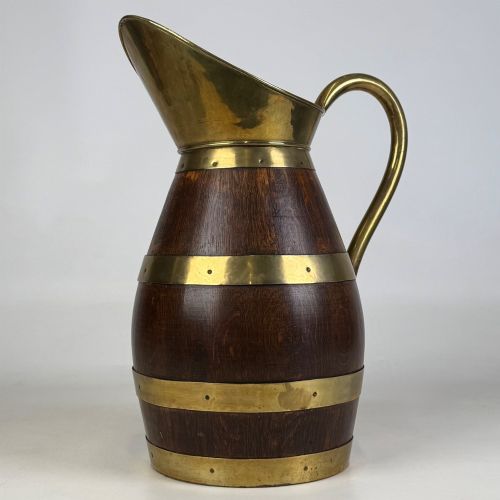
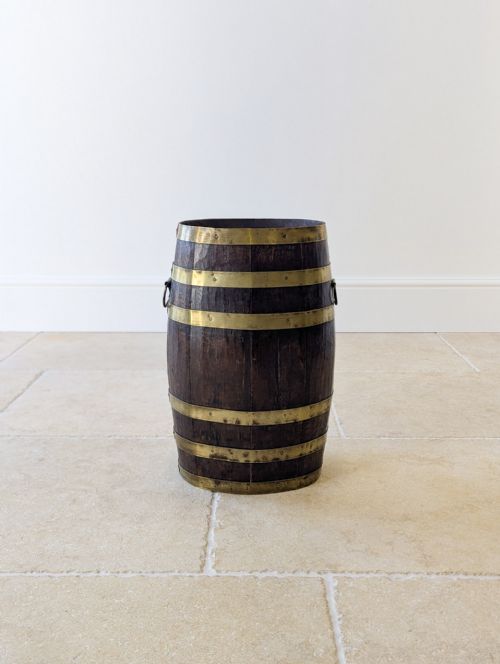
Coopered examples utilise curved oak staves held together by metal bands of brass or iron, much like traditional barrel construction. This technique allowed makers to create watertight oval or cylindrical vessels suitable for wet umbrellas.
Carpenters joined rectangular and hall stands using mortise and tenon joints, sometimes incorporating turned spindles, carved relief panels or applied mouldings. Metal components such as drip trays, hooks and rails employ cast brass, copper and iron.
Retail Price Guide 2026
Typical UK retail prices for oak stick stand, calculated from the Sellingantiques database of over a million retail prices indexed since 2003. This retail price guide relies exclusively on Sellingantiques data; no external sources or auction records are used, so the figures do not describe the wider market.
Several barrels began life holding whiskey before finding a second career as dignified umbrella retainers in country houses.
What Varies in Quality
Quality rests in the selection of the timber grain, the tightness of the coopered staves and the robustness of the metal hardware. Heavy brass or copper banding and original fitted drip trays indicate higher workshop standards.
Carving depth and execution distinguish standard hall furniture from more ambitious pieces associated with specific design movements like the Arts and Crafts style. The integrity of the internal structure and surviving original surface finishes determine the standing of each piece.
The Antique Oak Stick Stand Glossary
- Coopered
- Constructed from curved wooden staves joined edge-to-edge and secured with metal hoops. This method derives from traditional barrel-making.
- Drip tray
- A metal base insert placed inside the stand to catch water from wet umbrellas. These are frequently formed from brass, copper or zinc.
- Quadrant
- A shape designed to fit neatly into a room corner, possessing a curved front and two straight sides meeting at a right angle.
- Greenman
- A decorative architectural motif depicting a face carved from or entwined with leaves and vines. It appears on carved oak hall stands.
- Arts and Crafts
- A design movement valuing handcraftsmanship, simple forms and honest construction. Pieces from this period often display exposed joints and plain oak surfaces.
Frequently Asked Questions
Where were stick stands placed?
These furnishings stood in entrance halls, boot rooms and reception areas of larger homes. They offered visitors a place to leave wet walking gear before entering the main rooms.
Their practical placement near the front door meant they encountered heavy daily use and damp conditions.
How do I care for an oak stick stand?
Keep the timber clean with a soft cloth and occasional application of appropriate wax polish. Ensure that metal drip pans are emptied and dried regularly to prevent moisture damage to the wooden base.
Avoid placing the stand directly beside heat sources that might cause the oak staves to dry out and shrink.
What is a coopered barrel stand?
A coopered stand is built like a small wooden cask using curved oak staves bound by metal hoops. Makers adapted traditional barrel designs to hold walking sticks and umbrellas neatly.
Such vessels often feature brass or copper handles and watertight interiors.
How do I identify an Edwardian stick stand?
Edwardian pieces generally date from the early twentieth century and often exhibit lighter oak tones. They frequently combine umbrella storage with revolving coat hooks, mirrors or stick racks.
Design influences from the Arts and Crafts movement appear commonly in these later domestic furnishings.