


Carved Oak Coal Purdonium
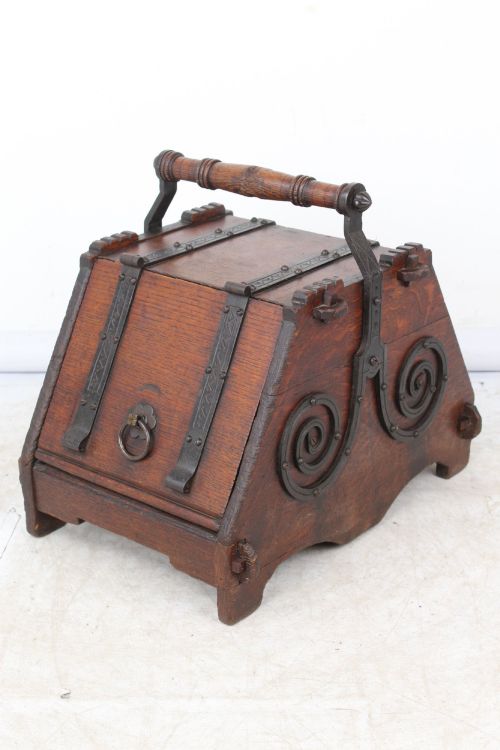
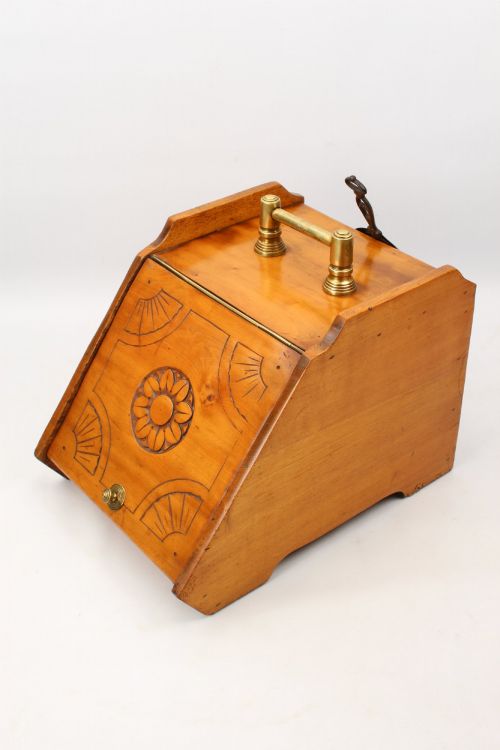
A carved oak coal purdonium brings heavy Victorian and Edwardian timber and bright brass hardware directly to the fireside.
Carved Oak Coal Purdonium
A carved oak coal purdonium is a fireside accessory designed to store and transport coal neatly beside the hearth. These pieces belong to the Victorian and Edwardian eras, emerging from the nineteenth century when domestic coal storage required robust and ornamental containment.
Most examples on this page take the form of drop-front cabinets, scuttles or purdoniums fashioned from solid timber. They often incorporate internal metal or glass liners and frequently retain their original shovels.
How they were made
Maker's workshops built these boxes using solid oak and occasionally pollard oak, applying deep relief carving to the drop fronts and panels. Wrought iron, metal and polished brass hardware provided structural reinforcement and lifting handles.
Internal components relied on removable metal liners to catch debris and moisture from the fuel. Hinges and drop-front mechanisms required durable brass mounts to withstand daily domestic use.
Some coal boxes feature carved Green Man faces glaring out at the hearth from beneath the coal dust.
What varies in quality
Quality rests in the depth and clarity of the timber carving, distinguishing simple panel work from elaborate Victorian Gothic or Green Man motifs. The weight and finish of the brass mounts and handles also signal the standard of the piece.
The survival of original internal liners and matching shovels elevates a box above those missing these components. Structural integrity in the drop-front mechanism dictates daily usability.
Christopher Dresser·Edwards and Roberts
The Carved Oak Coal Purdonium Glossary
- Purdonium
- A dedicated coal box or cabinet designed for domestic hearths, usually featuring a sloping drop front for easy access. The form became popular during the Victorian period.
- Drop front
- A hinged front panel that falls forward to reveal the internal coal compartment or liner. This mechanism allows fuel to be scooped out without opening a traditional top lid.
- Gothic Revival
- An architectural and decorative style drawing inspiration from medieval design, featuring pointed arches and heavy relief carving. This style appears frequently on Victorian fireside boxes.
- Pollard oak
- Timber taken from trees that have been pollarded, producing a dense wood with distinctive clustered grain patterns. It was selected for finer decorative furniture and purdoniums.
- Green Man
- A decorative architectural motif depicting a human face carved with leaves and vines issuing from the mouth. It represents rebirth and appears on certain carved Victorian coal boxes.
Carved Oak Coal Purdonium: Frequently Asked Questions
What is a coal purdonium?
A coal purdonium is a specialised Victorian or Edwardian cabinet designed to hold household coal beside the fireplace. It keeps fuel neatly enclosed and out of sight when not in use.
These boxes usually feature a drop-front mechanism and internal metal liners to manage soot and dirt.
How do you use a purdonium?
You lower the hinged drop front to access the metal or glass liner containing the coal. A matching shovel, often stored in a side rack or inside the box, is used to transfer fuel to the fire.
The sturdy brass handles allow the entire box to be carried when refilling is necessary.
How do I date an oak coal box?
Dating relies on stylistic clues such as Victorian Gothic carving, Edwardian proportions, or Art Nouveau detailing. Nineteenth-century examples often display heavier timber work and robust brass mounts.
Construction methods and the presence of original metal liners also help place the piece within the Victorian or Edwardian era.
Are original liners important?
Original metal or glass liners protect the surrounding oak from moisture, coal dust, and scratching. Finding a box with its original liner intact is desirable for authenticity.
Many surviving pieces retain these functional components alongside their matching coal shovels.