



Antique Fireside Storage
Antique fireside storage keeps fuel near the hearth in brass, copper, and oak.

Antique Fireside Storage
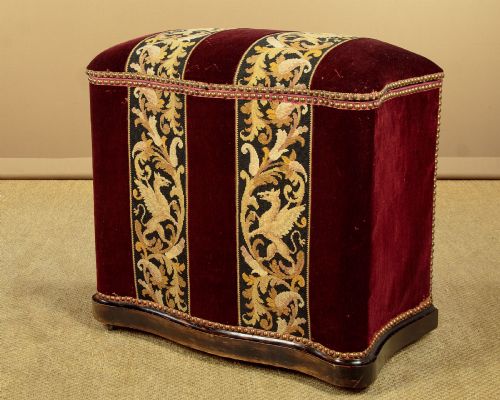
Antique fireside storage encompasses coal boxes, log bins, scuttles, and purdoniums designed to hold fuel neatly beside the fireplace. These pieces emerge predominantly from the Victorian and Edwardian eras, alongside Georgian and early twentieth-century examples.
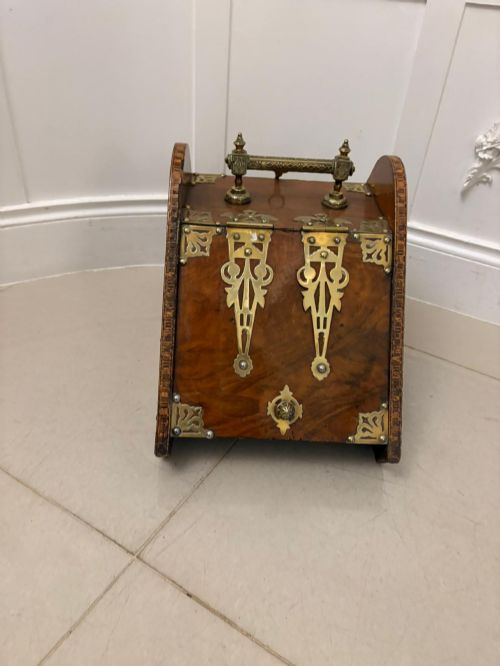
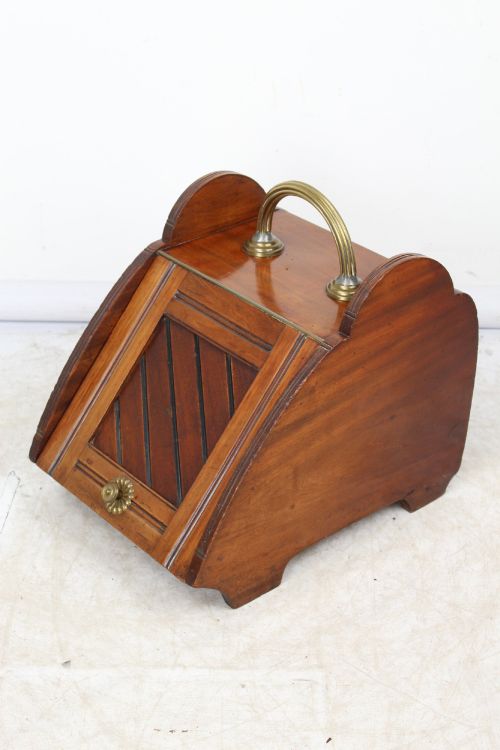
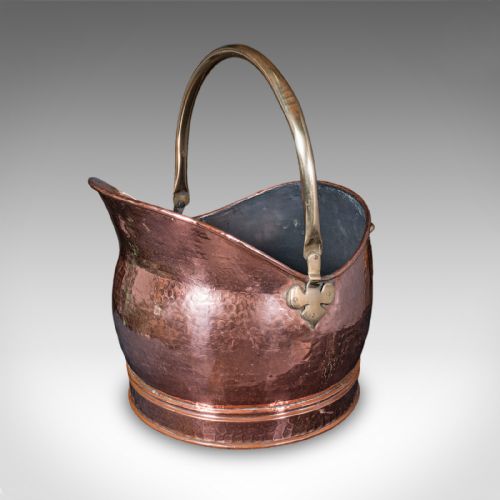
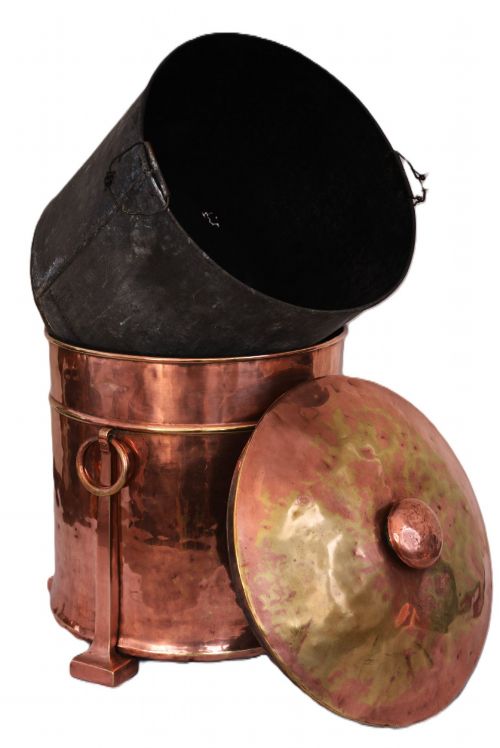
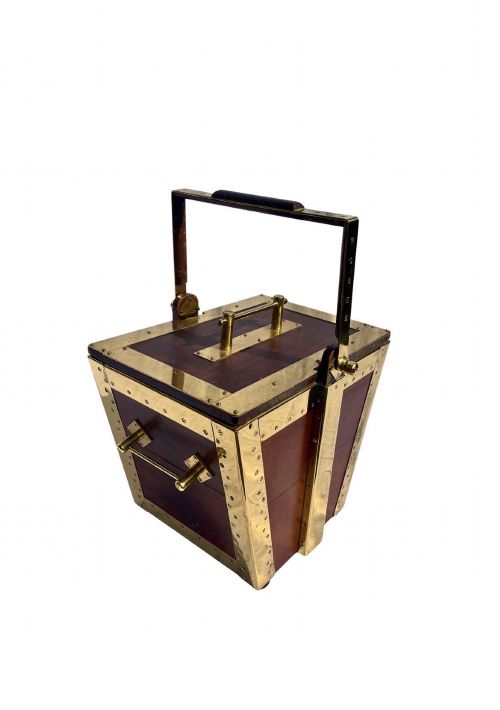
The most common form you will meet on this page is the Victorian coal box or scuttle in oak, walnut, or heavy brass and copper. Many incorporate metal liners, drop-down lids, and matching shovels for daily hearth maintenance.
Beyond standard coal receptacles, the selection includes rustic country log baskets in pine, coopered fire buckets, and inlaid rosewood cabinets. These containers shift from utilitarian metal buckets to refined wooden furniture built for polite drawing rooms.
How these pieces were made
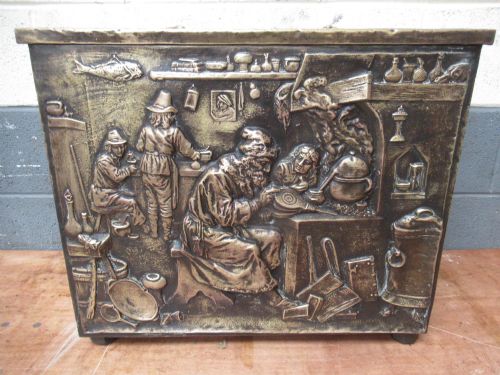
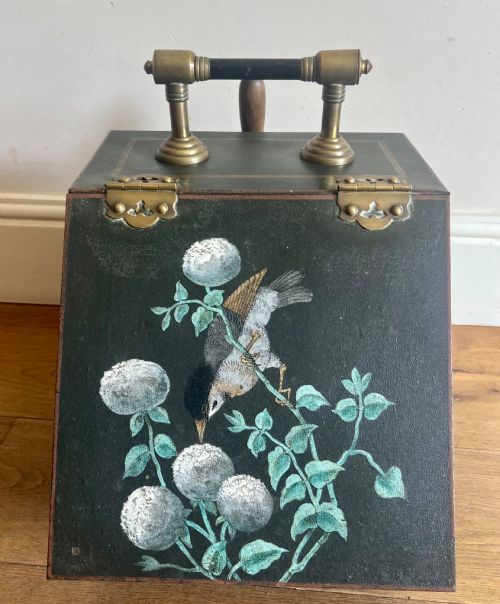
Makers utilised durable metals such as brass, copper, iron, and tole ware, often hammering, embossing, or riveting sheets together into helmets, buckets, and bins. Brass mountings, hinges, and carrying handles secure the wooden bodies of oak and walnut boxes.
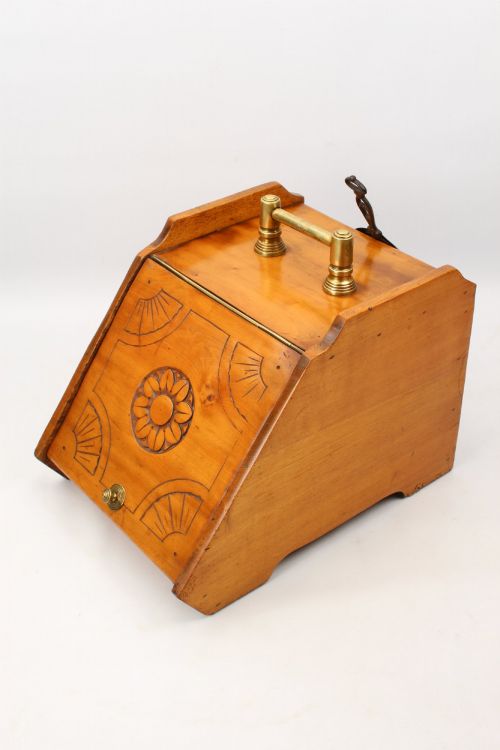
Woodworkers constructed timber boxes using solid oak, mahogany, walnut, and pine, frequently adding coopered staves, carved panels, or delicate inlaid rosewood details. Hand finishes and original interior metal liners protect the timber from damp fuel.
Antique Fireside Storage Retail Price Guide 2026
Typical asking prices for fireside storage among the pieces listed under this phrase on Sellingantiques today, from the lower quarter to the upper quarter. They describe what is for sale here now, not the wider market.
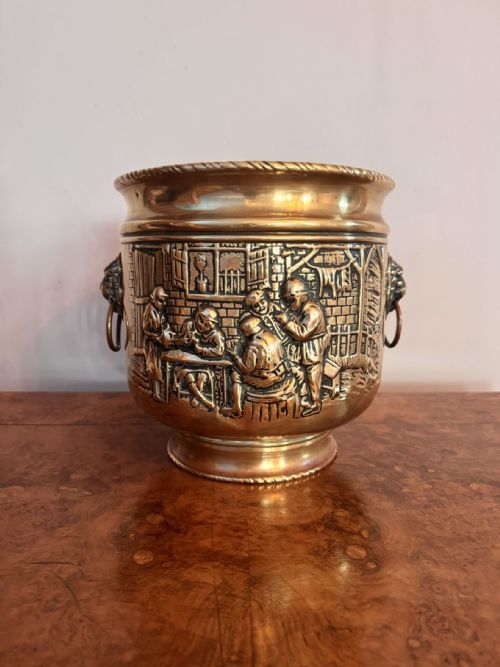
Several bins double as plant pots, proving that nineteenth-century coal storage finds a cheerful second act holding indoor ferns.
What varies in quality
Quality rests upon the weight of the metal and the selection of timber, distinguishing heavy gauge brass and deeply figured walnut from thin sheet metal and plain pine. Superior examples retain their original brass mountings, fitted shovels, and watertight metal liners.
Craftsmanship defines the upper tier through crisp embossing, tight joinery, and refined decorative details such as inlaid stringing or hand-hammered copper bands. Lesser pieces show utilitarian construction with simple joints and plain surfaces intended solely for back-of-house utility.
The Antique Fireside Storage Glossary
- Purdonium
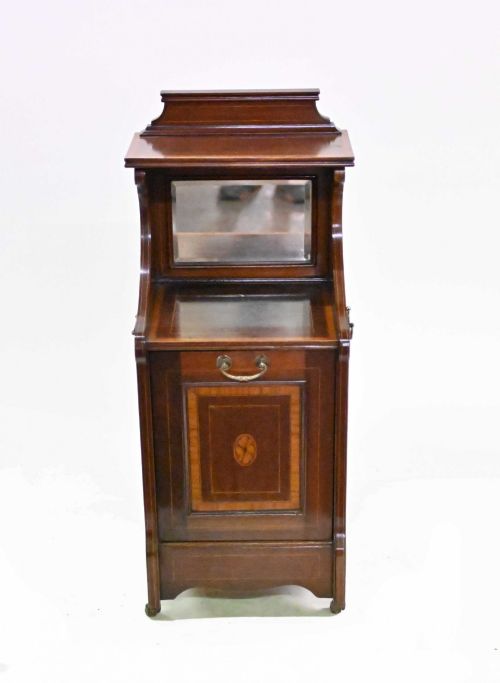
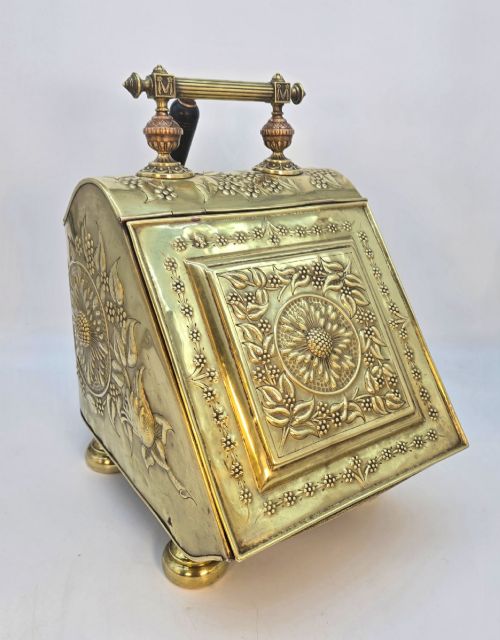
- A specialised coal cabinet featuring a sloping front door and a built-in internal shovel compartment. These drop-front boxes hide the fuel completely inside structured wooden furniture.
- Coal Scuttle
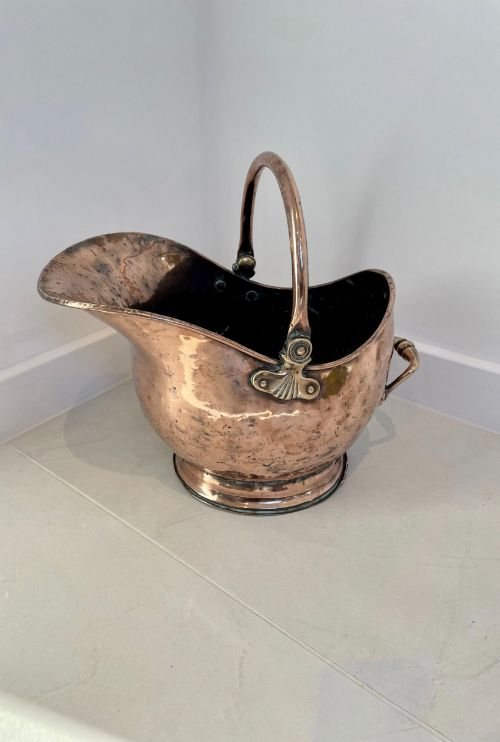
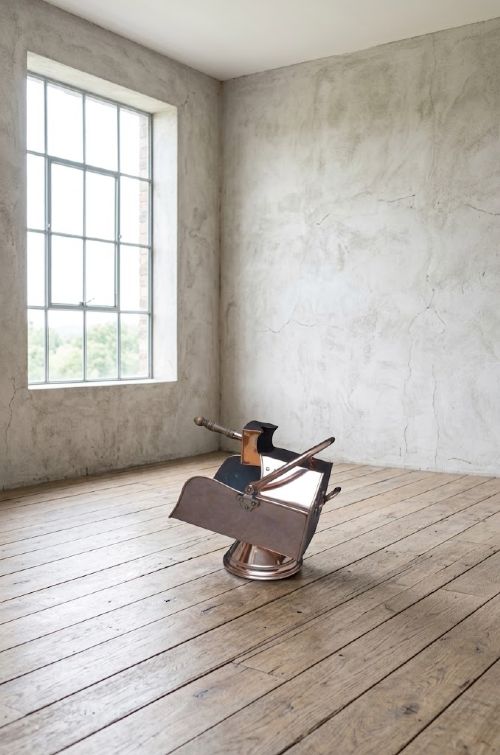
- A deep bucket or helmet-shaped vessel with a hinged handle designed for carrying coal to the grate. They range from simple iron buckets to embossed brass display pieces.
- Cellarette
- A formal cellar box or container originally used for chilling wine that occasionally crosses over into fireside storage use. Georgian examples display fine cabinetmaking and secure locking lids.
- Coopered
- A method of construction where narrow staves of wood are joined tightly together with metal bands, much like a traditional water barrel or fire bucket.
Antique Fireside Storage: Frequently Asked Questions
What is a purdonium?
A purdonium is a dedicated coal box with a slanted front panel that opens to release fuel. It typically houses an internal metal liner and comes with a matching shovel stored inside.
Cabinetmakers designed these enclosed units during the Victorian period to keep coal dust contained while matching the surrounding parlour furniture.
How do I use a coal scuttle?
A coal scuttle serves to transport fuel from an outdoor bunker or cellar directly to the fireplace hearth. The pivoting handle allows for steady pouring into the fire grate.
Many antique versions include a small internal scoop or shovel resting in a side bracket for daily tending.
Are these pieces waterproof?
Most antique coal boxes and log bins feature removable metal liners made of zinc, copper, or galvanised iron. These liners catch moisture from logs and prevent coal dust from staining the wooden exterior.
If a wooden box lacks its original metal liner, it suits dry kindling or blanket storage better than damp logs.
How do I date a brass coal bin?
Dating relies on manufacturing techniques, styles, and materials, with heavy hand-embossed brass and coal helmets pointing to the Victorian era. Edwardian and later pieces often feature lighter gauge metal and simpler Arts and Crafts or Art Deco lines.
Examine the fixings, handles, and hinges for signs of period hand-craftsmanship rather than modern machine production.