



Victorian Oak Purdonium
A victorian oak purdonium is a fireside coal box designed to hold fuel neatly while looking like a handsome piece of furniture.

Victorian Oak Purdonium
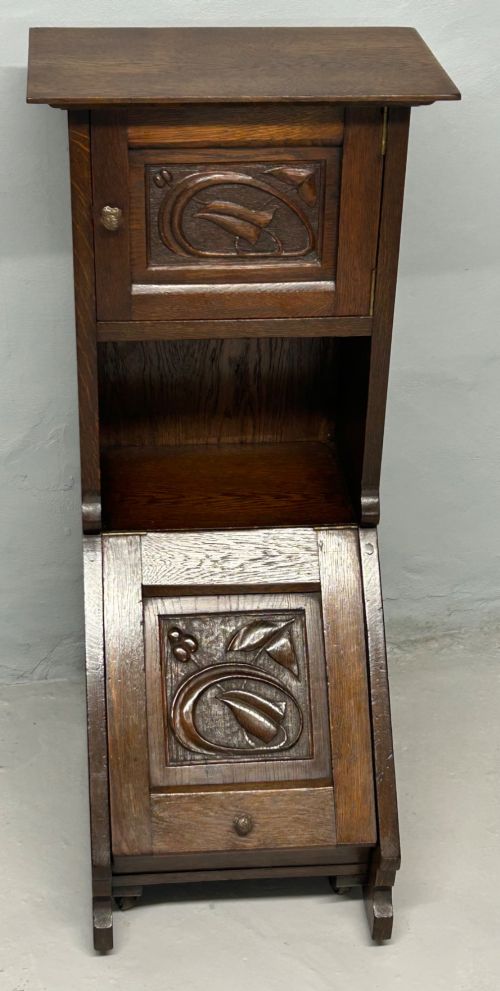
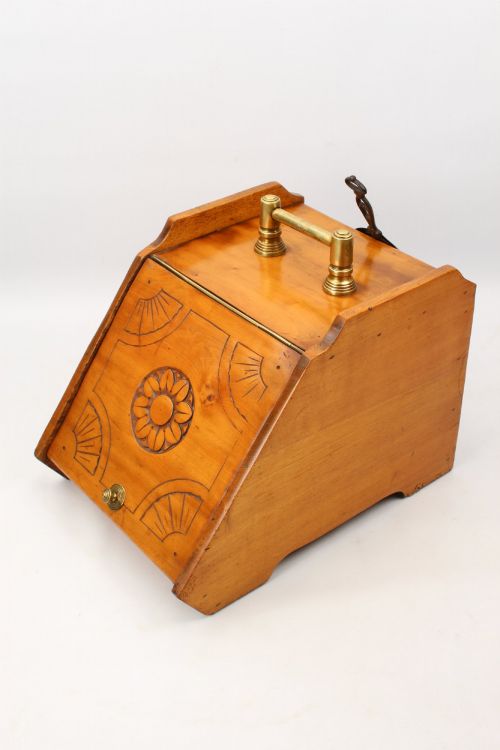
When you search for a victorian oak purdonium, you are looking at nineteenth-century fireside storage boxes that house coal near the hearth. These items generally take the form of drop-front cabinets or sloping coal scuttles, often containing an original metal or glass liner to catch dust and debris.
The versions met most frequently on this page date from the Victorian and Edwardian periods, stretching from the middle decades of the nineteenth century up to 1900. Alongside standard oak constructions, examples employ pollard oak and burr oak to provide richer grain patterns.
Many of these pieces double as log bins or fireside storage boxes, and some incorporate carved decoration or a Green Man motif. They stand beside the fireplace as practical accessories that conceal domestic fuel.
How They Were Made
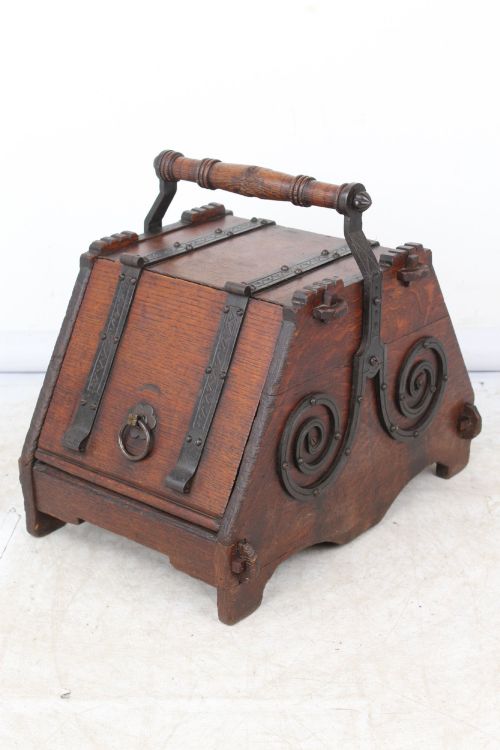
Joiners built these fireside boxes primarily from solid oak, utilising pollard oak and burr oak veneers to create decorative movement on the drop-front panels and lids. Carved details adorn the exterior surfaces of many examples, ranging from geometric strapwork to gothic revival panels.
Metal components play a crucial role in the construction, with brass handles, hinges and shovels fitted to the wooden bodies. Wrought iron and standard metal liners sit inside the boxes to hold the coal safely.
Victorian Oak Purdonium Retail Price Guide 2026
Typical asking prices for victorian oak purdonium among the pieces listed under this phrase on Sellingantiques today, from the lower quarter to the upper quarter. They describe what is for sale here now, not the wider market.
Listings feature oak, pollard oak, burr oak, and brass components across Victorian and Edwardian periods.
What Varies in Quality
The standard of carving sets individual boxes apart, moving from plain timber panels to deeply worked gothic revival designs and figural carvings. Timber selection also dictates the visual weight, with burr oak and pollard oak offering greater depth of grain than plain quarter-sawn boards.
Hardware execution marks the difference between standard utility items and finer pieces, with substantial brass handles and complete original shovel and liner sets commanding closer attention from collectors.
Christopher Dresser
The Victorian Oak Purdonium Glossary
- Purdonium
- A specialised fireside coal box or cabinet featuring a drop front or sloping lid for dispensing fuel. This term gained popularity during the Victorian era for domestic coal containers.
- Pollard Oak
- Timber taken from trees that have been pollarded, producing a dense cluster of branches and a highly figured, mottled grain. Cabinetmakers utilised this wood for decorative fronts.
- Drop Front
- A hinged panel that lowers to provide access to the interior compartment of a cabinet or coal box. This mechanism allows fuel to slide forward easily.
- Gothic Revival
- An architectural and decorative style drawing inspiration from medieval forms, featuring pointed arches and heavy carving. Pieces from this movement often display dark timber finishes.
- Burr Oak
- Wood harvested from the abnormal growths on oak trees, yielding swirling grain patterns prized by furniture makers. It appears on the display surfaces of select boxes.
Victorian Oak Purdonium: Frequently Asked Questions
What is a purdonium used for?
A purdonium serves as a dedicated fireside container for storing coal and fuel near an open hearth. The enclosed design keeps dust contained and hides messy fuel inside a tidy wooden cabinet.
Most units include a drop front or tilted opening alongside a removable metal liner for easy ash disposal. A matching shovel typically hangs on the side or fits inside.
How do I tell a purdonium from a coal scuttle?
A coal scuttle is traditionally an open bucket with a swinging handle designed for carrying fuel from a cellar. A purdonium is a structured cabinet built to stay permanently by the fireplace.
Purdoniums look like small pieces of furniture with feet, flat tops, and hinged doors rather than open bucket shapes.
Where should I place a purdonium in a room?
These boxes sit naturally beside a fireplace or wood-burning stove as part of the hearth arrangement. The flat top surface can also display small decorative objects.
Keep the wood away from direct, intense heat sources to prevent the oak panels from drying out or splitting over time.
How do I clean an antique oak purdonium?
Dust the exterior oak surfaces regularly with a soft dry cloth to remove soot and surface particles. Feed the wood occasionally with a traditional beeswax polish to nourish the grain.
Avoid using harsh chemical sprays or soaking the metal liner while it sits inside the wooden cabinet to protect the antique joinery.