

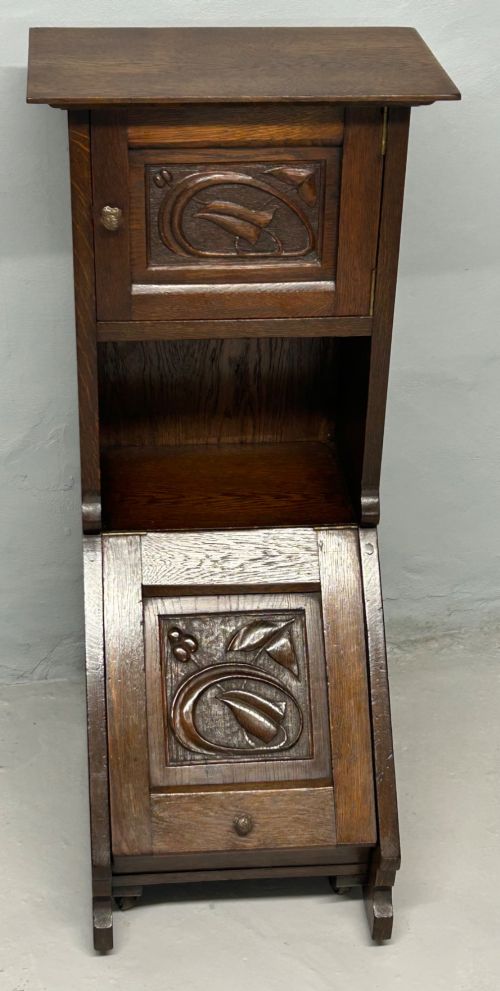
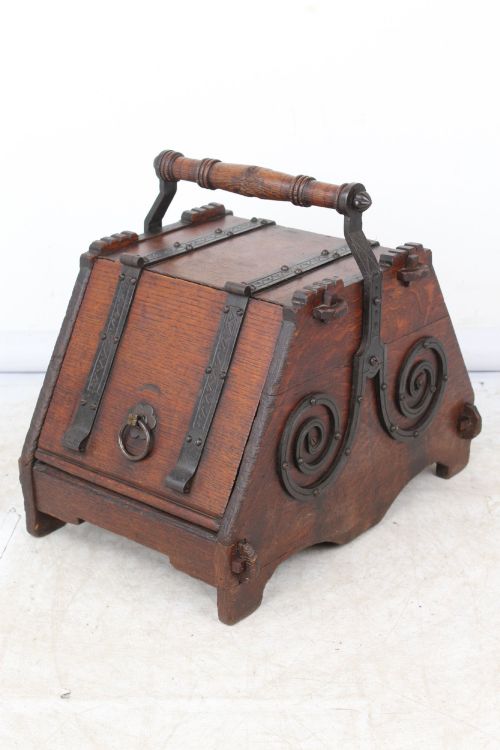
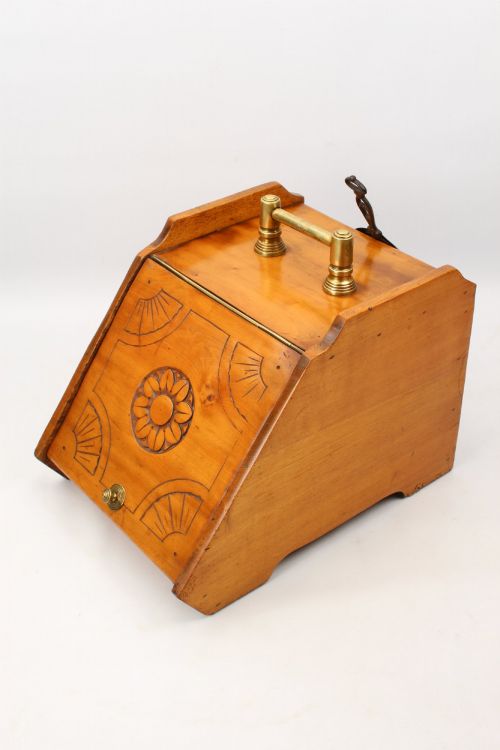


Carved Oak Coal Scuttle
These carved oak coal scuttles combine robust utility with period craftsmanship, bringing practical fireside storage to any hearth.

Carved Oak Coal Scuttle
The pieces on this page span the late nineteenth and early twentieth centuries, featuring robust oak construction paired with metal fittings. These utilitarian objects range from simple wooden boxes to elaborate Gothic Revival and Art Nouveau designs.
Most examples date from the 1880s through to 1900, reflecting the heavy demand for domestic coal storage during the Victorian and Edwardian eras. They serve as both practical accessories and decorative period furniture for traditional interiors.
How they were made
Maker's workshops built these coal scuttles using solid oak boards joined with traditional cabinetry techniques, often incorporating carved surface enrichment. Drop front mechanisms and hinged lids allowed easy access to the interior fuel space.
Makers reinforced the wooden structures with brass and wrought iron mountings, hinges, and handles to withstand daily use. Internal metal liners or removable shovels provided protection against damp coal and ash.
Carved Oak Coal Scuttle Retail Price Guide 2026
Typical asking prices for carved oak coal scuttle among the pieces listed under this phrase on Sellingantiques today, from the lower quarter to the upper quarter. They describe what is for sale here now, not the wider market.
What varies in quality
Quality rests in the crispness of the carving and the substantial weight of the brass or iron hardware fitted to the oak body. Finer examples display detailed Gothic Revival or Art Nouveau motifs rather than plain panels.
The structural integrity of the drop front mechanism and the condition of the internal metal components separate standard utility boxes from superior decorative purdoniums.
Christopher Dresser
The Carved Oak Coal Scuttle Glossary
- Purdonium
- A specialised coal box or cabinet designed with a sloping front and a hinged lid to dispense fuel cleanly. This term became popular in the Victorian period for refined fireside coal receptacles.
- Coal Scuttle
- A vessel or box traditionally used for holding and carrying coal to the fire. These items evolved from simple open buckets into enclosed wooden cabinets by the late nineteenth century.
- Gothic Revival
- An architectural and decorative style drawing inspiration from medieval forms, characterised by pointed arches and heavy carved ornamentation. This style frequently appears on Victorian fireside accessories.
- Drop Front
- A hinged cabinet door that opens downward to provide access to an internal compartment or metal liner. This mechanism is common in nineteenth-century oak coal cabinets.
- Art Nouveau
- An international style of art and design marked by intricate sinuous curves and organic plant-like motifs. It emerges on Edwardian pieces alongside traditional oak carving.
Carved Oak Coal Scuttle: Frequently Asked Questions
What is a purdonium?
A purdonium is an enclosed wooden coal box featuring a drop front or tilted opening for easy fuel retrieval. It kept messy coal hidden from view in Victorian and Edwardian drawing rooms.
These pieces combined furniture-grade cabinetry with practical metal liners, making them more decorative than traditional open metal buckets.
How do I date a coal scuttle?
Dating relies on stylistic details, timber selection, and hardware construction characteristic of specific decades. Pieces from the 1880s often display heavy Gothic Revival carving, while 1900 examples may incorporate Art Nouveau motifs.
Makers utilised sturdy oak combined with brass or wrought iron across both Victorian and Edwardian periods, so hinges and handles provide additional clues.
Can I still use these for coal?
Many surviving oak scuttles retain their internal metal liners designed to hold solid fuel safely. However, modern owners frequently repurpose them as stylish storage boxes for kindling, magazines, or blankets.
Using them for dry storage preserves the historic interior linings and prevents moisture damage to the antique timber.
How do I clean carved oak?
Maintenance involves dusting the carved surfaces regularly with a dry cloth and occasionally applying a mild beeswax polish to nourish the grain. Avoid soaking the wood or using harsh chemical cleaners that might strip the finish.
Brass mountings can be gently cleaned with a specialised metal polish while taking care not to stain the surrounding oak.