


Dark Oak Coal Box
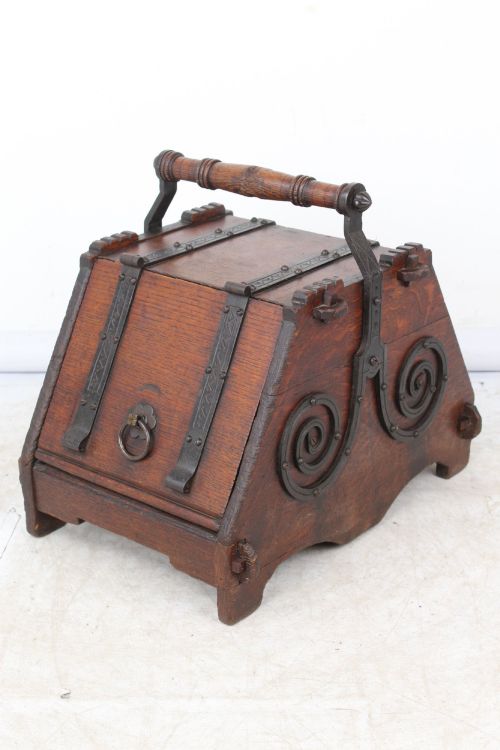
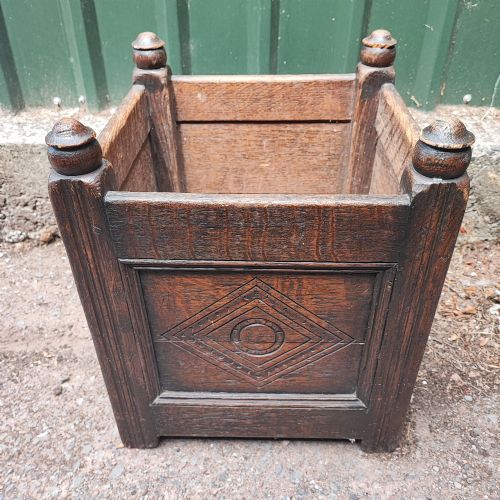
A dark oak coal box brings heavy timber and dark grain to the hearth, offering a practical vessel for fuel that doubles as a sturdy fireside furnishing.
Dark Oak Coal Box
A dark oak coal box stands by the fireplace to hold solid fuel, rendered in sturdy timber with a deep finish. The selection spans standard purdoniums with interior metal linings to rustic log boxes and novelty forms shaped like railway wagons.
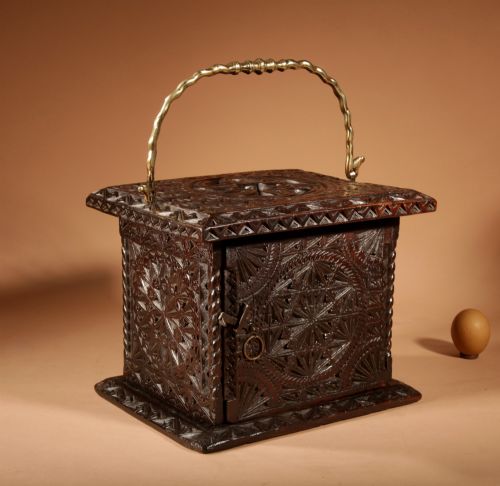
Most pieces seen here belong to the Victorian and Edwardian eras, alongside earlier Georgian examples and seventeenth-century chip-carved foot stoves. Forms vary from simple country chests to Gothic Revival scuttles and brass-mounted purdoniums complete with matching shovels.
Materials and Construction
Makers utilised solid oak boards joined with traditional carpentry methods, often enhanced by hand-carving or chip-carved geometric patterns. Timber surfaces were polished or waxed to achieve a deep dark tone.
Mounts, handles, and hinges are forged from brass, iron, or wrought iron, whilst some containers incorporate interior metal liners to hold coal safely. Silver plate hardware occasionally appears on novelty biscuit boxes styled after fireside containers.
Railway enthusiasts can store biscuits or smoke tobacco inside miniature wooden coal wagons complete with tiny metal wheels.
Assessing Quality and Execution
Quality rests in the crispness of the carving, the thickness of the oak boards, and the robust condition of the brass handles and hinges. Plain country boxes rely on honest timber construction, whereas finer Victorian examples feature detailed Gothic Revival motifs or specialised purdonium mechanisms.
The integrity of the interior metal liner and the survival of original shovels or fittings elevate a piece. Finer items demonstrate careful jointing and substantial metalwork designed to withstand heavy daily use by the hearth.
Christopher Dresser
The Dark Oak Coal Box Glossary
- Purdonium
- A specialised coal box featuring a sloping front drop-down door and a built-in compartment for a shovel. This Edwardian and Victorian form keeps coal neatly enclosed beside the fireplace.
- Coal Scuttle
- A deep fireside container traditionally used for carrying coal from a cellar to the hearth. These pieces often feature a pivoting top handle and a flat base for standing.
- Gothic Revival
- An architectural and decorative style drawing inspiration from medieval forms. Pieces in this manner display pointed arches, heavy tracery, and robust proportions.
- Chip Carving
- A primitive technique where small chips are removed from a single wooden surface to create geometric patterns. This style appears on seventeenth-century foot stoves and folk art items.
- Foot Warmer
- A low wooden box containing a heated metal pan to warm the feet during cold weather. Early examples frequently employ intricate carved decoration across the lid.
Dark Oak Coal Box: Frequently Asked Questions
What is a purdonium?
A purdonium is a dedicated fireside coal container featuring a hinged flap or drop-down front for easy access to the fuel. They often include an interior metal scuttle and a matching shovel stored within the housing.
These cabinets were popular during the Victorian and Edwardian periods, designed to keep coal dust contained while presenting a tidy wooden exterior in the reception room.
How do I clean dark oak?
Clean dark oak surfaces using a soft, dry cloth to remove dust and debris. Avoid harsh chemical cleaners that strip the historic finish.
Apply a quality beeswax periodically to nourish the dry timber and maintain the deep sheen characteristic of antique oak furniture.
Are these boxes safe for real coal?
Most antique coal boxes contain a removable metal liner designed to hold solid fuel safely without damaging the surrounding wooden structure. Inspect the interior metal insert to ensure it remains intact before loading heavy fuel.
If the metal liner is missing or corroded, many owners choose to use the wooden container for logs, kindling, or magazine storage instead.
How do I date a coal box?
Dating relies on examining the timber preparation, hardware materials, and stylistic motifs such as Gothic Revival carving or Edwardian brass mountings. Eighteenth-century and earlier pieces exhibit hand-sawn board marks and simpler, heavier construction.
Later Victorian and Edwardian items often incorporate patented mechanical hinges for drop-down purdonium doors and standardised brass fixings.