
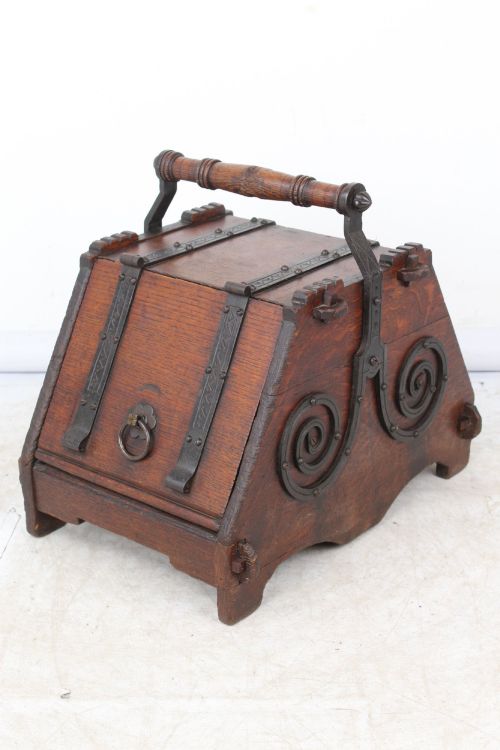
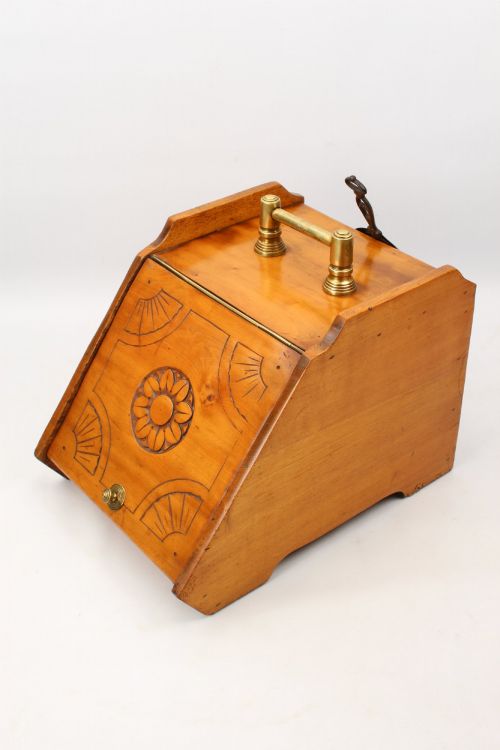


Carved Oak Purdonium
These carved oak purdoniums are practical fireside coal scuttles and boxes that bring robust Victorian and Edwardian craftsmanship directly to the hearth.
Carved Oak Purdonium
A carved oak purdonium is a dedicated fireside storage box designed to hold coal neatly beside a fireplace. Most examples on this page date from the Victorian and Edwardian periods, stretching from eighteen-eighty to nineteen hundred.
You will encounter pieces taking the form of drop-front cabinets, lidded coal scuttles, and specialised receptacles often accompanied by their original metal liners and matching shovels. Some variants incorporate hall seat configurations or elaborate Gothic carvings into their wooden frames.
These items served a purely domestic yet prominent function in nineteenth-century homes, keeping fuel close at hand while maintaining a tidy, decorative appearance in the reception room. The prevalence of oak construction ensures a sturdy build suited to daily use.
How they were made
Makers built these pieces primarily from solid oak and pollard oak, utilising dense timber capable of withstanding the heavy loads of coal and frequent handling. Woodworkers employed traditional joinery techniques alongside decorative carving to adorn the drop fronts and panels.
Functional hardware played a vital role in construction, with manufacturers mounting brass handles, hinges, and wrought iron or metal fittings onto the wooden bodies. Many incorporate internal removable metal liners designed to contain coal dust and facilitate easy cleaning.
Listings on this page feature oak, pollard oak, brass, and wrought iron across nineteenth-century and early twentieth-century forms.
What varies in quality
The standard of a carved oak purdonium rests largely on the depth and crispness of its woodwork, ranging from simple paneling to intricate Gothic revival motifs or Green Man carvings. Finer specimens display superior figure in the oak timber, sometimes utilising pollard oak for striking grain patterns.
Hardware integrity also distinguishes the range, as substantial brass mounts and robust drop-front mechanisms demonstrate higher-grade manufacturing than standard iron fittings. The presence of matching original shovels and intact metal liners elevates the completeness of a piece.
Christopher Dresser·Edwards and Roberts
The Carved Oak Purdonium Glossary
- Purdonium
- A specialised coal box or cabinet designed for the domestic hearth, usually featuring a sloping drop front or hinged lid to dispense fuel. The term gained common usage during the Victorian era for these refined fireside containers.
- Drop front
- A hinged door that opens downward to grant access to the interior compartment or removable metal liner. This mechanism allows for easy scooping of coal without removing the entire container lid.
- Green Man
- A sculptural architectural ornament depicting a human face entwined with or sprouting foliage, occasionally found carved onto Victorian furniture. It symbolizes rebirth and appears on select Gothic revival fireside pieces.
- Pollard oak
- Timber taken from a tree that has been pollarded, resulting in a gnarled grain pattern with dense, decorative clusters. Cabinet makers prized this wood for its distinctive visual texture on prominent panels.
- Original liner
- The internal metal or iron bucket fitted inside the wooden housing to hold the coal safely. Surviving original liners maintain the historical integrity of the purdonium.
Carved Oak Purdonium: Frequently Asked Questions
What is a carved oak purdonium?
A carved oak purdonium is an enclosed wooden coal box designed during the Victorian and Edwardian eras to store fireplace fuel neatly in a parlor or living room.
Unlike an open bucket, these containers use a drop front or lid to conceal the coal while housing a removable metal liner inside for practical refilling.
How were they used beside the fire?
These boxes sat close to the hearth to provide a ready supply of coal for the fire without exposing the messy fuel to the room.
Households used the accompanying metal shovel to transfer coal from the internal liner directly into the grate, keeping carpets clean of dust and debris.
How do I clean the interior liner?
The internal metal or iron liner lifts entirely out of the wooden oak housing so you can empty coal dust and ash away from the finished woodwork.
Users should wipe the metal surface with a dry cloth and ensure it is completely free of moisture before placing it back inside the cabinet.
How do I tell Victorian from Edwardian pieces?
Victorian examples often feature heavier, more ornate details such as Gothic revival motifs, dark finishes, and deeply carved panels.
Edwardian pieces tend to display lighter oak tones, sometimes incorporating cleaner lines alongside simpler decorative carving or early Art Nouveau influences.