
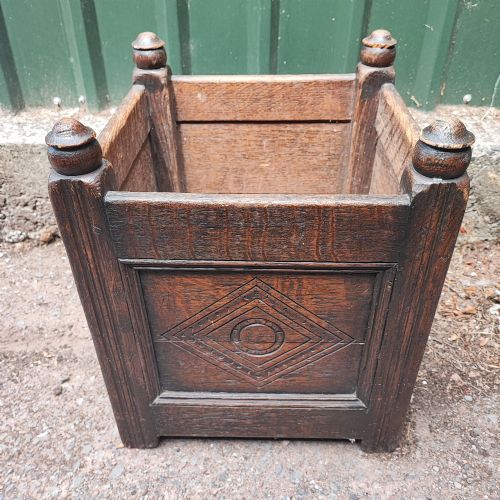
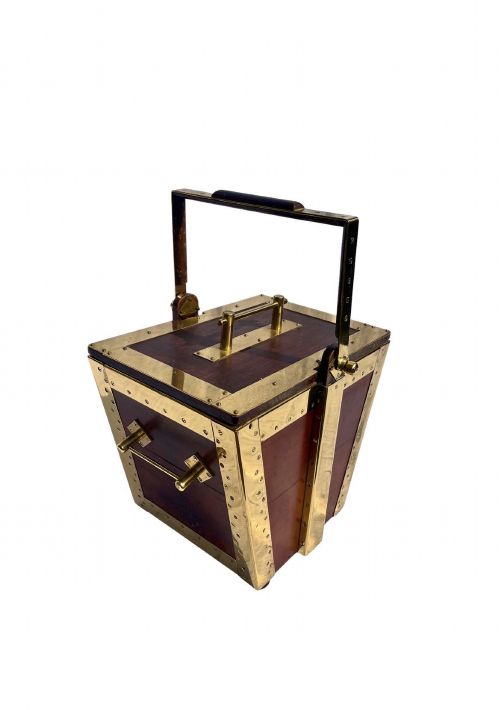
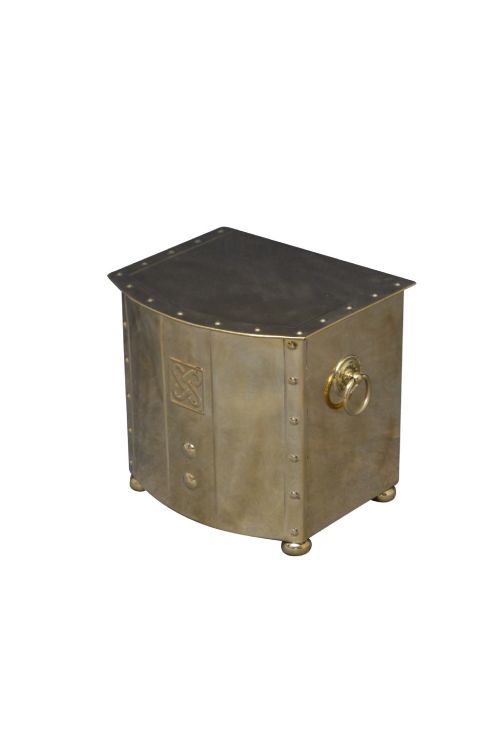


Fireplace Log Box
A fireplace log box brings order and warmth to a hearth, combining practical fuel storage with period craftsmanship in wood and metal.
Fireplace Log Box
A fireplace log box serves as a robust container for fuel near the hearth, appearing in forms ranging from traditional scuttles and purdoniums to lidded bins and buckets. These pieces originate primarily from the Victorian and Edwardian eras, alongside earlier 18th century examples and later 1930s designs.
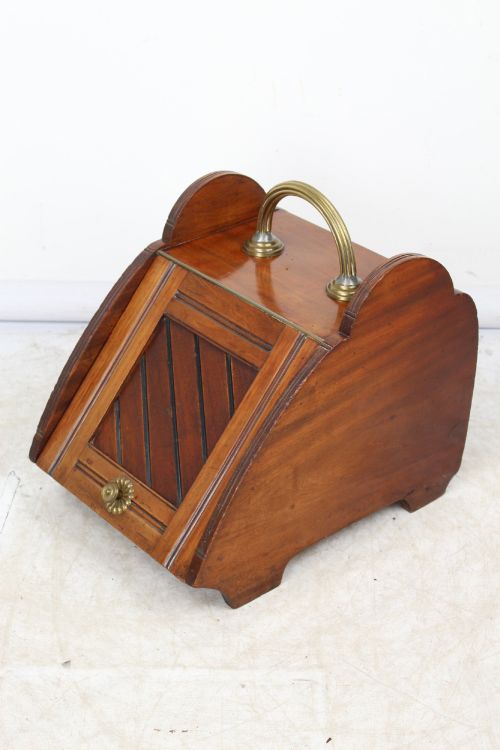
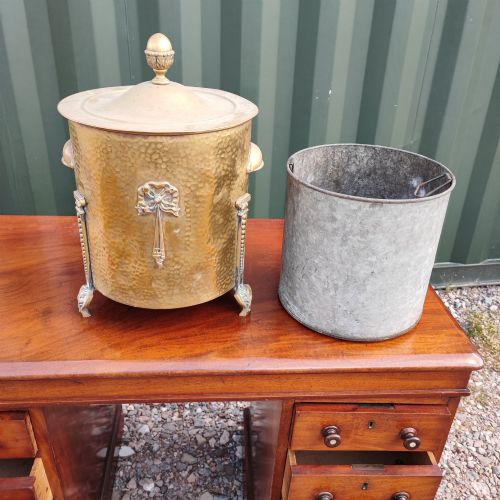
The version most commonly met on this page is the Victorian timber or metal container, often featuring brass mounts, hinged lids, and drop handles. Cabinet styles like the purdonium sit alongside open buckets and lidded bins, shaped by regional British, Scottish, and Scandinavian craftsmanship.
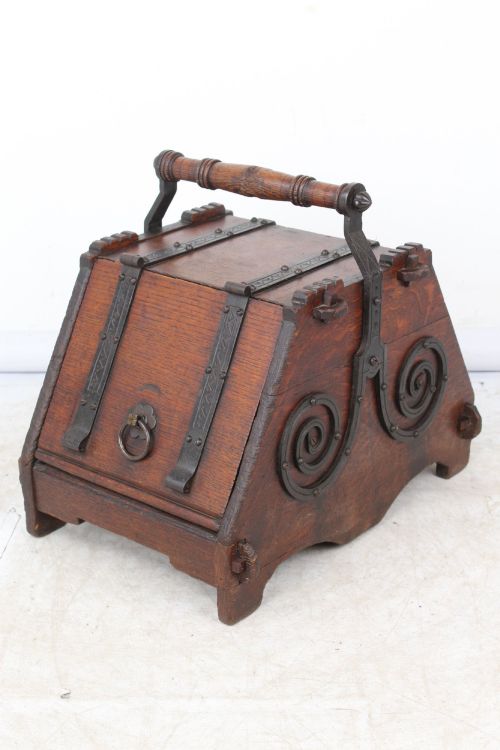
Makers and makers' styles span the Arts and Crafts movement, Gothic Revival, Art Nouveau, and rustic country traditions. Domestic woods like oak, walnut, mahogany, and pine combine with durable copper, brass, and iron to handle the daily weight of logs and coal.
Materials and Construction Methods
Makers built these containers using dense hardwoods such as oak, walnut, and mahogany, frequently pairing them with metal liners to contain debris and moisture from fuel. Joinery techniques included dovetailed corners and carved panels, ensuring the boxes could withstand heavy daily use beside a hot hearth.
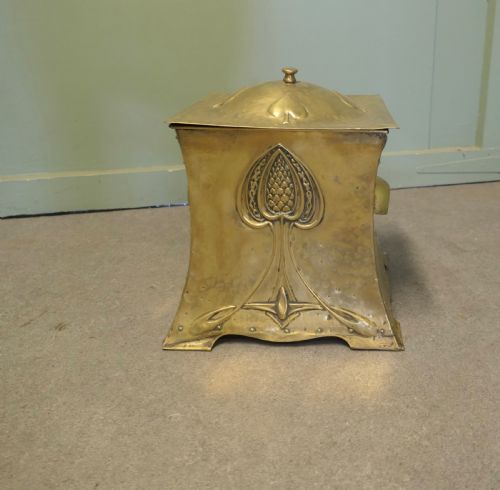
Metalworking played a central role, utilising beaten copper, cast brass, and wrought iron for bodies, hinges, handles, and decorative mounts. Artisans of the Arts and Crafts and Art Nouveau periods applied hand-hammered textures, spade motifs, and decorative strapwork directly to the metal surfaces.
Surface finish depended on the material, with timbers receiving polished or carved treatments while metals displayed natural patinas, sometimes enhanced with brass mounts or copper plating. Folk art pieces incorporated painted toleware and decorative barge wear details directly onto the iron or tin bodies.
Some Victorian households relied on a metamorphic scuttle that doubled as an occasional seat when closed.
Distinctions in Build and Detail
Quality rests upon the integrity of the construction, distinguishing boxes built with solid, substantial timbers and heavy-gauge metals from lighter, purely decorative pieces. Superior examples feature robust internal metal liners, tight-fitting joints, and substantial brass hardware that remains secure under the weight of logs.
The refinement of the ornamentation dictates the upper tier of the range, visible in crisply carved woodwork, intricate marquetry inlay, and hand-worked metal details by designers like Christopher Dresser. Plain utility boxes fulfill a purely functional role, whereas artistic pieces exhibit thoughtful proportions and integrated decorative motifs.
Henry Loveridge
The Fireplace Log Box Glossary
- Purdonium
- A specialised coal or log cabinet featuring a forward-tilting drawer or drop-down front for easy fuel access. This Victorian invention kept messy fuel concealed within a polished wood housing.
- Coal Scuttle
- A bucket-shaped vessel designed to carry fuel from an external store to the fireplace. They typically possess a swing handle at the top and a smaller grip underneath for controlled tipping.
- Barge Ware
- Traditional polychrome folk art decoration found on tin and iron items, characterised by bright floral motifs. This distinctive style often appears on Victorian toleware log boxes.
- Aesthetic Period
- A late 19th-century design movement emphasising visual beauty over narrative meaning. Pieces from this era focus on form, natural materials, and simple, elegant construction.
Fireplace Log Box: Frequently Asked Questions
What is a coal purdonium?
A coal purdonium is an enclosed cabinet designed to store fuel neatly beside the fireplace. It usually includes an internal metal liner and a tilting front or drop-down door.
These pieces emerged during the Victorian era to replace open buckets, keeping dust and debris hidden while offering a polished wooden exterior that matched drawing room furniture.
How do I clean an antique brass log box?
Cleaning antique brass requires a soft cloth and a gentle metal cleaner to remove accumulated soot and dust without stripping the natural age patina. Avoid harsh abrasives that can scratch the surface.
Preserving the darkened areas within embossed or hammered details helps maintain the depth and character of the original metalwork.
Can I use these for modern firewood?
Most antique log boxes and bins accommodate modern firewood, provided the internal metal liner is intact and structurally sound. Check the interior for moisture resistance before loading heavy logs.
Heavier oak and iron examples handle daily use easily, while lighter decorative pieces suit smaller kindling or magazine storage.
How do I date a wooden coal box?
Dating relies on identifying stylistic markers, construction methods, and timber types associated with specific periods like the Victorian or Edwardian eras. Hand-cut dovetailing and heavy brass mounts typically point to 19th-century manufacturing.
Inlaid marquetry, Arts and Crafts strapwork, or specific maker attributions further narrow the decade of production.