


Fireplace Coal Box
A fireplace coal box brings functional fuel storage to the hearth, combining period materials like brass, mahogany, and oak with everyday utility.
Fireplace Coal Box
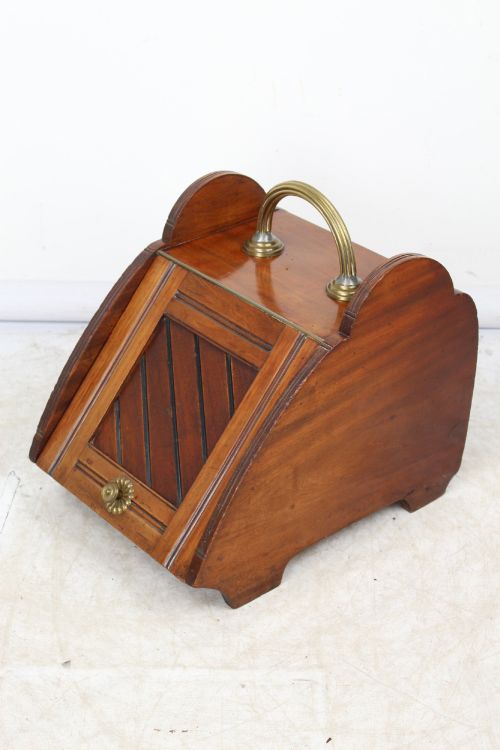
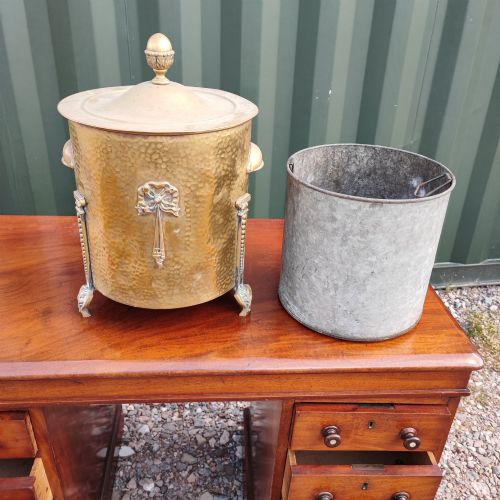
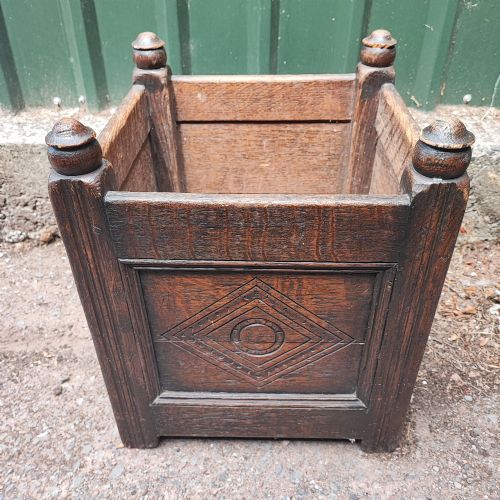
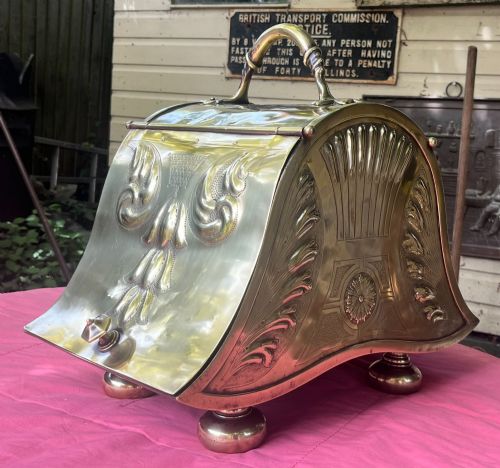
A fireplace coal box serves as a practical vessel for holding solid fuel beside the hearth, appearing across periods from the eighteenth century to the twentieth century. These pieces encompass forms such as coal scuttles, purdoniums, log bins, and bunkers.
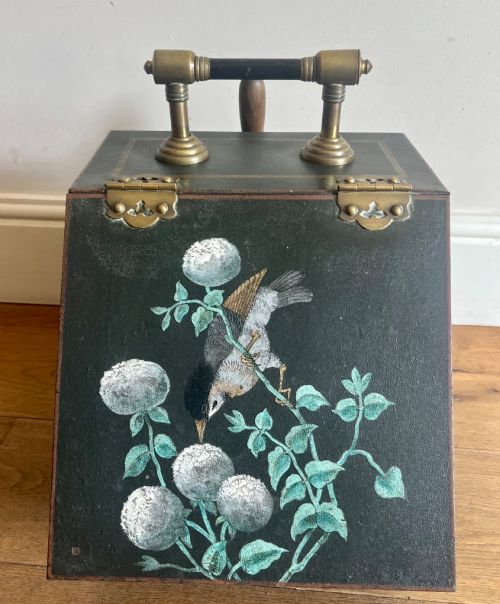
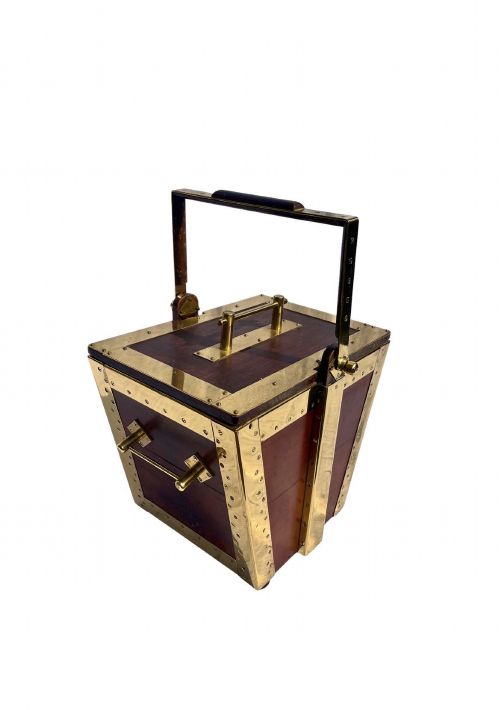
The Victorian and Edwardian examples dominate the selection, often featuring hinged lids, drop fronts, and fitted metal liners designed to contain coal dust and ash. Cabinet styles like the purdonium frequently include a dedicated slot for a matching shovel.
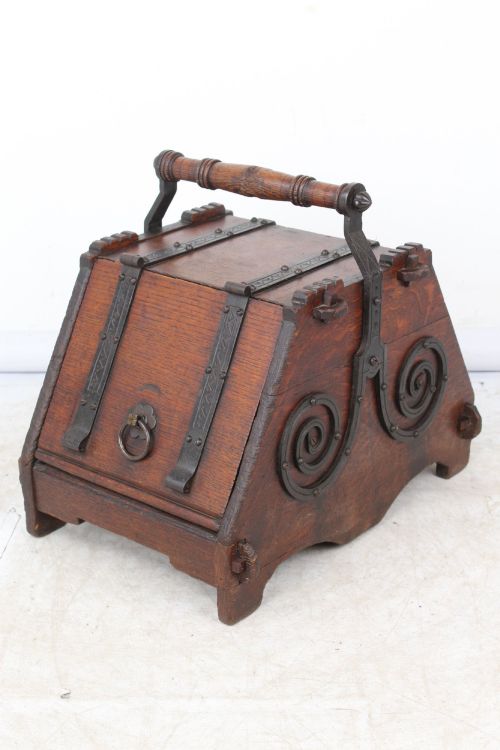
Makers utilised timber and metal alike, resulting in variations from simple country oak boxes to highly decorative inlaid rosewood cabinets. Regional pieces from England and Scotland sit alongside items reflecting specific design movements.
Materials and construction
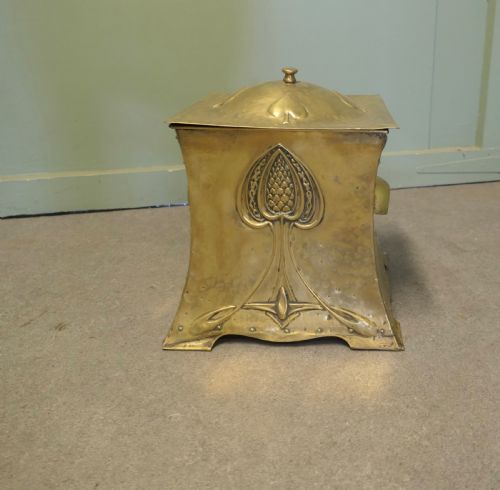
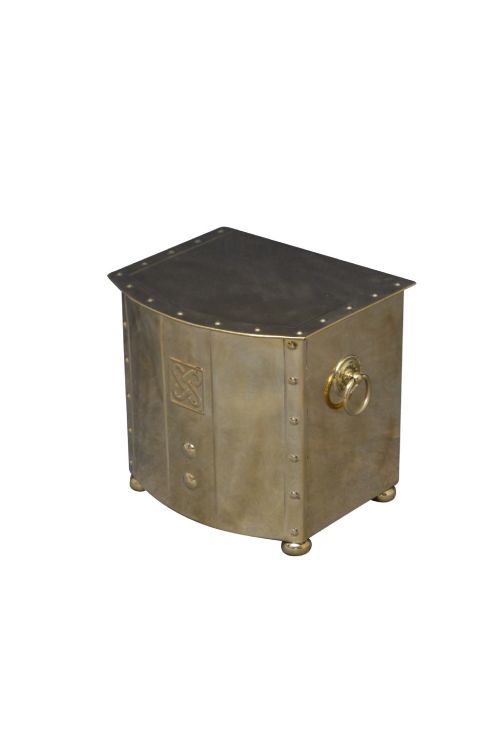
Makers built these containers using robust timbers such as mahogany, walnut, and oak, often enhancing the wooden bodies with brass handles, mounts, and hinges. Metal variants rely on beaten brass, copper, iron, and tole ware to form durable buckets and helmets.
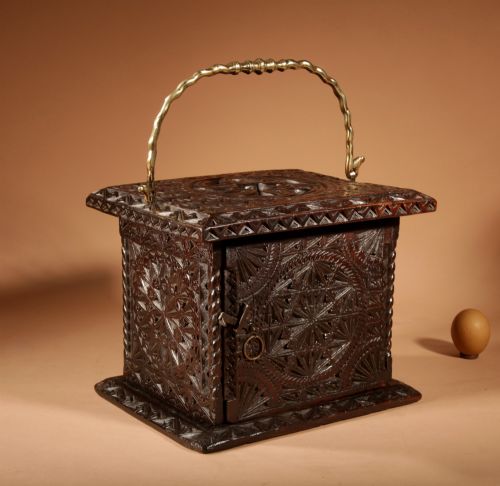
Carpenters employed carving, chip carving, and decorative wood inlay to adorn the exterior surfaces of cabinet forms. Metalworkers utilised spinning, panel-raising, and riveting techniques to shape sheet brass and copper into scuttles and bins.
Materials represented across the inventory include brass, copper, iron, walnut, mahogany, oak, and tole ware.
Markers of quality
The standard of a piece depends heavily on the integrity of its construction, particularly the joinery on wooden boxes and the thickness of the metal on brass or copper bodies. Superior items retain their original metal liners and matching shovels, whereas replacements alter the authenticity of the interior.
Artistic execution dictates distinction, separating plain utility items from those displaying refined Gothic Revival, Art Nouveau, or Arts and Crafts ornamentation. Thoughtful details such as inlaid contrasting woods or maker stamps elevate the standing of an individual piece.
Benham and Froud·Henry Loveridge·Christopher Dresser
The Fireplace Coal Box Glossary
- Purdonium
- A dedicated coal cabinet featuring a drop-front door that tilts forward to release fuel. This form typically contains an internal metal liner and holds a small shovel on the side.
- Coal Scuttle
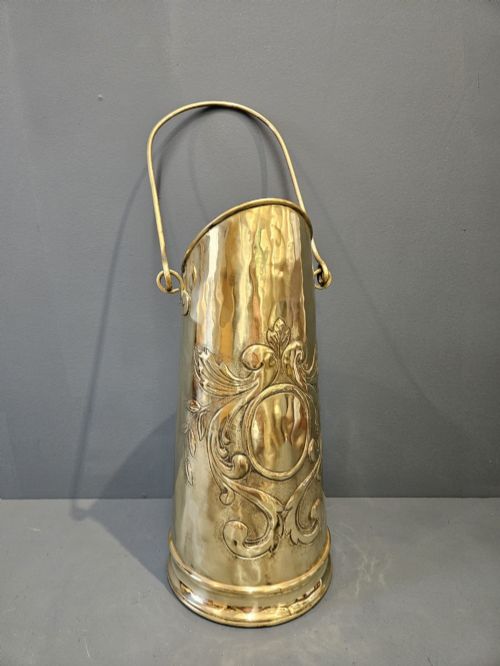
- A bucket-shaped or sloping fuel container equipped with a swinging handle for carrying coal to the grate. These items appear in brass, copper, and wood.
- Tole Ware
- Lacquered or enamelled metalware used for decorative household objects. Items in this material offer painted surfaces.
- Log Bin
- A large freestanding container designed to hold firewood rather than smaller pieces of coal. These vessels often take circular or oval shapes in metal or timber.
- Metamorphic
- Describing furniture designed to transform its shape or function for a secondary purpose. In this context, it refers to scuttles that open or alter configuration.
Fireplace Coal Box: Frequently Asked Questions
What is a purdonium?
A purdonium is a specialised coal cabinet developed in the Victorian era featuring a tilting front door. It encloses the fuel neatly within a room while housing a shovel.
These cabinets often use oak or walnut matched with brass mounts to complement fireplace surrounds.
How do I use one today?
These boxes function well beside wood-burning stoves or open hearths to store kindling, logs, or coal. The internal metal liners make cleaning out debris straightforward.
They also serve as decorative planters or general storage bins in living spaces.
What metals were used?
Makers most frequently turned to brass and copper for their durability and bright appearance near the hearth. Iron and tole ware also appear in designs reflecting industrial or regional tastes.
Metal components often include stamped handles, rims, and hinges.
How do I date a piece?
Dating relies on observing stylistic markers such as Arts and Crafts strapwork, Art Nouveau curves, or Victorian Gothic Revival motifs. The choice of wood, fixings, and construction methods further assists in placing an item within a specific century.
Makers' marks stamped onto metal items provide direct attribution.