
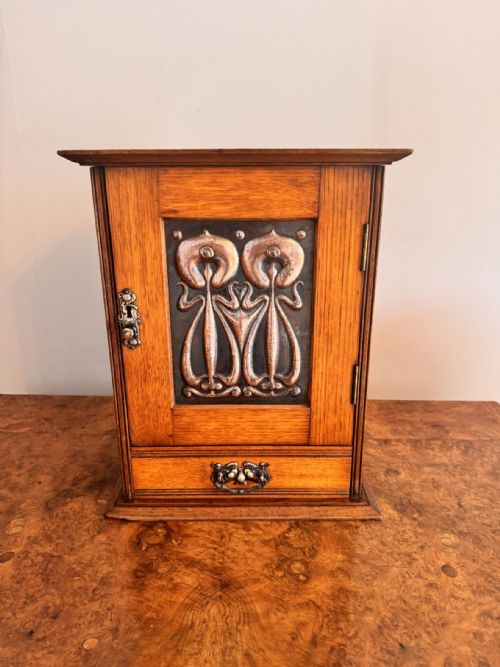


Repousse Copper Box
A repousse copper box brings heavy metalwork and domestic utility together, offering distinctive hand-raised relief work for firesides and tabletops.
Repousse Copper Box
When you search for a repousse copper box, you encounter items designed for fireside utility and tabletop storage, spanning coal boxes, log bins, cigar boxes, and letter boxes. These pieces predominantly emerge from the nineteenth century, the Edwardian era, and the Arts and Crafts period, often combining metallic panels with wooden carcases.
You are most likely to meet Arts and Crafts examples featuring hand-decorated metalwork, alongside Victorian and Edwardian iterations linked to fireside accessories. Forms range from small decorative boxes and hanging spill holders to large coal keepers and umbrella stands constructed in oak or mounted with brass.
Stylistic influences vary from standard Victorian ornamentation to Art Nouveau curves and William Morris inspired motifs, with occasional Dutch traditional designs. The integration of copper with oak, iron, and bronze patina defines the visual character of the objects seen on this page.
What varies in quality
The depth and crispness of the hammered relief work dictate the visual strength of the metal panels, separating boldly executed designs from flat or pressed imitations. Precision in the joinery of the supporting oak frames and the integration of the copper sheets also determine the overall solidity of the piece.
Proportion and the handling of decorative motifs, whether following Art Nouveau lines or William Morris patterns, influence the aesthetic success of the object. The preservation of the original bronze patina and the quality of the wood finishing complete the distinction between standard utilitarian items and finer examples.
Listings span the nineteenth century, the Edwardian era, and the 1920s, combining copper with oak, brass, iron, and bronze patina.
William Morris
The Repousse Copper Box Glossary
- Repousse
- A metalworking technique where the design is hammered into relief from the reverse side. This method allows artisans to create detailed pictorial and abstract surfaces on sheet copper.
- Arts and Crafts
- A design movement valuing handcraftsmanship and traditional materials over industrial mass production. Pieces from this period frequently display visible tool marks and nature-inspired motifs.
- Art Nouveau
- A style characterised by flowing, organic lines and floral motifs popular around the turn of the twentieth century. It appears on cabinets, boxes, and metal panels of this era.
- Patina
- The surface ageing and coloration acquired by metal and wood over time. A bronze patina on copper enhances the visual depth of the raised decoration.
Repousse Copper Box: Frequently Asked Questions
What is a repousse copper box used for?
These pieces served practical storage roles in historic homes, functioning as coal bins, log boxes, letter receptacles, and cigar containers. Their sturdy construction allowed them to handle heavy fuel materials near the hearth.
Smaller versions sat on tabletops or hung on walls to hold correspondence, spills, and small valuables, combining domestic utility with decorative metalwork.
How do I identify an Arts and Crafts copper box?
Look for hand-hammered surface textures, visible working marks, and motifs inspired by nature or William Morris designs. These pieces often date from around nineteen hundred and embrace honest construction.
The metal panels are usually mounted onto solid oak carcases, distinguishing them from later mass-produced items.
What is the difference between a coal box and a log box?
Coal boxes generally required internal liners or heavier metal construction to contain coal dust and smaller fuel pieces safely. Log boxes and bins were built larger and deeper to accommodate firewood.
Both forms frequently utilised repousse copper panels on wooden frames to elevate utilitarian fireside accessories into decorative furnishings.
How should I clean a copper box?
Preserve the existing bronze patina by dusting the surface gently with a soft, dry cloth rather than applying harsh metal polishes. Removing aged patination can diminish the historical character of antique metalwork.
Condition the wooden elements occasionally with appropriate wax to maintain the oak frames supporting the metal panels.