


Victorian Oak Coal Purdonium
A victorian oak coal purdonium brings proper hearthside practicality and dark timber warmth to a period fireplace.
Victorian Oak Coal Purdonium
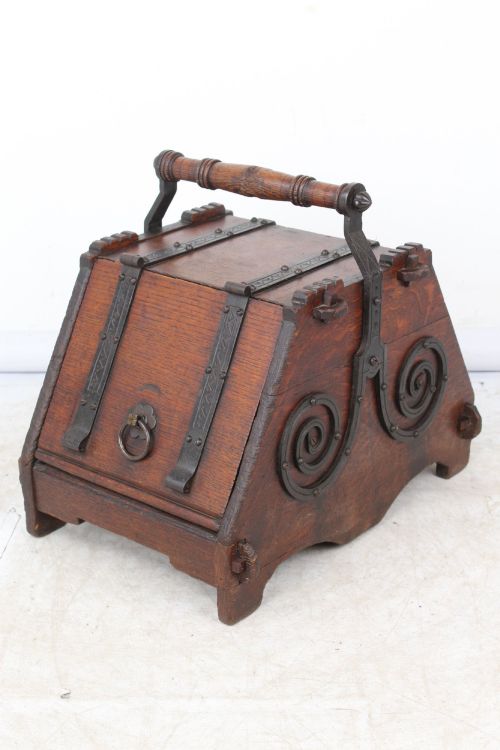
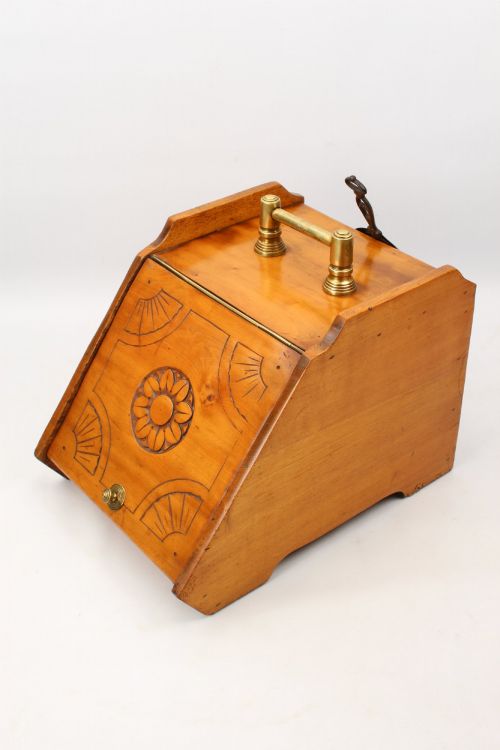
A victorian oak coal purdonium is a fireside coal box or bin designed to store fuel beside the grate with decorative grace. Most examples found here date from the nineteenth century, including late Victorian and Edwardian periods, taking forms such as drop-front cabinets and sloping scuttles.
Makers produced these pieces to conceal messy fuel inside domestic parlours, often incorporating internal metal liners to hold the coal cleanly. Variants range from plain timber boxes to Gothic Revival designs and carved receptacles featuring brass handles and matching shovels.
How they were made
Cabinetmakers constructed these fireside boxes primarily in solid oak and pollard oak, sometimes applying carved ornamentation to the drop fronts or panels. Metal components like brass hinges, mounts, and carrying handles provided both structural reinforcement and decorative contrast against the dark wood.
Internal elements relied on durable iron or metal liners to protect the wooden structure from moisture and residue left by the fuel. Wrought iron and glass occasionally appear among the fittings, reflecting the varied industrial techniques of the period.
Listings feature oak, pollard oak, brass, and wrought iron across Victorian and Edwardian periods.
What varies in quality
The standard of carving and timber selection dictates the distinction between standard utility items and finer parlour pieces. Pollard oak and crisply executed Gothic Revival motifs elevate a piece above simpler domestic storage boxes.
Original matching shovels and intact metal or glass liners significantly influence the completeness and integrity of a purdonium. Robust brass mountings and well-fitted drop fronts demonstrate superior workshop execution.
Christopher Dresser
The Victorian Oak Coal Purdonium Glossary
- Purdonium
- A specialised coal box or cabinet designed for domestic hearthside use, typically featuring a sloping front or drop-down door. This term became popular in the later nineteenth century for refined coal receptacles.
- Drop front
- A hinged panel that lowers to provide access to the interior compartment or metal liner. This mechanism allows easy scooping of fuel while concealing the contents when closed.
- Green Man
- A sculptural architectural motif depicting a human face entwined with foliage, symbolizing rebirth. Carved examples appear on the decorative panels of certain Gothic Revival coal boxes.
- Pollard oak
- Timber taken from trees that were pollarded, yielding wood with highly figured, dense grain patterns. Cabinetmakers utilised this decorative veneer or solid wood for high-status furniture.
- Gothic Revival
- An architectural and decorative style drawing inspiration from medieval forms, prevalent during the nineteenth century. Pieces in this style often feature pointed arches, heavy carving, and elaborate brass strapwork.
Victorian Oak Coal Purdonium: Frequently Asked Questions
What is a coal purdonium?
A coal purdonium is a dedicated Victorian fireside cabinet or box created to store fuel neatly near an open hearth.
Unlike an open bucket, these enclosed containers kept coal dust contained while complementing the surrounding interior decor.
How do I use one today?
You can place a purdonium beside a fireplace to store logs, kindling, or modern fireside accessories.
Many people also utilise them as decorative storage cabinets in living rooms or hallways.
How do I spot a Gothic Revival piece?
Gothic Revival examples display medieval-inspired architectural motifs, pointed details, and heavy carved woodwork.
They often incorporate dramatic elements such as Green Man carvings or substantial brass strapwork.
Are liners usually original?
Many surviving purdoniums retain their original metal or tin inliners designed to hold the coal safely.
Replacements do occur due to rust from heavy use over the decades.