





Arts and Crafts Coal Box
These arts and crafts coal box pieces bring honest metalwork and solid timber to the fireside, combining everyday utility with striking domestic design.
Arts and Crafts Coal Box
An arts and crafts coal box serves as a practical hearth container designed to store fuel near the fire while adding decorative character to the room. The selection includes scuttles, bins, purdoniums, and log buckets spanning the nineteenth and early twentieth centuries.
Buyers will most frequently encounter metal and wooden variations, particularly copper-clad boxes with wrought iron fittings and oak bodies. These items often display characteristic period motifs such as repoussé panels or spade decorations.
Makers and designers of the movement adapted traditional fireside accessories into artistic statements. The forms range from upright lidded bins to hinged purdoniums and Gladstone bag shapes.
Materials and Construction
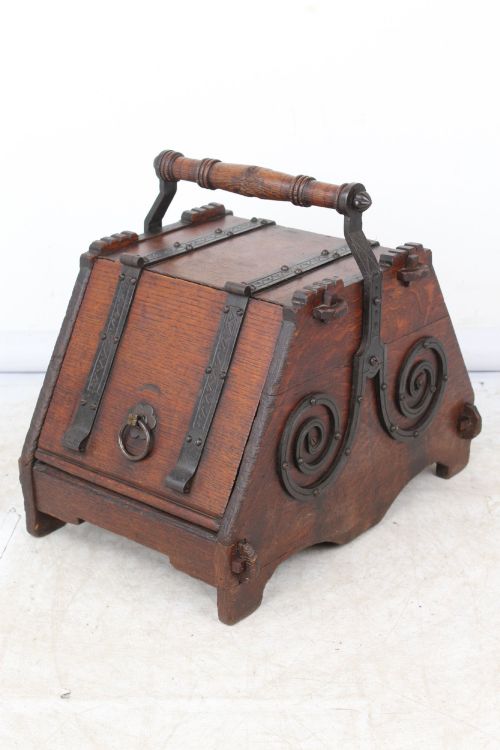
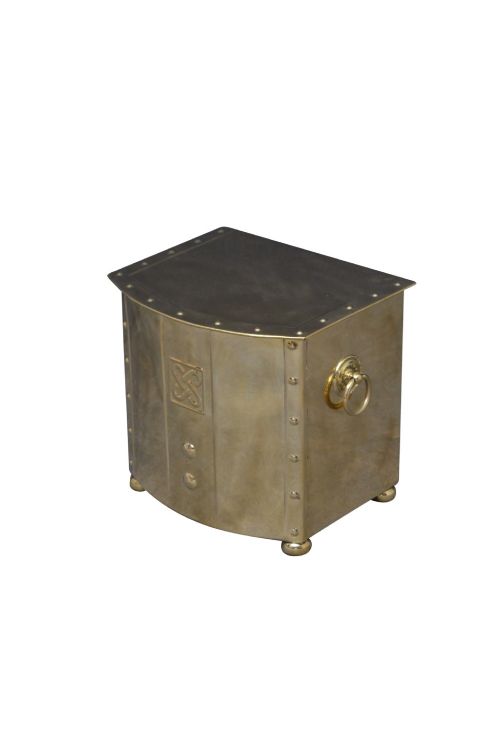
Makers utilised sheet copper and brass for bodies and decorative panels, often attaching them to sturdy timber frames made of oak or walnut. Wrought iron provided durable hinges, handles, and strapwork that anchored the metallic elements.
Metalworkers employed hand-beating, riveting, and repoussé techniques to pattern the surfaces with plant motifs, galleons, or geometric designs. Interiors frequently retained galvanised metal or iron liners to contain coal dust and moisture.
Arts and Crafts Coal Box Retail Price Guide 2026
Typical asking prices for arts and crafts coal box among the pieces listed under this phrase on Sellingantiques today, from the lower quarter to the upper quarter. They describe what is for sale here now, not the wider market.
Evaluating Quality
Quality rests upon the weight of the metal and the integrity of the internal construction. Thicker gauge copper and solid oak foundations distinguish substantial pieces from lighter, mass-produced alternatives.
The precision of hand-hammered detailing and the quality of the blacksmith work on the iron hinges indicate the maker's skill. Retaining original liners and operational drop handles elevates the desirability of a piece.
Benham and Froud·Shapland and Petter Of Barnstaple·Christopher Dresser
The Arts and Crafts Coal Box Glossary
- Purdonium
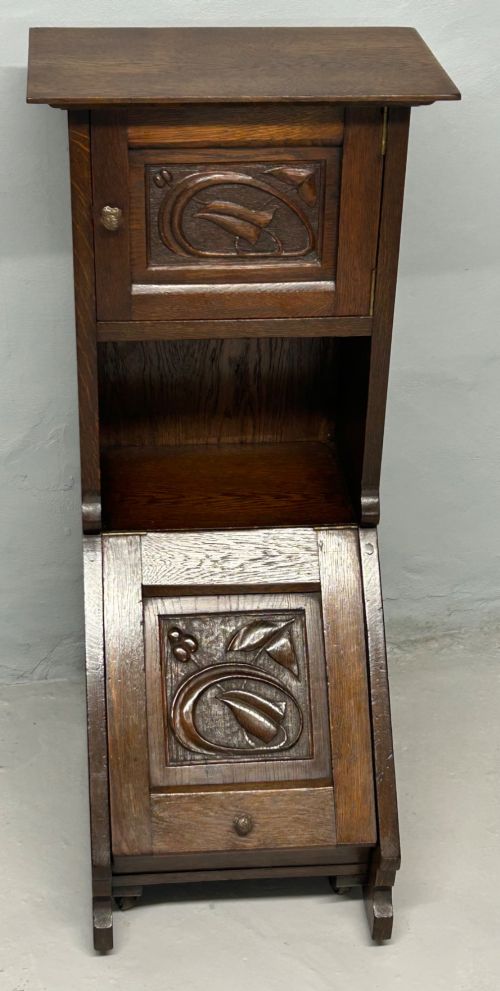
- A specialised coal box featuring a sloping front door that drops forward to reveal an internal metal shovel or scuttle. This form became popular in Victorian and Edwardian interiors.
- Repoussé
- A metalworking technique where the artisan hammers the design from the reverse side to form a raised relief on the front. It appears frequently on copper panels.
- Coal Scuttle
- A deep bucket or container designed for carrying and holding coal, typically fitted with a swinging overhead handle and a smaller steadying handle at the base.
- Log Bin
- A robust fireside receptacle intended for larger pieces of firewood rather than small coal. These containers often utilise heavy iron and oak construction.
Arts and Crafts Coal Box: Frequently Asked Questions
How do I clean a copper coal box?
Wipe the surface with a soft, damp cloth to remove dust and soot accumulation. Avoid harsh commercial dips that strip the aged patina which collectors value.
Dry the metal thoroughly after cleaning to prevent spotting. Leave the interior untreated if it retains its original protective lining.
Can these boxes store modern firewood?
Most models accommodate standard logs or kindling without issue, provided the internal liner remains intact. Measure the opening before loading large pieces of wood.
Check that the base and handles support the heavier weight of logs compared to lighter coal. Lined bins protect the surrounding timber from moisture.
What is a purdonium?
A purdonium is a specialised fireside cabinet with a hinged front flap that drops down to dispense fuel. Many include a built-in shovel stored inside.
This design kept coal neatly concealed within a decorative wooden or metal casing. They represent a more formal option than an open bucket.
How do I date an arts and crafts piece?
Examine the construction methods, such as hand-cut rivets, screw types, and timber dovetailing. Makers often marked their metalwork with stamped initials or registry numbers.
Stylistic cues like Gothic Revival ironwork or Art Nouveau whiplash lines help narrow the decade. Compare the patination on the interior and exterior surfaces.