
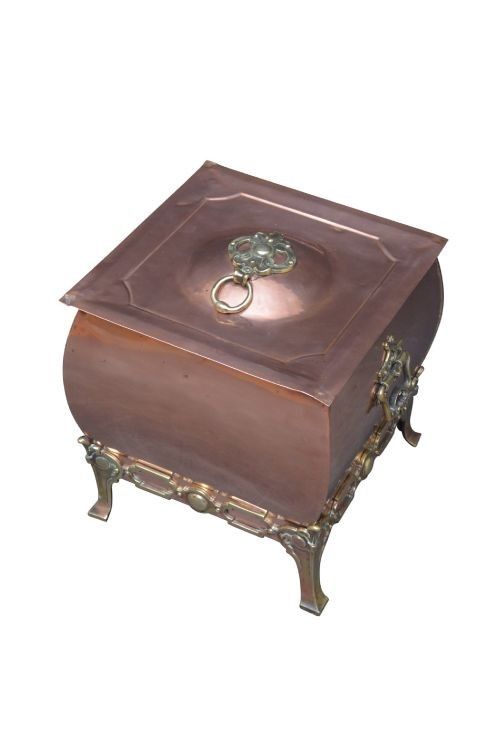


Copper Fireside Box
A copper fireside box keeps fuel neat beside the hearth, combining utility with the warm, reflective glow of hammered metal.

Copper Fireside Box
A copper fireside box serves as a functional container for coal or logs while adding a warm metallic accent to the hearth. These pieces range from simple Victorian coal scuttles to elaborate Arts and Crafts log bins.
The versions most commonly met on this page date from the nineteenth century through the Edwardian era. Makers constructed these utilitarian items with considerable decorative ambition, employing repousse work and brass fittings.
Forms include slipper boxes, purdoniums, and rectangular log boxes designed to sit neatly beside a fireplace. Many combine copper bodies with oak framing or wrought iron handles and hinges.
How They Were Made
Craftsmen built the structural carcases of these boxes using timber such as oak, then clad them in sheet copper. Wrought iron and brass appeared in the hinges, handles, and structural supports.
Surface decoration relied heavily on hand beating and embossing, particularly within the Arts and Crafts tradition. Artisans hammered patterns, galleon designs, or floral motifs directly into the soft metal sheets.
Copper Fireside Box Retail Price Guide 2026
Typical asking prices for copper fireside box among the pieces listed under this phrase on Sellingantiques today, from the lower quarter to the upper quarter. They describe what is for sale here now, not the wider market.
Some nineteenth-century coal boxes feature secret compartments originally intended to store specialised fireplace matches.
What Varies in Quality
The thickness of the copper sheet and the depth of the hand-hammered relief work set finer pieces apart from plain commercial items. Heavy gauge metal resists dents and maintains structural integrity over decades of use.
The integration of secondary materials defines the craftsmanship of a fireside box. Superior examples feature robust oak framing, hand-forged wrought iron hardware, and well-fitted interior metal liners.
The Copper Fireside Box Glossary
- Purdonium
- A specialised coal box featuring a sloping front and a hinged lid designed for easy shovelling. This form became popular during the Victorian period.
- Slipper box
- A low fireside container shaped vaguely like a shoe, traditionally used to store slippers or small fuel briquettes. These often feature lift-off lids and brass carrying handles.
- Coal scuttle
- A bucket or box designed to carry coal from an outside store to the fireplace hearth. They frequently include pivoting handles and brass shovels.
Copper Fireside Box: Frequently Asked Questions
How do I clean a copper fireside box?
Wipe the surface gently with a soft, damp cloth to remove accumulated dust and soot from the fireplace. Avoid harsh commercial abrasive cleaners that strip away the aged patina built up over decades.
Apply a microcrystalline wax if you wish to protect the metal from further tarnishing. Leave the interior unpolished to preserve its authentic working character.
Can I use these boxes for modern logs?
Many of these containers were originally sized for coal or smaller wood billets rather than massive modern logs. Check the internal dimensions before loading heavy firewood into an antique container.
Use a plastic or metal liner inside older wooden boxes to catch dirt and moisture. This protects the historic timber and copper panels from unnecessary wear.
How do I date a copper fireside box?
Examine the construction methods, including the type of screws, hinges, and internal linings used by the maker. Machine-cut screws and standard iron fittings typically point towards the later nineteenth or early twentieth century.
Stylistic cues also help narrow down the period, such as the characteristic plant motifs and hand-beaten surfaces of the Arts and Crafts movement. Victorian pieces often lean towards heavier brass mounts and traditional helmet shapes.
What is an Arts and Crafts fireside box?
An Arts and Crafts fireside box reflects the philosophy of manual skill and simple construction championed by late nineteenth-century designers. These pieces emphasise visible hand-hammered textures and honest joinery over factory-stamped uniformity.
They frequently combine copper panels with solid oak and wrought iron strapwork. The decorative motifs often draw inspiration from nature or traditional maritime themes.