

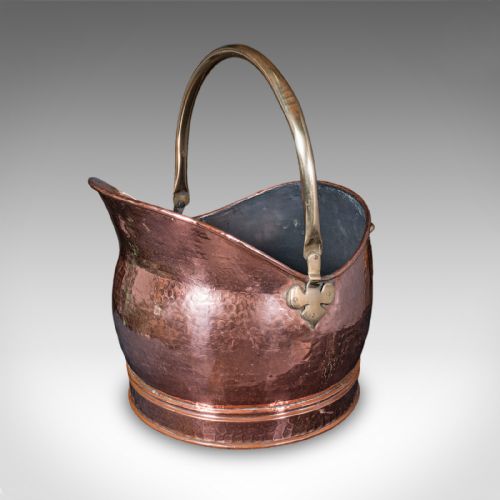



Hand Hammered Copper Scuttle
These hand hammered copper scuttles are utilitarian fireside vessels that bring warmth and genuine Arts and Crafts character to a hearth.
Hand Hammered Copper Scuttle
When searching for a hand hammered copper scuttle, buyers encounter functional coal buckets and helmet-shaped scuttles designed for hearthside service. The selection spans the Victorian era and the turn of the twentieth century, bringing together robust domestic utility and decorative metalwork.
Most examples date from the nineteenth century up to around nineteen hundred, aligning with the Victorian period and the burgeoning Arts and Crafts movement. Forms range from traditional helmet shapes with swing handles to dedicated coal receivers that sit beside the fireplace.
The objects combine practical fuel storage with expressive craftsmanship, utilising sturdy metals to withstand daily domestic use. They serve as both functional containers for coal and striking decorative focal points in period or contemporary interiors.
How They Were Made
Maker's hands shaped sheet copper by striking it repeatedly with a hammer to create distinctive surface textures and rigid forms. This manual beating process strengthened the metal while leaving individual artisan marks across the body.
Structural elements such as swing handles and mounts frequently incorporate contrasting materials like wrought iron or brass. Rivets and sturdy joints secure these additions, ensuring the vessels could bear the heavy weight of coal without failing.
Hand Hammered Copper Scuttle Retail Price Guide 2026
Typical asking prices for hand hammered copper scuttle among the pieces listed under this phrase on Sellingantiques today, from the lower quarter to the upper quarter. They describe what is for sale here now, not the wider market.
Every time you lift a swing handle, you are testing a hinge that was beaten into shape by a Victorian smith who probably had very strong forearms.
What Varies in Quality
Quality rests in the rhythm and depth of the manual hammer work, where deliberate strikes create an even, tactile surface rather than random dents. Superior examples display careful hand-shaping that gives the copper body clean architectural lines and balanced proportions.
The integration of mixed materials distinguishes finer output, particularly where wrought iron handles and brass fittings complement the copper rather than merely fastening it. Heavier gauge metal and secure, traditional joinery separate robust artisan pieces from lighter, purely utilitarian vessels.
The Hand Hammered Copper Scuttle Glossary
- Scuttle
- A metal container with a handle, traditionally used for carrying and holding coal by the fireplace. These vessels combine heavy-duty domestic function with decorative presence.
- Arts and Crafts
- A design movement spanning the late nineteenth century that championed hand-craftsmanship and honest materials over mass production. Objects from this period often highlight the physical marks of the maker's tools.
- Helmet
- A specific coal bucket profile featuring a high back and a sloping front rim that resembles a traditional headpiece. This shape allows for easy pouring of fuel onto the fire.
- Wrought iron
- Tough, malleable iron beaten into shape by hand, frequently utilised for handles and mounts on copper fireside accessories. Its dark finish contrasts sharply with polished or patinated copper.
Hand Hammered Copper Scuttle: Frequently Asked Questions
How do I clean a copper scuttle?
Wash the surface gently with warm soapy water and a soft cloth to remove everyday dust and soot. Avoid harsh abrasive cleaners that can strip away centuries of natural patination.
Dry the metal thoroughly after washing to prevent water spotting. Many collectors prefer to leave the aged copper surface untouched rather than polishing it to a bright shine.
Are these scuttles still usable for coal?
These historical vessels were built for daily domestic service and remain structurally capable of holding fuel near a fireplace. Many people continue to use them for their original purpose beside active hearths.
Consider placing a modern liner inside older pieces if you wish to protect the interior from moisture and coal dust. This preserves the historical metal while maintaining practical utility.
How do I date a copper scuttle?
Examine the construction methods, handle attachments, and overall stylistic influences to determine the period of origin. Pieces showing distinct Arts and Crafts hand-beating typically point towards the late nineteenth or early twentieth century.
Victorian examples often favour classic helmet profiles paired with traditional brass or iron fittings. Comparing the weight of the metal and the style of the rivets helps narrow down the decade of manufacture.