


Hand Hammered Copper Bin
These hand hammered copper bin pieces are robust fireside vessels and storage containers that bring warmth and texture to a room.

Hand Hammered Copper Bin
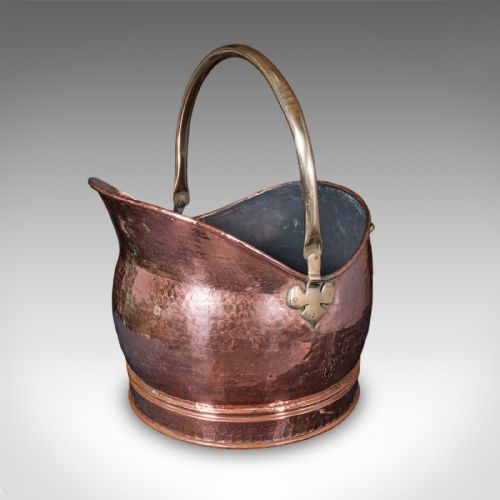
When you search for hand hammered copper bin, you are looking at utilitarian vessels repurposed for the hearth and home. The selection spans robust coal buckets, log bins, and planters originating from the Georgian and Victorian eras through to the Arts and Crafts movement.
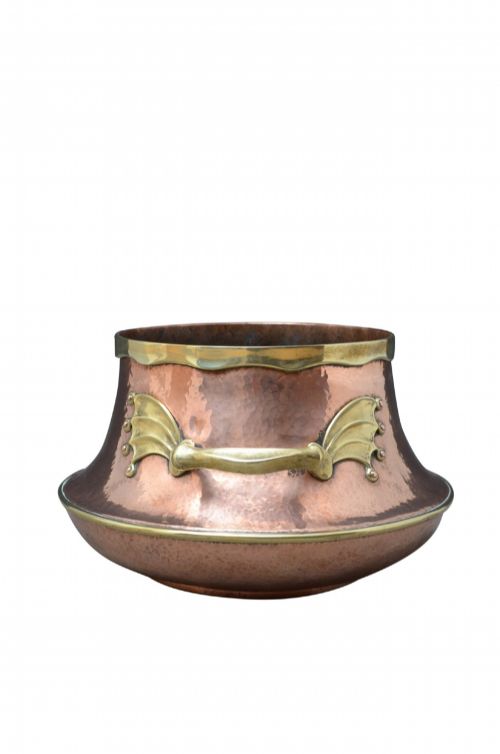
Origins stretch from English workshops to Scottish and French provincial makers. The forms range from simple riveted cauldrons to elaborate Arts and Crafts receivers mounted on wrought iron stands.
Materials and technique
Makers formed these pieces from sheet copper and brass, often beaten by hand to create distinct surface textures. Rivets and wrought iron elements added structural strength to load-bearing coal scuttles and log bins.
Hand-beaten and hand-finished techniques left visible tool marks across the metal body. Brass handles, feet, and rims provided durable contrast to the softer copper panels.
Hand Hammered Copper Bin Retail Price Guide 2026
Typical asking prices for hand hammered copper bin among the pieces listed under this phrase on Sellingantiques today, from the lower quarter to the upper quarter. They describe what is for sale here now, not the wider market.
Some coal scuttles spent a century covered in coal dust before finding retirement as polished umbrella stands.
What varies in quality
The distinction between ordinary utility items and finer examples lies in the weight of the metal and the crispness of the hand hammering. Heavier gauge copper retains its structural integrity better over generations of use.
Execution of details such as riveted joints, shaped brass handles, and wrought iron mounts dictates the overall calibre. Pieces demonstrating deliberate aesthetic consideration during the Arts and Crafts period command greater visual presence.
The Hand Hammered Copper Bin Glossary
- Coal Scuttle
- A bucket or container specifically designed for holding and transporting domestic coal to the fire. These often feature a sloped opening and a carrying handle.
- Arts and Crafts
- A design movement valuing handcraftsmanship, simple forms, and honest materials over mass production. Pieces from this period frequently display visible hand beating.
- Cauldron
- A large round metal pot, often with sturdy handles, used historically for boiling or general holding. In domestic settings, these were adapted for storage.
- Ferrat
- A traditional French metal vessel or bucket associated with hearth and agricultural use. They share the robust construction seen in British coal receivers.
Hand Hammered Copper Bin: Frequently Asked Questions
What were these copper bins originally used for?
These vessels served primarily as utilitarian storage containers for solid fuel near the fireplace. Households relied on them to hold coal, logs, and kindling close at hand.
Over time, many of these durable metal containers transitioned from purely functional hearth accessories to decorative interior planters and log bins.
How do I date a copper bin?
Dating relies on observing construction techniques, stylistic markers, and materials. Georgian and early Victorian pieces often feature heavy hand-riveting and simpler cauldron forms.
Later Victorian and Arts and Crafts examples display distinct surface hammering, decorative brass mounts, and wrought iron stands characteristic of turn-of-the-century design.
Can I use an antique copper bin for logs?
Most of these vessels were built to withstand heavy loads of coal and wood, making them structurally suited for modern log storage. Their robust metal construction handles the weight easily.
It is sensible to check the interior for moisture retention and line the base if storing damp wood to protect the historic metal surface.
How do I clean antique copper?
Preserving the character of old metal usually involves gentle dusting and occasional cleaning with a mild, non-abrasive cleaner. Many collectors prefer to retain the aged patina rather than polish the copper to a bright shine.
Harsh chemical polishes can strip away centuries of oxidation and diminish the historical appearance of the hand-beaten surface.