
Antique Copper Tub
These antique copper tub pieces bring genuine utility and warmth into a room, offering robust metalwork shaped by centuries of practical use.
What an antique copper tub is
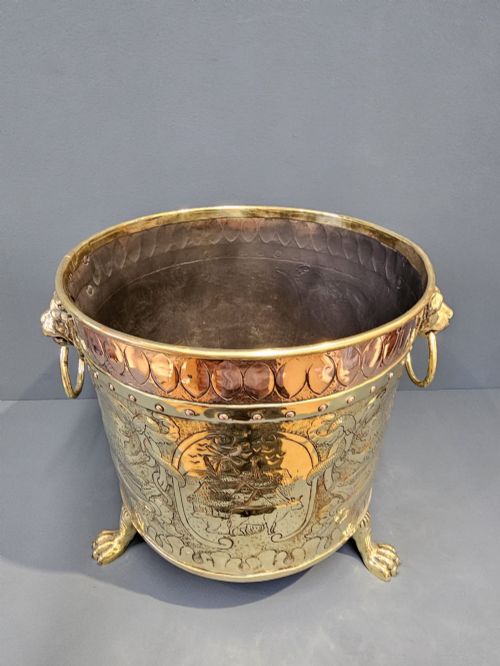
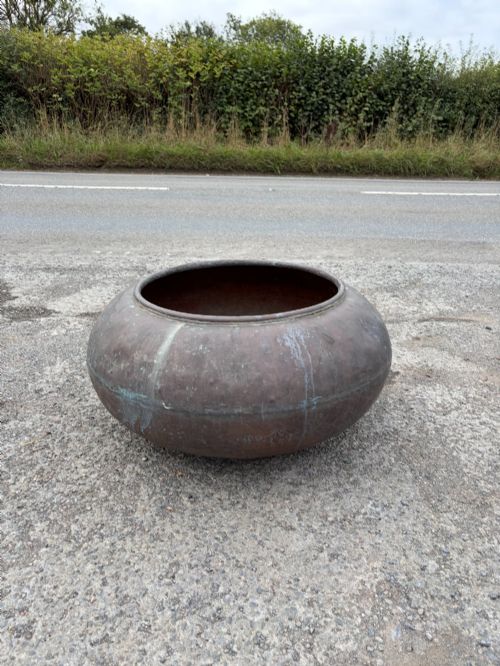
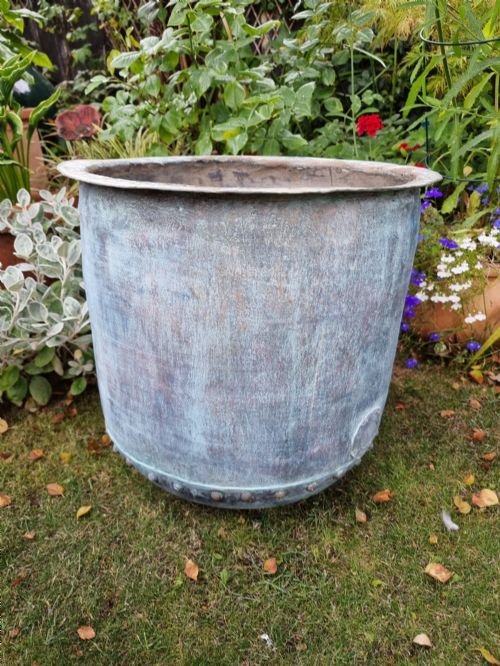
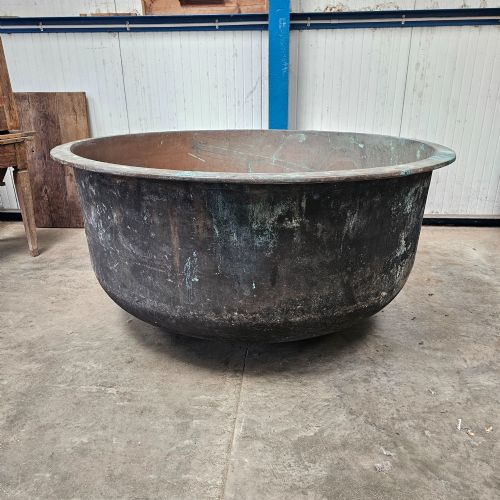
When you search for an antique copper tub, you encounter heavy-duty vessels forged for utilitarian purposes rather than mere decoration. These pieces span the eighteenth and nineteenth centuries, taking the form of large planters, log bins, jardiniere bowls, and deep cooking or wash vessels.
The versions you meet most frequently on this page belong to the Victorian and Georgian eras, often showing the generous proportions needed for holding firewood, earth, or water. Rustic farmhouse examples sit alongside more finished decorative planters from the mid-nineteenth century, reflecting diverse domestic and agricultural origins.
How they were made
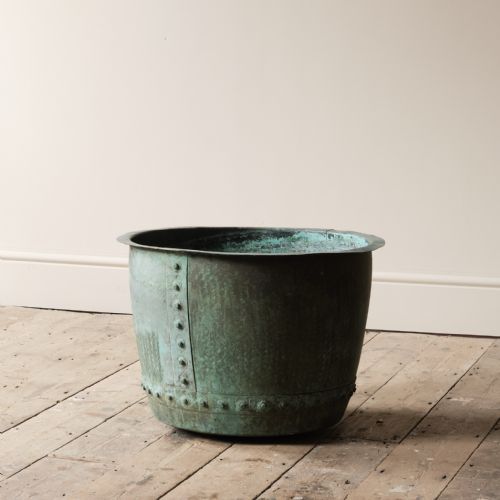
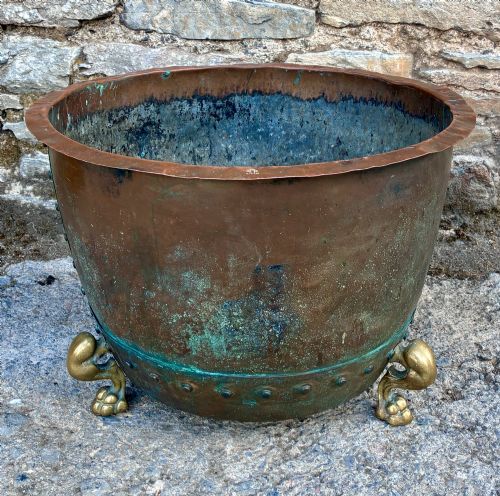
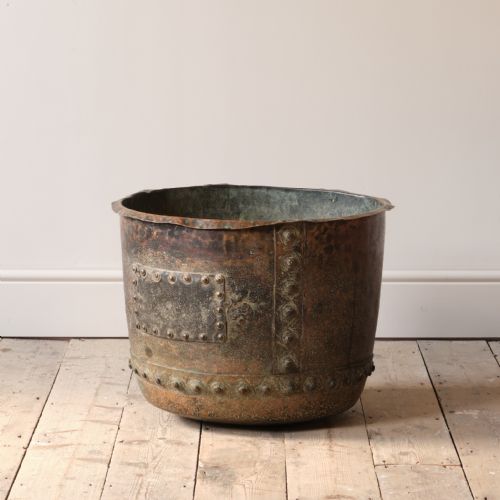
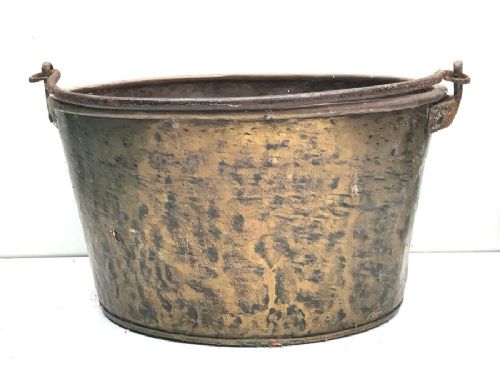
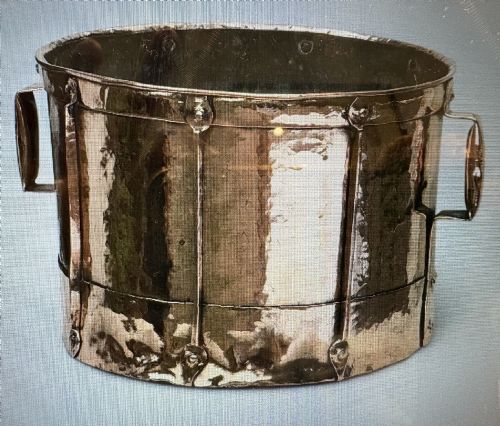
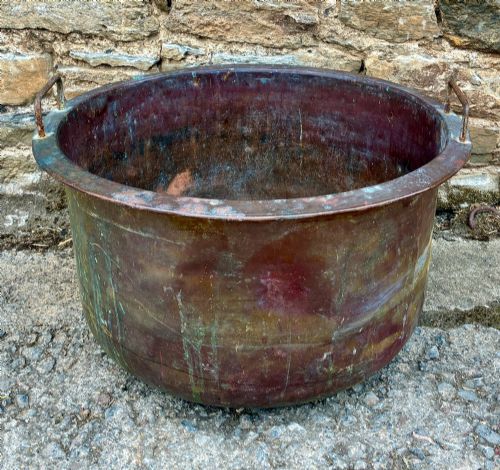
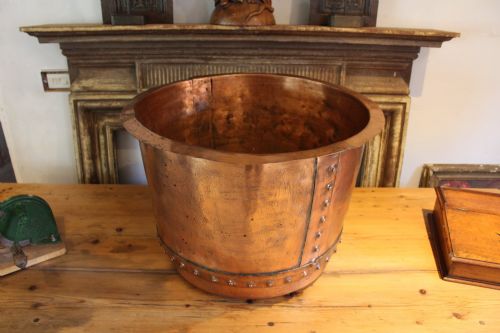
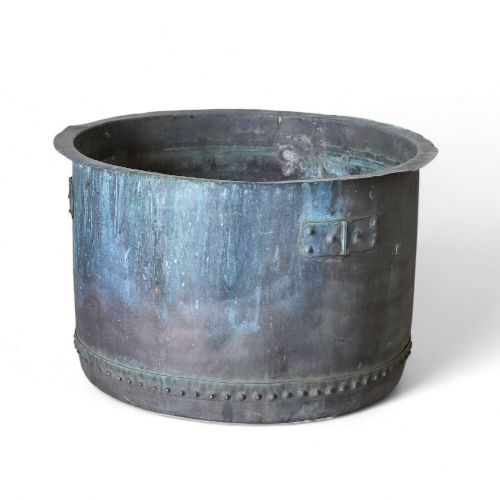
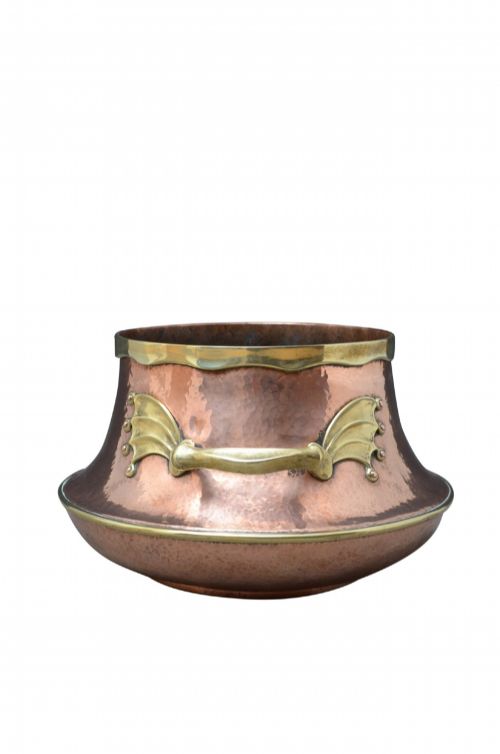
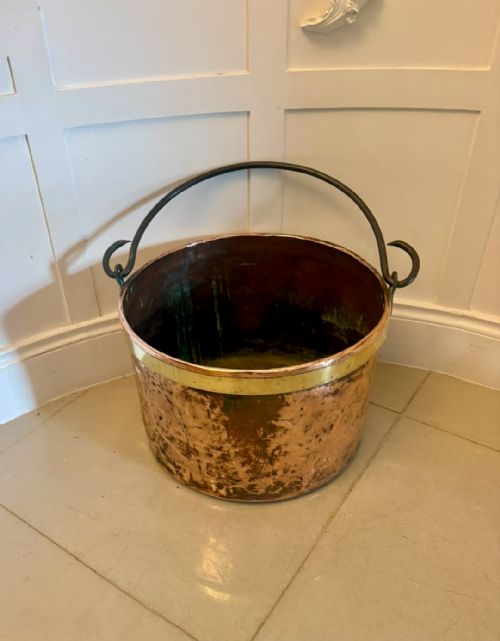
Makers shaped these vessels primarily from heavy sheet copper, often joining sections with visible hand-beaten rivets that added structural strength. Iron and wrought iron handles, bands, or feet appear alongside brass fittings, providing sturdy support for heavy loads of logs or damp soil.
Surfaces developed their character through intensive hammering and natural oxidation over generations of exposure. Early pieces show the irregular hand-planished marks of the smith, while later nineteenth-century examples display more uniform rolling and riveting techniques.
Retail Price Guide 2026
Typical UK retail prices for copper tub, calculated from the Sellingantiques database of over a million retail prices indexed since 2003. This retail price guide relies exclusively on Sellingantiques data; no external sources or auction records are used, so the figures do not describe the wider market.
Object forms span log bins, planters, jardinieres, and heavy cooking vessels across Georgian and Victorian periods.
What varies in quality
Quality rests in the gauge of the metal and the integrity of the original construction rather than surface gleam. Heavy-gauge copper that retains its structural rigidity without excessive buckling separates superior vessels from thinner, more fragile alternatives.
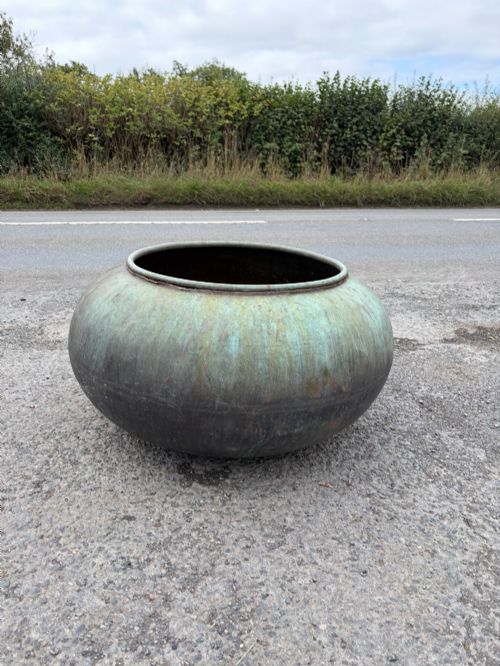
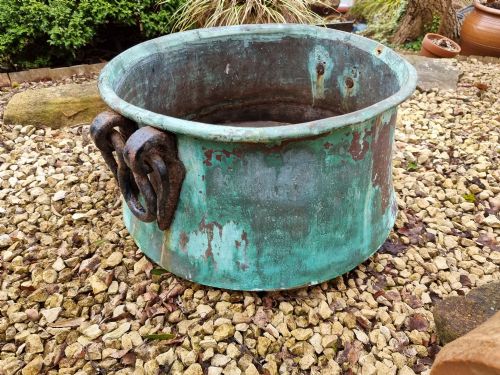
The integration of contrasting metals, such as wrought iron drop handles or brass mounts, dictates the aesthetic standard. Pieces retaining their unpolished verdigris patination alongside robust, unaltered iron mounts represent the height of historical survival.
The Antique Copper Tub Glossary
- Verdigris
- The natural green or bluish patina that forms on copper through atmospheric weathering over long periods. This stable oxidation layer protects the underlying metal and signals authentic age.
- Planished
- A metalworking technique where a smith hammers a surface with a round-faced tool to smooth it and harden the metal. It leaves subtle, rhythmic facets across the copper body.
- Jardiniere
- A large ornamental pot or stand designed to hold growing plants or flowers. In antique metalwork, these often feature decorative brass handles or feet.
- Riveted
- Joined together using heavy metal pins hammered flat at the ends. This method held structural seams secure before modern welding techniques existed.
Frequently Asked Questions
What were antique copper tubs used for?
These robust vessels served demanding household and agricultural roles, from washing laundry and heating water to cooking over open hearths.
Over time, many of the larger surviving examples transitioned into holding firewood by the hearth or housing large indoor plants.
How do I clean an antique copper tub?
Most collectors prefer to leave the natural verdigris and darkened patination undisturbed because it proves the age of the metal. Washing gently with warm soapy water removes accumulated dust without stripping away the historical surface.
Harsh chemical polishes should be avoided since they erase the subtle marks of manufacture and leave the surface unnaturally bright.
How can I tell Georgian from Victorian copper?
Georgian vessels, dating from the eighteenth century, frequently display heavier hand-forged iron attachments and simpler, utilitarian forms designed for cooking or washing. Their construction often relies on irregular hand-beaten seams.
Victorian pieces from the mid-nineteenth century tend toward decorative finish, incorporating brass mounts and refined planters intended for parlor display.
Can I use an antique copper tub outside?
Copper naturally withstands outdoor elements because the metal forms a protective barrier against corrosion when exposed to moisture. Placing a tub in the garden as a planter allows the patination process to continue naturally.
Extremes of standing water and winter frost can stress older riveted seams, so monitoring drainage is wise.