




Rustic Copper Planter
A rustic copper planter brings warmth and texture to a room, offering a sturdy vessel for greenery or logs.
Rustic Copper Planter
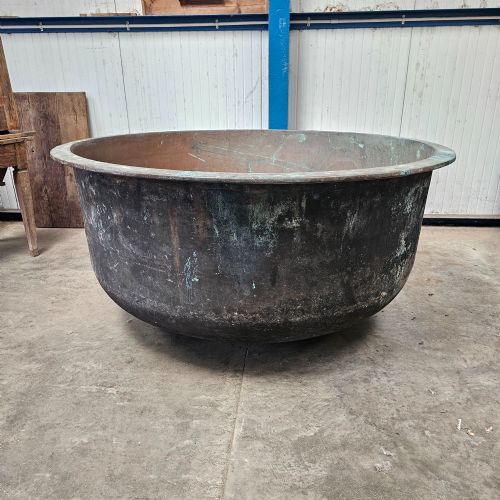
A rustic copper planter combines utility with warm metal surfaces, originating primarily from nineteenth-century domestic and agricultural life. These vessels range from large wash tubs and cheese vats to heavy cauldrons and boiling coppers, adapted over time for botanical displays or hearthside storage.
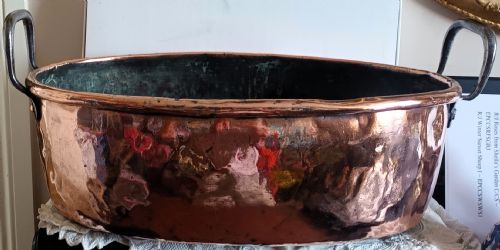
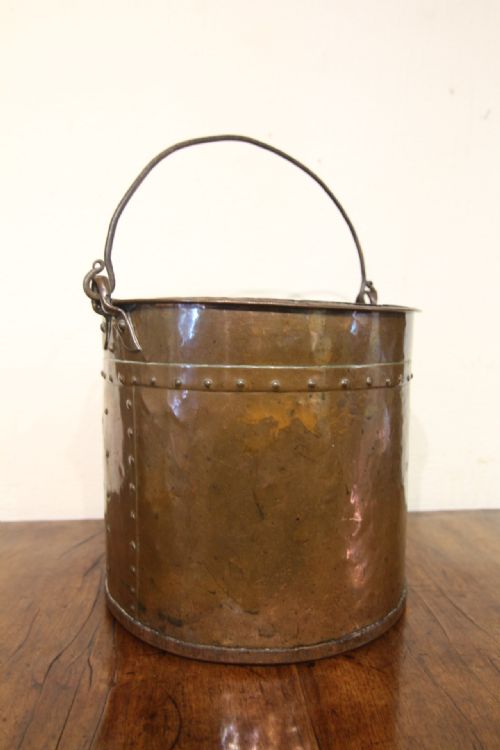
Buyers searching for a rustic copper planter frequently encounter converted utility items such as riveted log bins, coal buckets, and cream setting pans. These utilitarian objects form the core of the selection on this page, spanning Georgian origins through Victorian industrial and Arts and Crafts aesthetics.
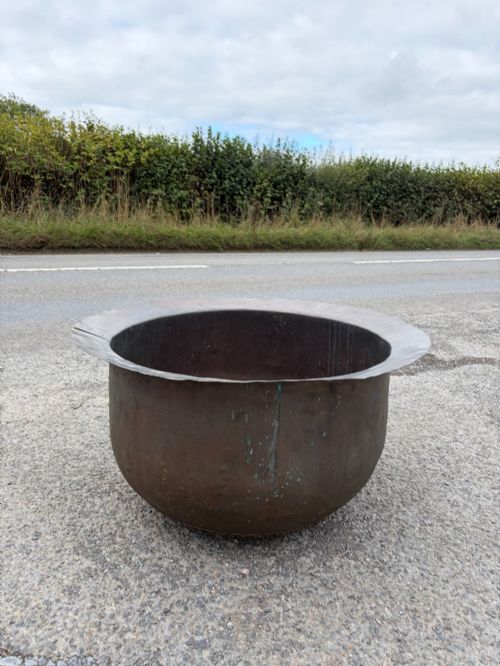
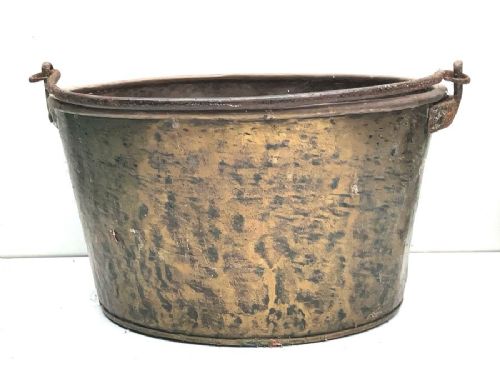
The forms vary from deep cylindrical pots with swing handles to wide bowls and wine cisterns. Many pieces show the marks of heavy domestic use, retaining the substantial proportions required for dairy work or laundry before finding a second life as planters.
How they were made
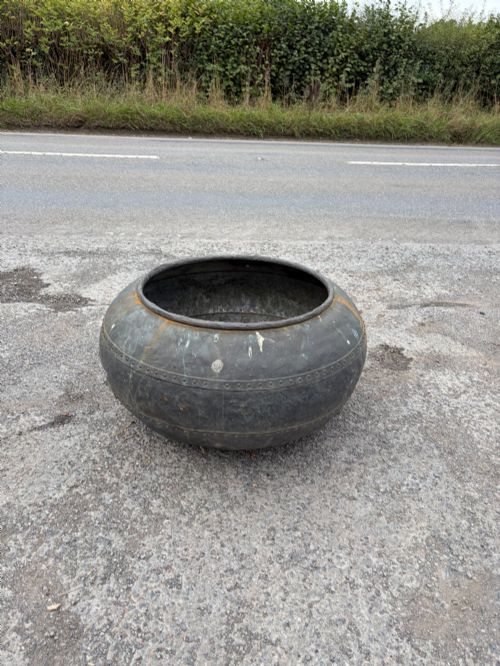
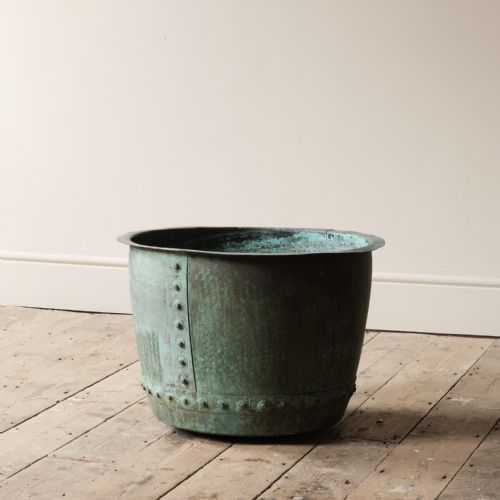
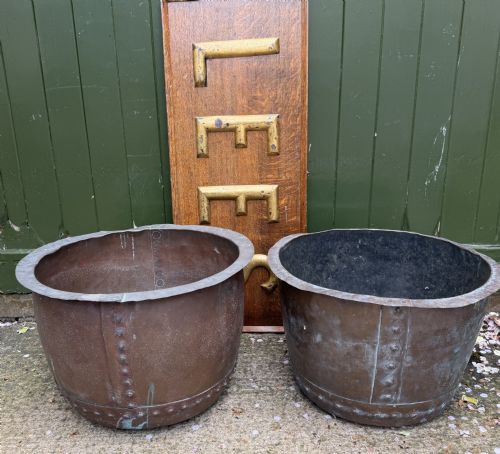
Makers formed these vessels predominantly from sheet copper, joining the seams with hand-beaten copper rivets that give the metalwork its distinct industrial character. Wrought iron and brass appear frequently on handles, swing Bails, and rim reinforcements, adding contrasting dark or golden tones.
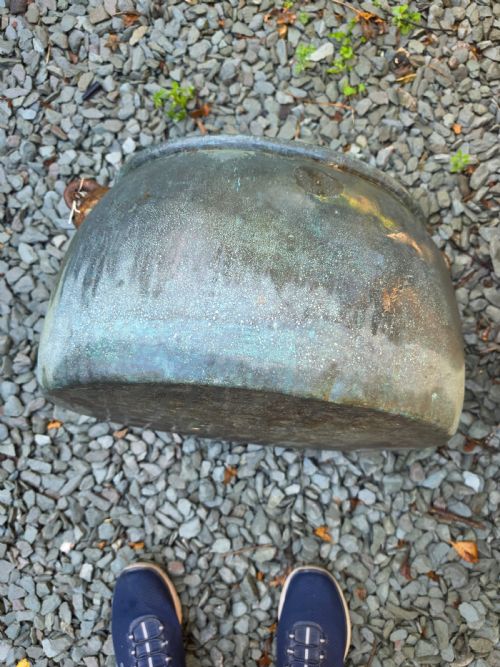
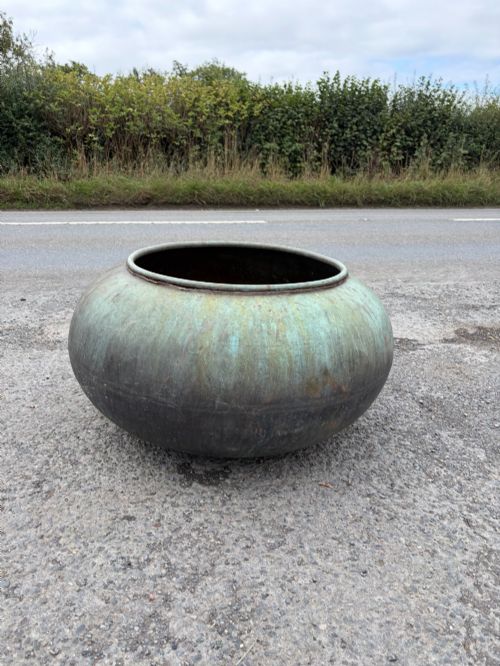
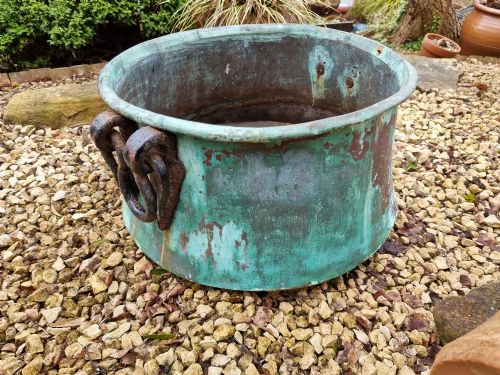
Sturdy materials like oak and zinc appear alongside copper in composite designs like jardiniere planters and wine coolers. Surface finishes develop naturally through age, displaying verdigris patinas and weathered tones derived from exposure to moisture and fire.
Rustic Copper Planter Retail Price Guide 2026
Typical asking prices for rustic copper planter among the pieces listed under this phrase on Sellingantiques today, from the lower quarter to the upper quarter. They describe what is for sale here now, not the wider market.
The listings span the eighteenth through the early twentieth centuries, featuring materials like wrought iron, oak, and brass alongside heavy copper.
What varies in quality
Quality rests in the integrity of the original construction, seen in heavy-gauge metal sheets and robust hand-riveting along the seams. Thicker copper walls resist buckling and maintain structural stability over decades of holding soil, water, or heavy logs.
Surface character distinguishes an appealing patina from indifferent wear. Pieces that retain their original wrought iron handles, balanced proportions, and honest traces of industrial use hold greater visual weight.
The Rustic Copper Planter Glossary
- Verdigris
- A green patina that forms naturally on copper over time through exposure to the elements. This oxidation layer is prized by collectors for its rich colour and aged character.
- Riveted
- Joined together using heavy metal pins hammered flat at the ends. This traditional construction method provides both structural strength and a distinct visual texture along the vessel seams.
- Cauldron
- A large round pot or kettle, typically equipped with a swing handle for suspension or transport. These heavy vessels were originally designed for boiling liquids over an open hearth.
- Jardiniere
- An ornamental pot or stand designed to hold growing plants or flowers. In metalwork, these often take the form of decorative bowls or footed vessels.
- Patina
- The surface appearance developed by copper and iron through age, handling, and environmental exposure. A good patina shows varied tones and depth rather than uniform brightness.
Rustic Copper Planter: Frequently Asked Questions
Can I use these planters outdoors?
Copper and iron weather outdoors by developing a natural green oxidation layer that protects the underlying metal.
Ensure proper drainage if planting directly into the vessel to prevent standing water from straining the historical seams.
How do I clean a copper planter?
Wash the surface gently with warm soapy water and a soft cloth to remove dirt without disturbing the aged metal.
Avoid abrasive cleaners and harsh chemical polishes that strip away the desirable verdigris patina.
What were these vessels originally used for?
Many of these pieces served practical domestic and agricultural roles such as laundering clothes, boiling water, setting cream, or heating vats.
Over generations, their robust construction and generous proportions made them natural candidates for holding logs or displaying large plants.
How do I date a copper planter?
Look to the construction methods, such as hand-hammered seams and heavy copper rivets typical of nineteenth-century workshop production.
Stylistic cues like Arts and Crafts embellishments or Georgian pan forms also help place the piece within a broad historical period.