

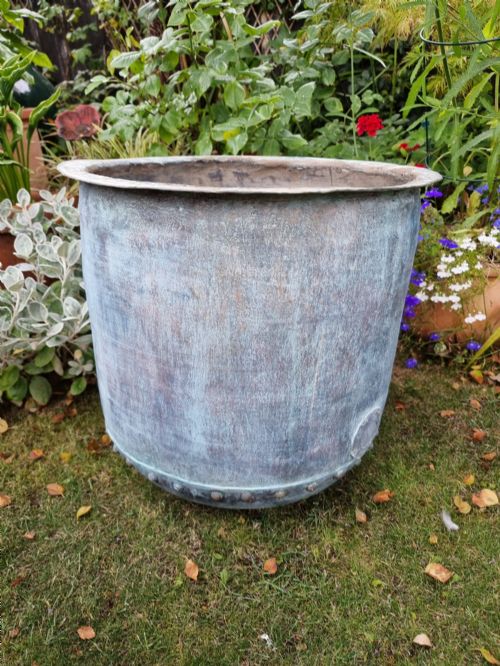

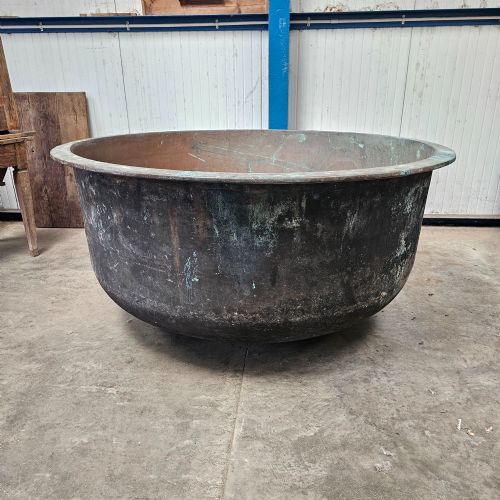
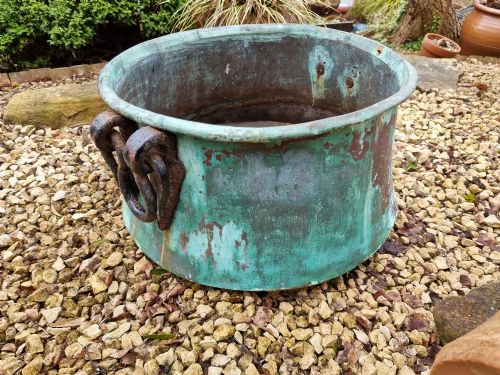


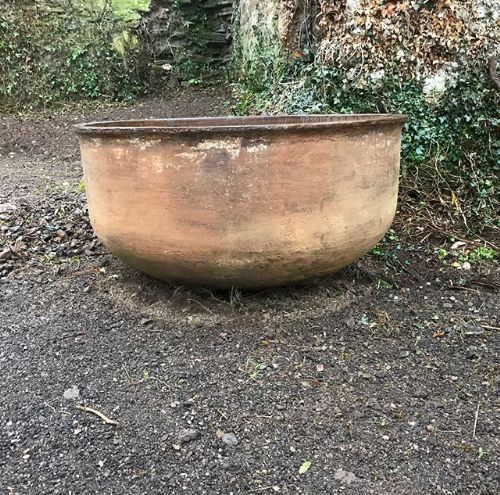
Large Copper Cauldron
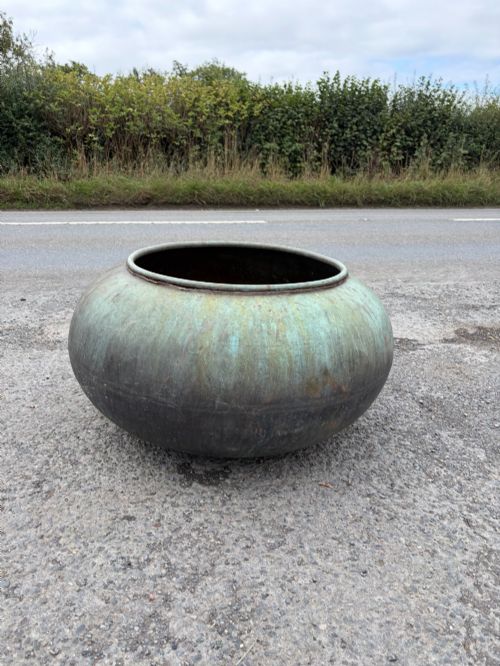
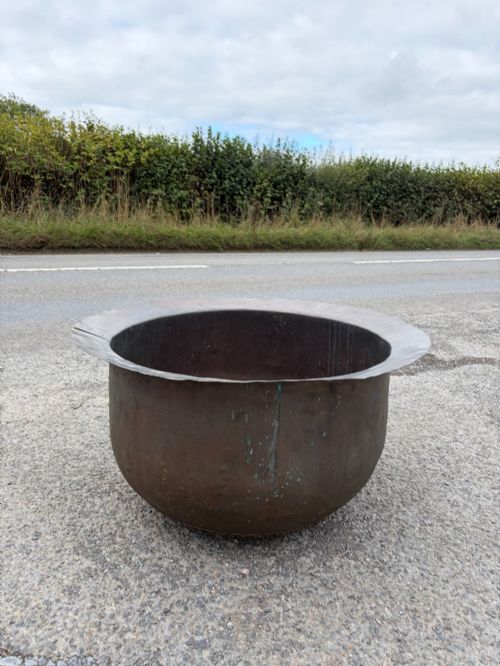
A large copper cauldron brings genuine heft and honest metalwork to a room, serving equally as a log bin, planter or fireside vessel.
Large Copper Cauldron
When you search for a large copper cauldron, you are looking at substantial metal vessels originally forged for cooking, boiling, or dairy production in Georgian and Victorian households. These pieces appear on this page primarily as robust log bins, garden planters, and fireplace accessories.
The selections span from 1800 through the Victorian era and into the early twentieth century, incorporating French country variants alongside domestic English examples. Such items transition naturally from utilitarian farmhouses and industrial settings to contemporary interior displays.
Construction and metalwork
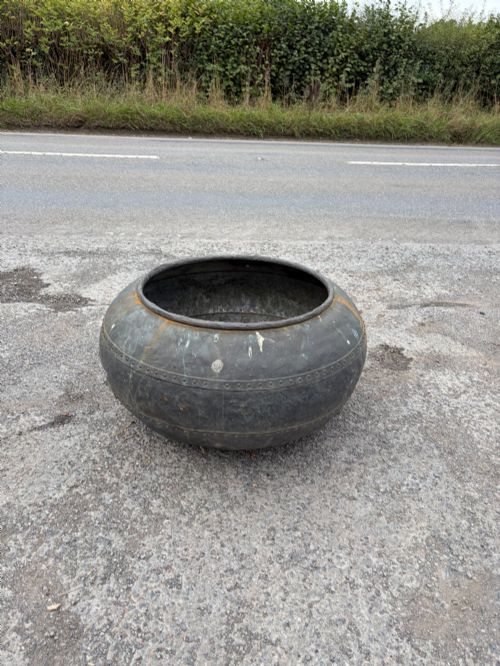
These vessels rely on heavy-gauge copper plates joined by hand-hammered rivets, often paired with contrasting wrought iron swing handles or cast iron mounts. The working edges frequently incorporate folded rims or reinforced brass bands to maintain structural rigidity under heavy loads.
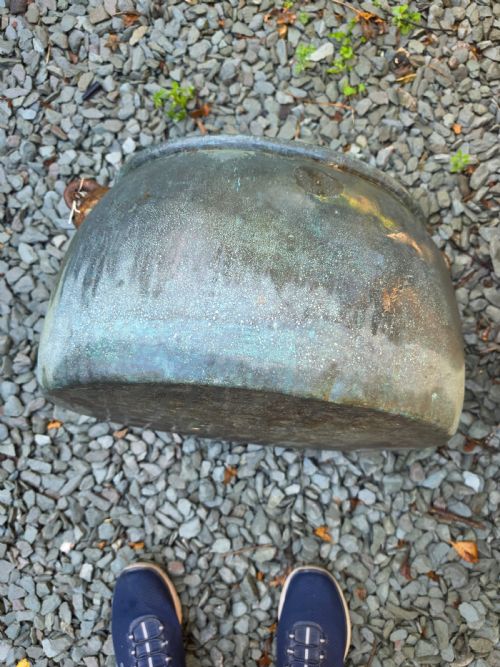
Surfaces accumulate natural verdigris, original patina, and historic paint traces over decades of use, recording the physical process of their creation and subsequent utility.
Large Copper Cauldron Retail Price Guide 2026
Typical asking prices for large copper cauldron among the pieces listed under this phrase on Sellingantiques today, from the lower quarter to the upper quarter. They describe what is for sale here now, not the wider market.
Several vessels retain traces of ancient cheese curds or hearth soot, proving they worked hard for a living before retiring to the fireside.
Judging build and preservation
Quality rests in the thickness of the beaten metal wall and the integrity of the riveted seams rather than mere surface shine. Vessels retaining their original wrought iron swing handles and heavy lids command greater interest than those altered or stripped down over time.
The depth of the natural verdigris and the preservation of the original hearth patina separate ordinary utilitarian metal from pieces with distinct decorative presence.
The Large Copper Cauldron Glossary
- Verdigris
- The green patina formed naturally on copper through atmospheric oxidation over long periods. This surface layer provides an indicator of age and exposure.
- Riveted
- Joined with metal pins hammered flat to secure overlapping sheets of copper. This technique predates modern welding in these heavy vessels.
- Dinanderie
- European brass and copper hollowware or decorative metalwork. The term applies to pieces shaped by hand hammering.
- Swing handle
- A movable bail handle attached to opposite sides of the vessel. It allows a heavy pot to be tilted or carried.
Large Copper Cauldron: Frequently Asked Questions
How were these large copper cauldrons originally used?
These vessels served heavy domestic and agricultural duties, including bulk cooking, laundry boiling, and cheese making in large rural kitchens. Their robust metal construction allowed them to hang safely over open hearths or sit directly upon heat sources.
Over time, many transitioned into dairy vats or wash tubs before finding a secondary life beside the fireplace as log holders or in gardens as planters.
Can these metal cauldrons be used outside?
Copper and iron vessels tolerate outdoor environments well, developing deeper verdigris patinas when exposed to weather and soil moisture. Many examples function effectively as garden planters or display pots.
Garden placement requires considering drainage and ensuring the heavy metal base rests securely on level ground to prevent tipping.
How do I date a Georgian versus a Victorian piece?
Georgian examples, dating around 1800 to 1820, frequently display heavier hand-beaten construction, distinct rim profiles, and specific Georgian proportions. Victorian pieces often incorporate standardised riveted seams and wider utility variations.
Examining the handle attachments, rivet styles, and interior tool marks helps establish whether a piece belongs to the early nineteenth century or later decades.
How do I clean and maintain antique copper?
Preserving the historical integrity of these pieces usually involves removing dust with a soft, dry cloth rather than applying aggressive chemical polishes. Retaining the original patina and verdigris protects the character accumulated over a century or more.
Active use as log bins or indoor planters requires only gentle wiping to keep the heavy metal stable within a room.