



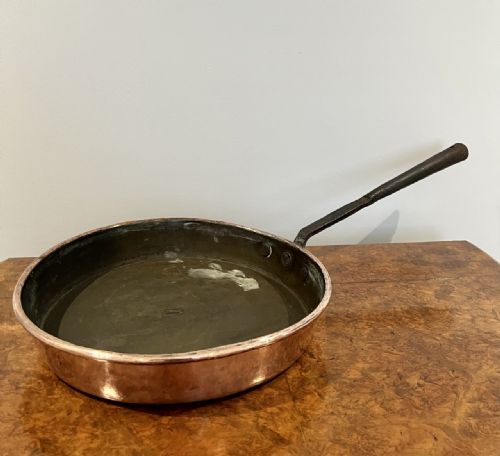

Heavy Gauge Copper Pan
These heavy gauge copper pan examples are substantial kitchenware built for serious cooking, prized for their thermal conductivity and enduring utility.
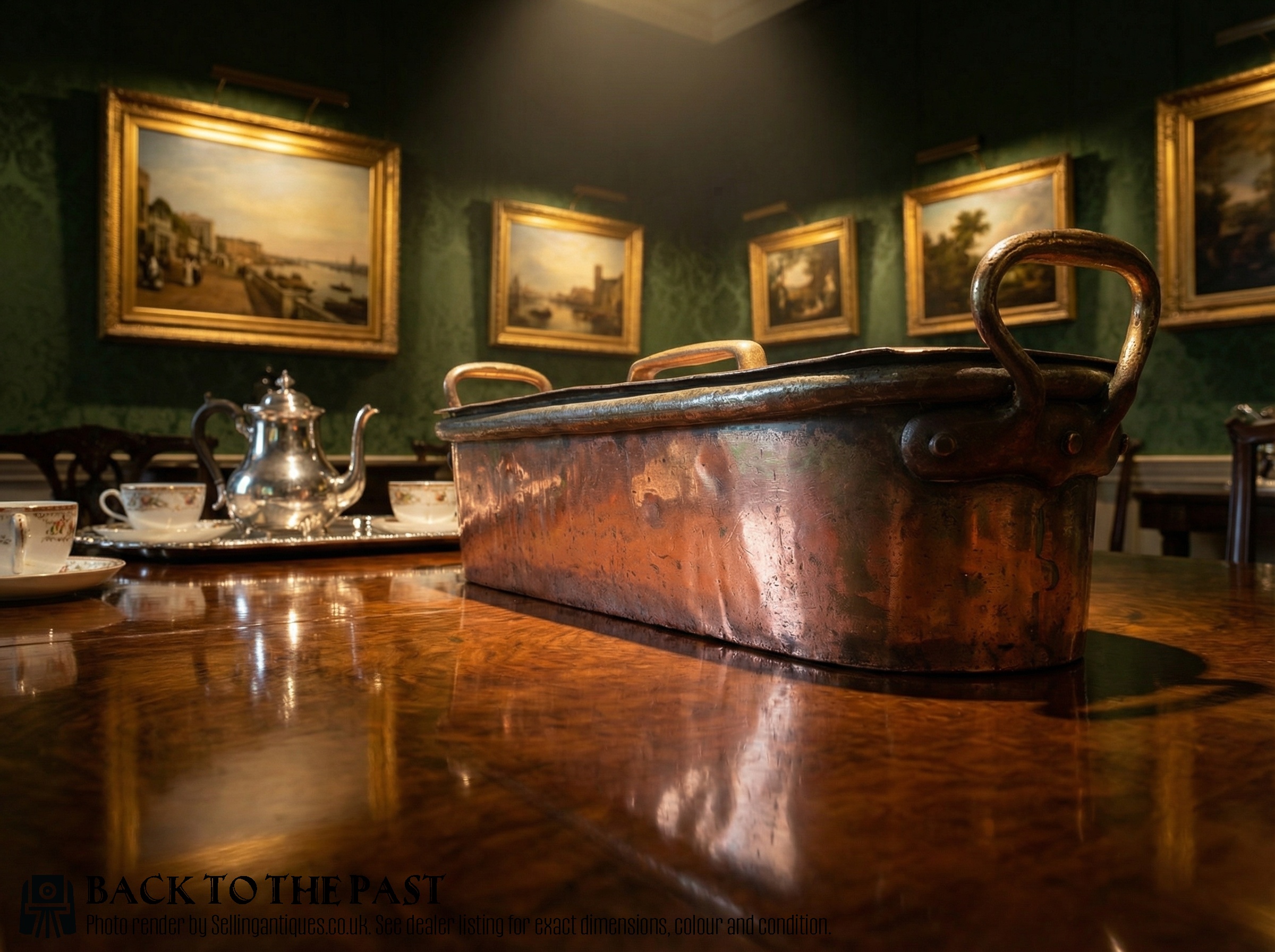
Heavy Gauge Copper Pan
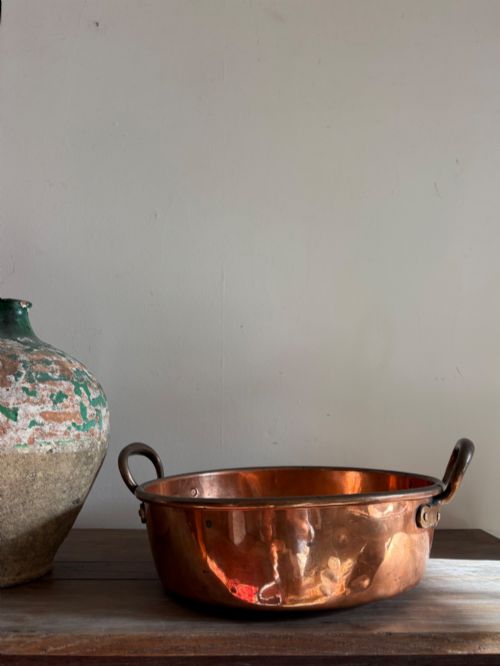
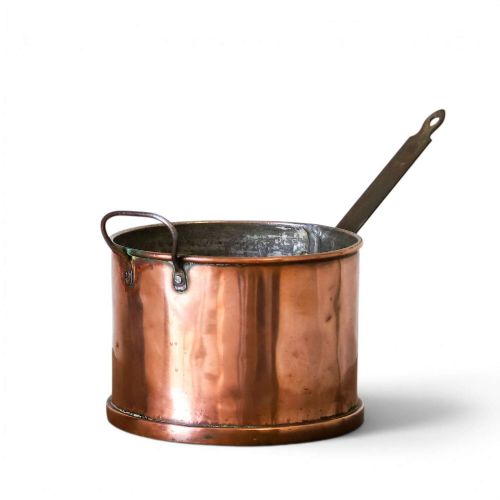
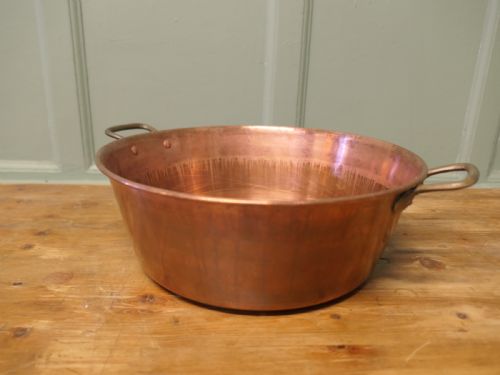
A heavy gauge copper pan represents functional kitchenware designed for serious culinary work, spanning the Georgian, Victorian, and nineteenth-century periods. These items encompass large preserve pans, jam pans, cream setting pans, fish kettles, and saucepans.
Buyers frequently encounter nineteenth-century pieces alongside Georgian examples, often featuring sturdy iron handles or brass fittings. The selection includes individual vessels as well as matched sets originating from English and French makers.
Forms range from deep cooking vessels and milk pans to double-handled preserve pans built for heavy domestic use. Their substantial weight distinguishes them from lighter decorative kitchenware of later eras.
How they were made
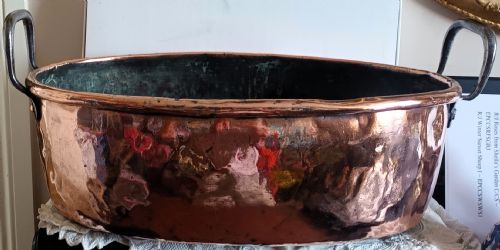
Makers fashioned these vessels using thick copper sheeting, often hand-beaten to shape the metal while increasing its structural rigidity. Wrought iron or cast iron handles were securely attached to the heavy bodies using robust rivets.
Many examples incorporated brass mounts and fittings to reinforce stress points and secure handles. Tin linings were traditionally applied to the interior surfaces to prevent direct contact between acidic foods and the copper.
Heavy Gauge Copper Pan Retail Price Guide 2026
Typical asking prices for heavy gauge copper pan among the pieces listed under this phrase on Sellingantiques today, from the lower quarter to the upper quarter. They describe what is for sale here now, not the wider market.
Listings feature copper, brass, iron, and tin across nineteenth-century and Georgian kitchenware.
What varies in quality
The thickness of the metal plate dictates the structural integrity of the vessel, with heavier gauges offering superior heat distribution and durability. Superior examples display careful hand-beating that maintains an even wall thickness throughout the body.
The method of handle attachment and the choice of iron or brass components reveal the standard of workshop execution. Maker stamps and clean dovetail or riveted seams distinguish workshop production from standard commercial output.
Liptons
The Heavy Gauge Copper Pan Glossary
- Heavy gauge
- A term denoting thick sheet metal that resists warping under intense heat and sustained professional use. This robust construction is characteristic of substantive culinary vessels.
- Preserve pan
- A wide, open vessel designed for boiling fruit and sugar, allowing rapid evaporation during jam-making. These items typically feature strong handles for lifting heavy loads.
- Cream setting pan
- A wide, shallow container utilised in dairies to allow cream to rise to the surface of milk. These pieces reflect specialised agricultural and domestic processing.
- Fish kettle
- An elongated cooking vessel equipped with a fitted lid, designed to poach whole fish evenly. Such items showcase specialised nineteenth-century kitchenware forms.
- Hand-beaten
- A manufacturing process where hammers shape the copper sheet manually, leaving subtle facets across the surface. This technique hardens the metal during formation.
Heavy Gauge Copper Pan: Frequently Asked Questions
How do I clean old copper?
Traditional methods involve mild acidic solutions like lemon juice and salt to lift oxidation without scratching the metal. Gentle polishing maintains the natural metallic sheen.
Avoid abrasive pads that remove too much of the historic surface. Regular wiping keeps the metal stable.
Can I cook with antique pans?
Many surviving vessels remain functional provided the interior tin lining is intact and sound. Acidic foods require a complete lining to prevent direct contact with the copper.
Professional re-tinning services can restore worn interiors for modern culinary use. Inspection of the rivets ensures structural safety.
How do I date a copper pan?
Handle styles, construction methods, and maker stamps help narrow down the period of production. Georgian and Victorian pieces often show distinct hand-beaten marks and heavy iron handles.
Comparing the weight and rim construction against dated examples provides further chronological clues. Dovetailed seams often point to earlier manufacturing dates.
Why are some pans so heavy?
Thick copper walls were necessary to distribute heat evenly across open hearths and commercial stoves. This substantial material prevented scorching during long periods of preserving and boiling.
Heavier gauges also resisted the denting and warping typical of daily kitchen service. This durability explains their survival in usable condition.