


Traditional Copper Cookware
Traditional copper cookware brings heavy gauge metal and seasoned tin into the kitchen for serious cooking.
What traditional copper cookware is
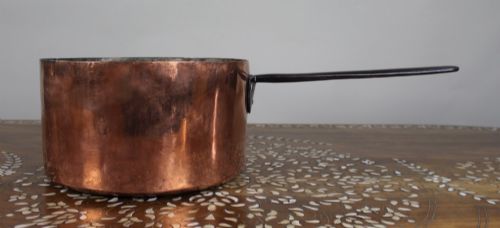
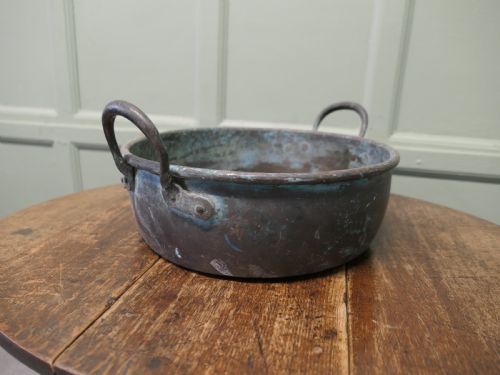
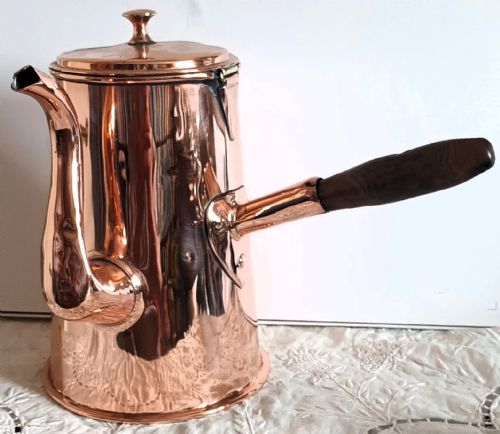
Traditional copper cookware comprises heavy metal pans designed for heat control and durability in the kitchen. Buyers seeking traditional copper cookware will find heavy saucepans and multi-pan sets dating from the Georgian and Victorian eras.
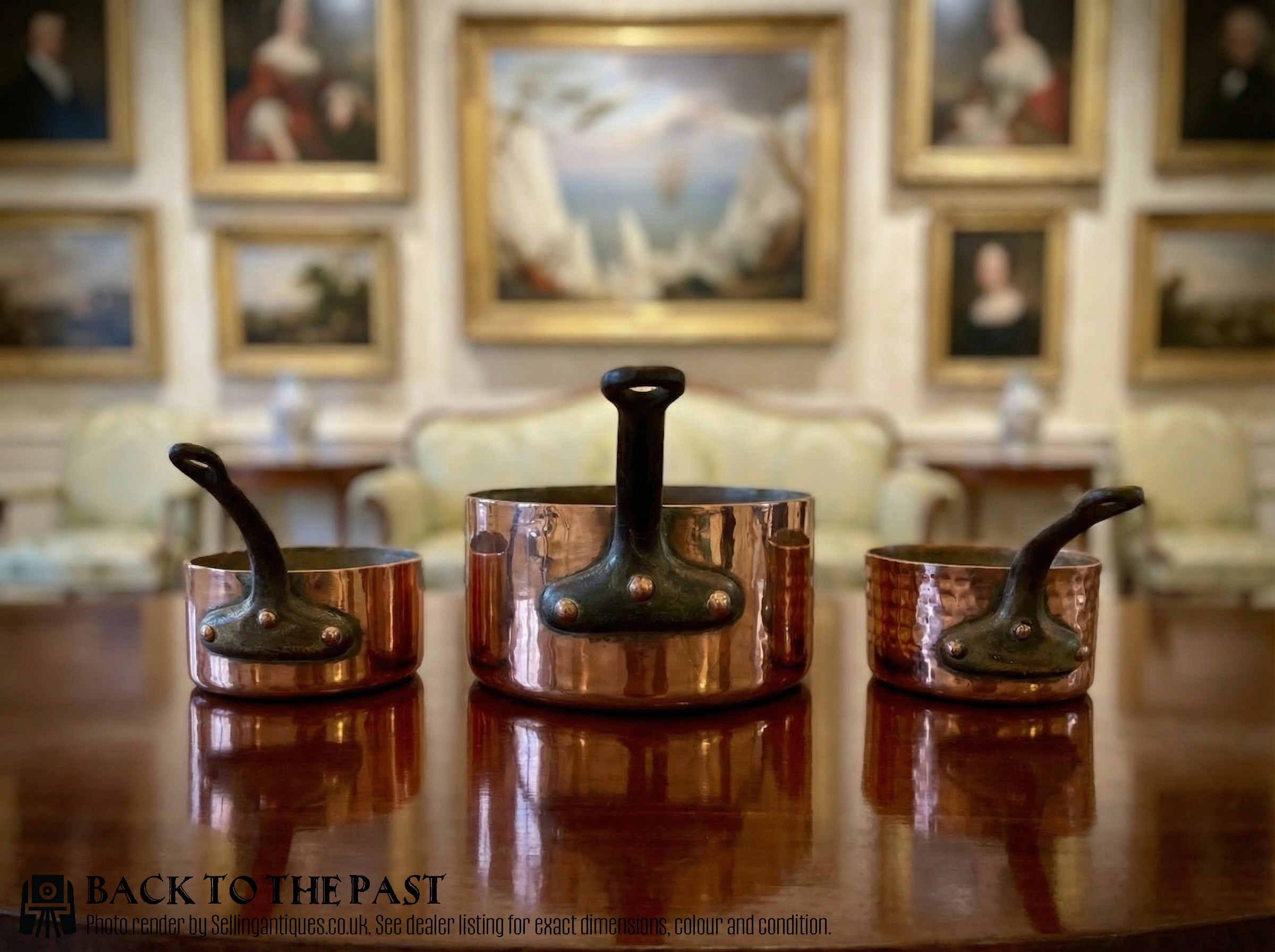
The selections on this page concentrate on saucepans, ranging from single heavy vessels to sets of four. These pieces originate from the Georgian and Victorian periods, spanning the years from eighteen hundred to eighteen sixty.
How they were made
These pieces utilise heavy sheets of copper formed into deep vessels for culinary use. Iron and wrought iron provide sturdy handles riveted directly to the heavy copper bodies.
Makers finished the interiors with a thin layer of tin to prevent food from reacting with the copper metal. Cast iron also appears in handles, offering robust support for lifting heavy pans.
Retail Price Guide 2026
Typical UK retail prices for traditional copper cookware, calculated from the Sellingantiques database of over a million retail prices indexed since 2003. This retail price guide relies exclusively on Sellingantiques data; no external sources or auction records are used, so the figures do not describe the wider market.
Object forms on this page include saucepans and matched sets of four pans.
What varies in quality
Quality separates simple utility vessels from substantial kitchen pieces through the thickness of the metal and the integrity of the construction. Heavier gauge copper and solid iron handles distinguish the finest items from standard kitchenware.
The presence of maker marks, such as Hodges and Sons, denotes superior workshop production from the Victorian era. Sets matched in age and style demonstrate greater craftsmanship than assembled groups of mixed origin.
Hodges and Sons
The Traditional Copper Cookware Glossary
- Gauge
- The thickness of the metal sheet used to form the pan body. Thicker gauge copper distributes heat more evenly across the base.
- Tinning
- The protective inner coating applied to copper pans to separate food from the reactive metal. This layer requires periodic renewal through the life of the vessel.
- Wrought iron
- A tough, fibrous iron alloy hammered into shape for handles and mounts. It resists bending under heavy loads.
- Georgian
- The design period spanning the reigns of the first four Georges, noted for robust utility and proportion. Pieces from this era carry simple lines suited to open hearth cooking.
Frequently Asked Questions
How do I clean copper pans?
Clean copper surfaces with traditional polishing pastes formulated to remove tarnish without scratching the metal.
Avoid abrasive scourers that thin the copper over years of maintenance.
Can I cook with antique copper?
Historic pans require an intact tin lining on the interior before preparing food.
Specialist tinning services restore the interior coating for modern culinary use.
How do I date these pans?
Examine the handle attachment methods, dovetail joints on the base, and overall weight.
Georgian pieces often display different handle contours compared to Victorian workshop production.
Why use heavy copper cookware?
Copper provides rapid thermal conductivity for precise temperature control during cooking.
Heavy gauge walls maintain steady heat across sauces and reductions.