


Copper Preserve Pan
A copper preserve pan brings warmth and practical heritage to any modern kitchen, offering durable utility rooted in centuries of culinary tradition.
Copper Preserve Pan
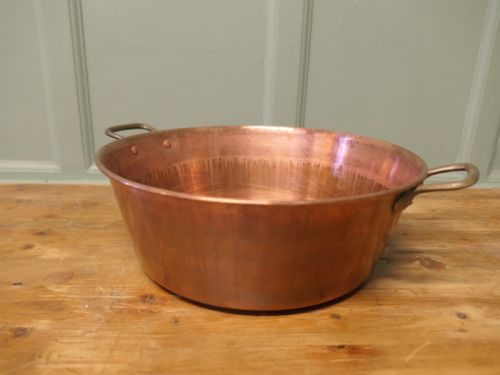
A copper preserve pan is a heavy kitchen vessel designed specifically for boiling fruit and sugar into jams and preserves. When searching for a copper preserve pan, buyers encounter robust domestic cookware spanning the Georgian, Victorian and early twentieth-century periods.
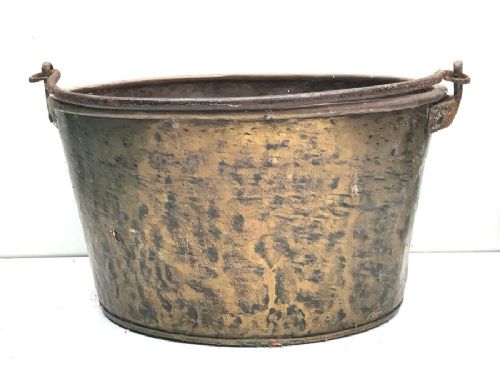
These pans appear in various traditional forms, including double-handled jam pans, cream setting pans, and swing-handled cooking vessels. Most examples found here belong to the nineteenth century, often showing the generous proportions typical of large country house kitchens and rustic farmhouse settings.
How they were made
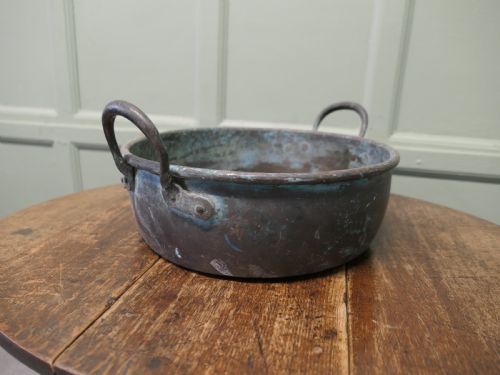
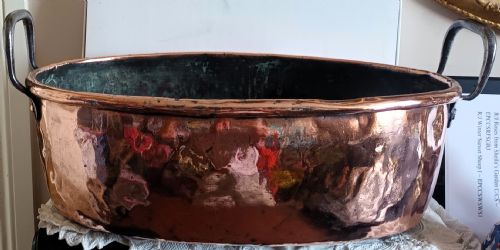
Makers formed these vessels primarily from hammered sheet copper, frequently pairing the main body with sturdy iron, brass, or wrought iron handles. Rivets secure the handles firmly to the sides, reflecting the heavy-duty demands of daily kitchen use.
Many pans feature rolled rims and hand-beaten surfaces that display the distinct marks of the artisan's hammer. Interiors often retain traces of tin lining, applied to prevent the acidic fruit mixtures from reacting directly with the copper.
Copper Preserve Pan Retail Price Guide 2026
Typical asking prices for copper preserve pan among the pieces listed under this phrase on Sellingantiques today, from the lower quarter to the upper quarter. They describe what is for sale here now, not the wider market.
Listings feature copper, brass, iron, wrought iron, bronze, and tin across Georgian, Victorian, and early twentieth-century domestic cookware.
What varies in quality
The distinction between standard utility vessels and superior pieces lies in the thickness of the metal and the integrity of the construction. Heavier gauge copper provides better heat distribution and retains its structural rigidity over generations of use.
Finishing details such as cleanly forged iron handles, neat hand-beating, and maker stamps elevate certain pans above ordinary kitchen ware. The survival of original fittings and balanced proportions also distinguishes finer examples from everyday domestic survivors.
Hodges and Sons
The Copper Preserve Pan Glossary
- Jam pan
- A wide, open copper vessel designed for boiling fruit and sugar rapidly to evaporate moisture. The shallow shape allows steam to escape efficiently during the preserving process.
- Cream setting pan
- A specialised wide-rimmed basin used historically in dairies to allow cream to rise to the top of milk. These pieces share the durable copper construction seen in preserving pans.
- Swing handle
- A movable arched handle attached to opposite sides of a pan, allowing it to swing freely. This feature provides flexibility when lifting heavy loads from hearths or stoves.
- Tin lining
- A protective metallic coating applied to the interior surface of copper cookware. This layer stops acidic foods from reacting with the copper during cooking.
- Riveted
- Joined together using heavy metal pins hammered flat at the ends. This traditional fastening method ensures handles stay secure under heavy weights.
Copper Preserve Pan: Frequently Asked Questions
Can I still cook with a copper preserve pan?
These historical vessels remain usable today, provided the interior lining is intact and clean. Many cooks still value copper for its unmatched heat conductivity when making jams.
Buyers should inspect the interior condition before culinary use. Modern maintenance involves gentle cleaning to preserve the historic exterior finish.
How do I clean an antique copper pan?
Routine maintenance requires warm soapy water and a soft cloth to remove dust and grease. Avoid harsh abrasives that scratch the historic surface.
Specialist copper cleaners can restore the bright metallic shine if desired. Many collectors prefer to leave a mellow, aged patina intact.
How do I date a copper preserve pan?
Dating relies on observing construction methods, handle shapes, and maker marks. Georgian and early nineteenth-century pieces often feature hand-forged iron mounts and irregular hand-beaten surfaces.
Later Victorian and twentieth-century examples typically display standardised machine rolling and uniform riveting. Comparing the weight and rim style helps narrow down the production era.
Why do some pans have iron handles?
Iron handles provided the strength needed to lift heavy pans filled with boiling sugar and fruit. Blacksmiths forged these robust mounts to withstand intense hearth heat.
Brass and bronze handles also appear on certain vessels, offering an alternative aesthetic and structural durability. Each material choice reflects the specific workshop traditions of the period.