
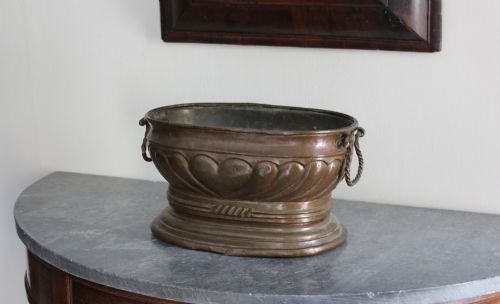

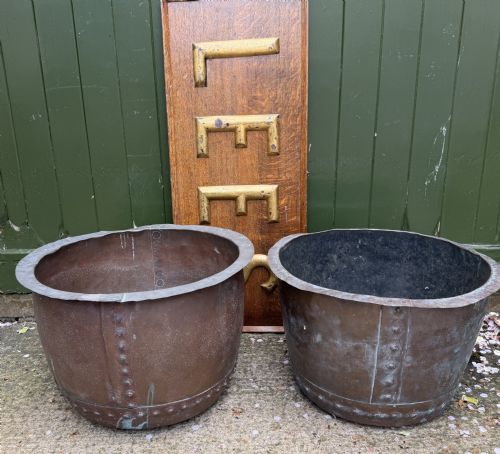


Large Copper Basin
A large copper basin offers substantial utility and honest warmth, bringing centuries of robust metalwork directly into contemporary interiors.
What a large copper basin is
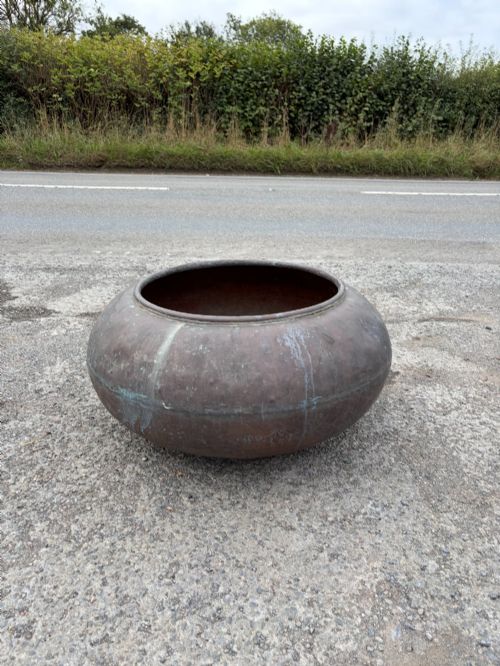
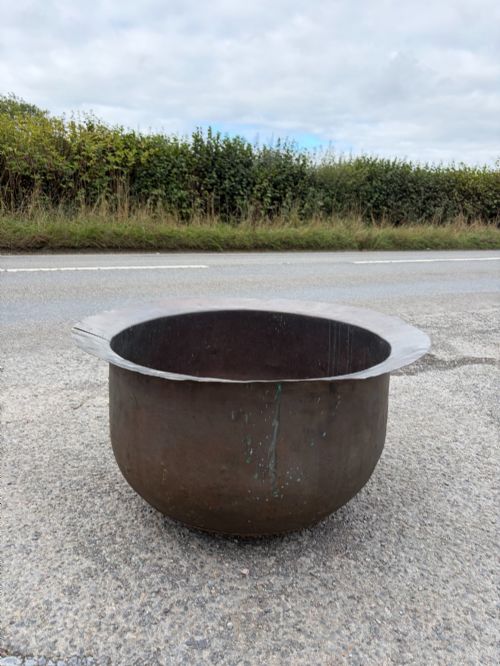
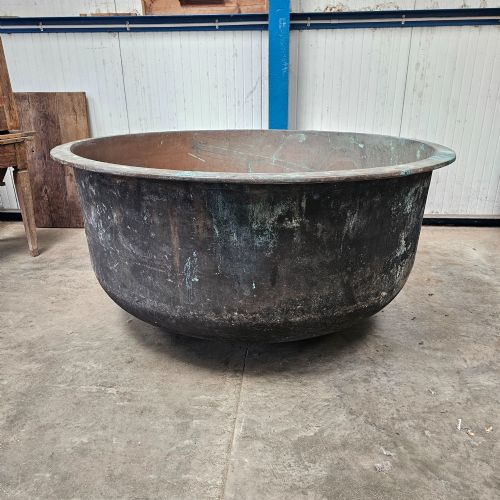
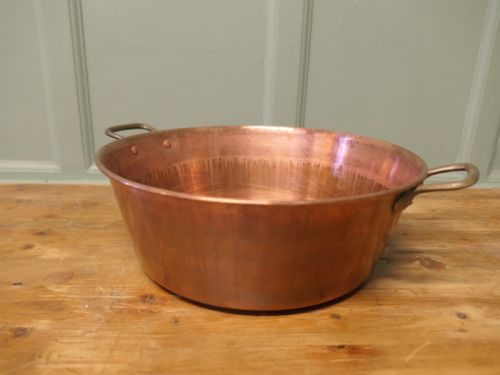
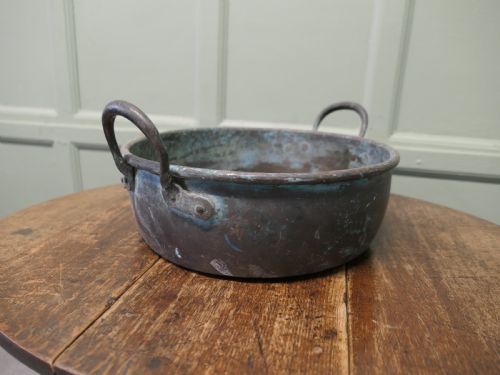
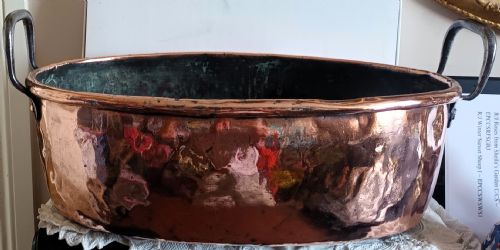
A large copper basin comprises functional vessels designed for domestic, agricultural, and culinary use, appearing across nineteenth-century and Georgian periods. These pieces include heavy-duty pans, dairy setting pans, cooking vessels, and deep bowls.
Buyers encountering this category will find items originating from English and French traditions, often reflecting robust country house or dairy applications. The forms remain heavy and utilitarian, shaped for physical work rather than decorative display.
The selection on this page centres on sturdy cookware and containers from the 1800s, 1850, and 1860. These objects represent durable nineteenth-century craftsmanship in copper, reinforced with iron and brass components.
How they were made
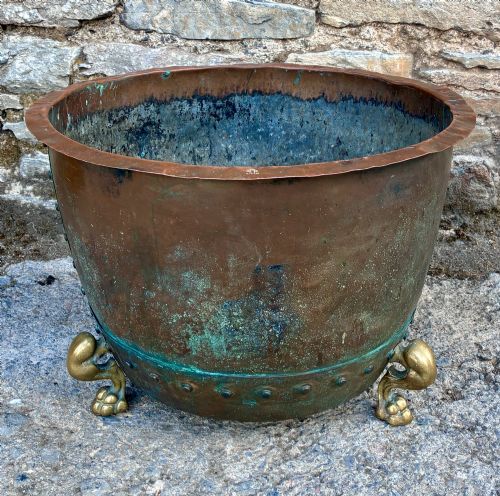
The construction of a large copper basin involves hammering and shaping sheet metal, frequently combined with iron handles or brass fittings. Makers joined sections using traditional techniques to ensure durability under heavy domestic loads.
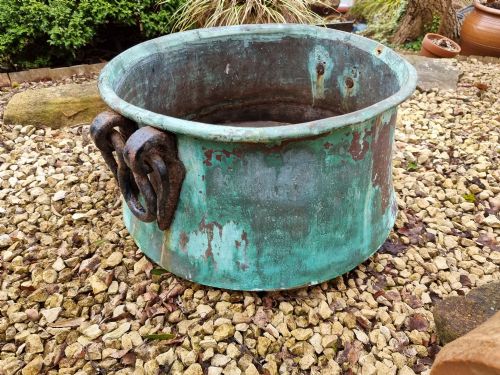
Materials span pure copper alongside supportive elements of wrought iron and brass, reflecting the functional demands placed on dairy pans and cooking pots. These metals weather naturally, developing patinas born of active use.
Retail Price Guide 2026
Typical UK retail prices for large copper basin, calculated from the Sellingantiques database of over a million retail prices indexed since 2003. This retail price guide relies exclusively on Sellingantiques data; no external sources or auction records are used, so the figures do not describe the wider market.
Current listings feature pieces spanning the 1800s to 1860, utilising copper, iron, brass, and wrought iron in various cookware forms.
What varies in quality
Quality within a large copper basin rests upon the thickness of the metal plate and the integrity of the original construction. Heavier gauge copper and robustly attached iron handles separate superior utility pieces from lighter vessels.
Maker attribution and period integrity elevate certain examples, particularly where workshops like Hodges & Sons marked their output. The harmony between utilitarian survival and honest patination defines the upper tier of these items.
Hodges and Sons
The Large Copper Basin Glossary
- Copper
- A malleable reddish metal utilised for centuries in the manufacture of heavy cookware and large basins due to its excellent thermal conductivity.
- Wrought iron
- A tough, fibrous iron alloy commonly used for structural handles and rims on nineteenth-century cooking vessels.
- Dairy pan
- A shallow, wide container historically employed in rural settings for setting milk and separating cream.
- Ferrat
- A traditional French metal vessel associated with hearth cooking and food preparation.
- Patina
- The surface sheen and colour variation developed over decades of exposure, handling, and polishing.
Frequently Asked Questions
What were large copper basins used for?
These vessels served demanding roles in domestic kitchens, dairies, and farmhouses across the Georgian and Victorian eras. Their generous proportions suited boiling, preserving, and setting cream.
Over time, many transitioned from active service to decorative storage or fireplace ornamentation within country interiors.
How do I date a copper basin?
Dating relies upon examining construction methods, handle attachments, and metal thickness. Pieces from the Georgian period often display different hammering patterns compared to later Victorian items.
Maker stamps or engraved workshop marks, when present, provide the most direct evidence of a specific decade.
Are these basins safe for cooking?
Many antique vessels were originally lined with tin to prevent food from reacting directly with the copper. Buyers intending to cook should check the interior surface condition and tinning integrity.
For decorative display or holding dry goods, the original unlined or aged interior requires no modification.
How do I clean a copper basin?
Maintenance depends entirely on whether a bright metallic finish or an aged patina is preferred. Gentle cleaning with appropriate metal care products removes active tarnish without stripping historical character.
Many collectors prefer leaving the dark, rich oxidation undisturbed to honour the age of the piece.