


Copper Fire Log Bucket
A copper fire log bucket brings warmth to a hearth, combining metalwork with practical fireside storage.
Copper Fire Log Bucket
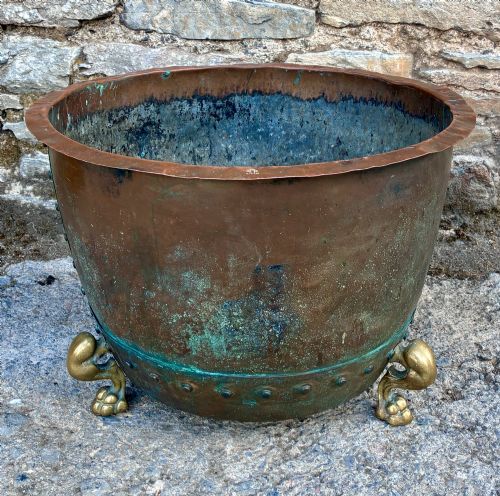
A copper fire log bucket serves as a sturdy container for holding firewood beside a hearth, often doubling as a coal scuttle or planter. When searching for a copper fire log bucket, you encounter pieces spanning the Georgian, Victorian, and Arts and Crafts periods. These objects originate from domestic and utilitarian contexts, evolving from simple boilers and cauldrons into decorative fireside accessories.
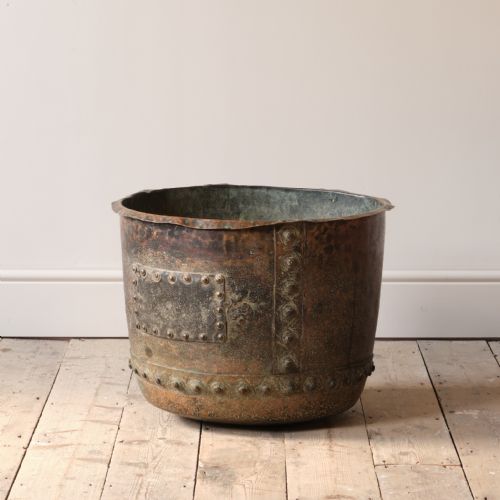
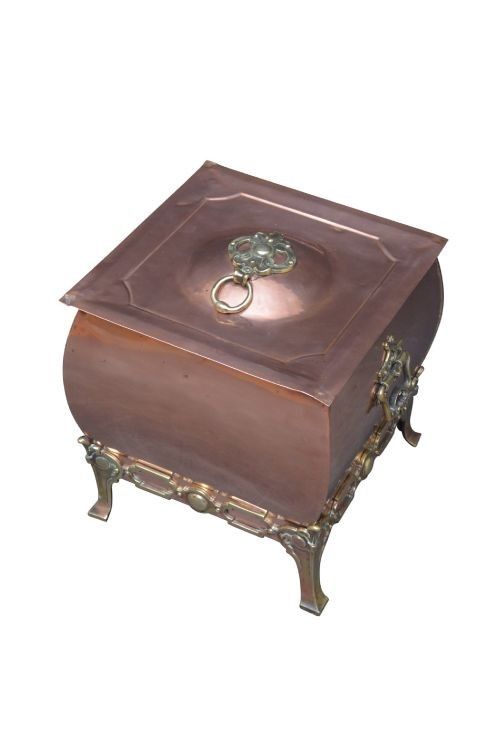
The most common forms seen on this page include cylindrical log bins, riveted boilers, and handled buckets finished with brass or iron accents. Many examples date from the nineteenth century, showing heavy metal construction designed for daily household use. Alongside standard log bins, the listings feature specialised vessels such as ferrats, cauldrons, and coal purdoniums.
How they were made
Makers constructed these vessels primarily from sheet copper, joining the seams with visible iron rivets to ensure structural strength. Brass handles, swing arms, and paw feet were frequently attached to the copper bodies using rivets or solder. Wrought iron and zinc also appear in structural elements and internal linings, providing additional durability for heavy fuel loads.
Surface finishes range from highly polished metal to patinated or verdigris surfaces developed through age and exposure. Beaten and hammered textures predominate in Arts and Crafts examples, whereas earlier Georgian and Victorian vessels often display smooth sheet metal construction with rolled rims.
Several of these sturdy vessels spent decades holding firewood before beginning a second retirement as garden planters.
What varies in quality
The quality of a copper fire log bucket rests upon the weight of the metal and the integrity of its construction. Thicker gauge copper resists dents better and maintains its structural form under the heavy weight of logs. Hand-hammered detailing and secure, well-fitted brass mounts distinguish finer Arts and Crafts pieces from standard utilitarian ware.
Proportion and the handling of seams also separate ordinary items from superior examples. Pieces with neat, evenly spaced riveting and well-balanced swing handles demonstrate higher standards of period metalworking craftsmanship.
The Copper Fire Log Bucket Glossary
- Ferrat
- A traditional metal vessel or tub used for holding fuel or water. These pieces often feature sturdy handles for hearth use.
- Riveted
- Joined together with small metal pins that are hammered flat on the ends. This method creates visible, structural seams characteristic of nineteenth-century metalwork.
- Purdonium
- A specialised coal box or container designed for domestic fireside use. They frequently include a hinged lid and an inner metal liner.
- Verdigris
- The green patina that forms naturally on copper over time through oxidation. Collectors often value this aged surface for its historical appearance.
Copper Fire Log Bucket: Frequently Asked Questions
How were these buckets used originally?
These vessels served primarily to transport and store coal or firewood near a fireplace for domestic heating. Households relied on their sturdy metal construction to contain rough fuel without damaging interior floors.
Over time, many of these utilitarian containers transitioned into decorative interior items or garden planters once central heating replaced open hearths.
How do I clean a copper bucket?
Cleaning depends entirely on whether you prefer a bright, polished metallic finish or wish to preserve the dark historic patina. Gentle washing with warm soapy water removes household dust and soot without harming the metal.
Avoid harsh abrasive compounds unless you specifically want to strip away the accumulated oxidation built up over centuries.
Can I use these outdoors as planters?
Many examples on this page are listed as dual-purpose log bins and garden planters due to their durable copper construction. The metal withstands damp soil conditions well, though drainage should be considered.
Placing them on patios or in gardens allows the metal to develop further verdigris through exposure to the elements.
How do I date a copper log bucket?
Dating relies on observing construction methods, handle styles, and design motifs associated with specific periods like the Georgian era or Arts and Crafts movement. Rivet types and rim formations often indicate whether a piece originates from the early nineteenth century or the late Victorian period.
Makers' stamps or specific aesthetic traits can narrow down the manufacturing decade further when present.