
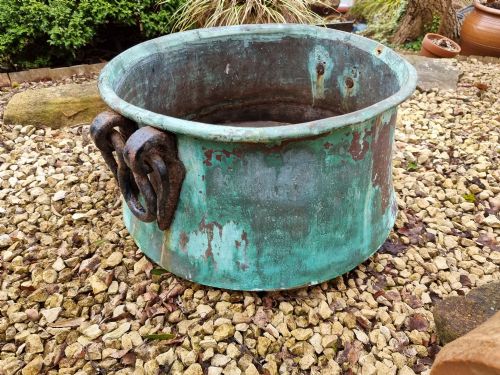


Large Copper Garden Pot
These large copper garden pot examples offer generous proportions and aged metal character for exterior spaces.
Large Copper Garden Pot
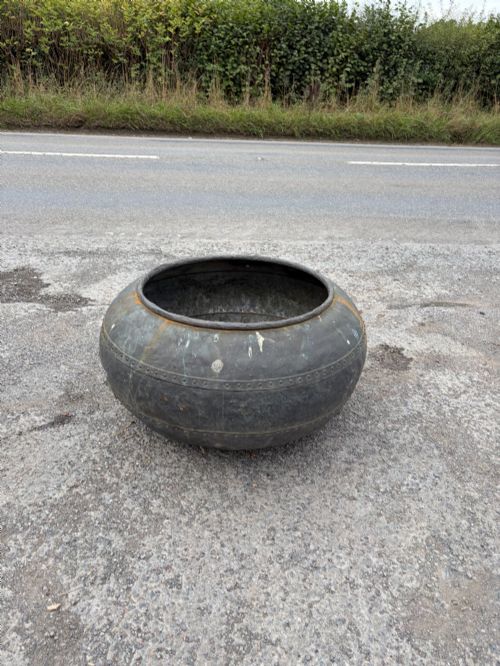
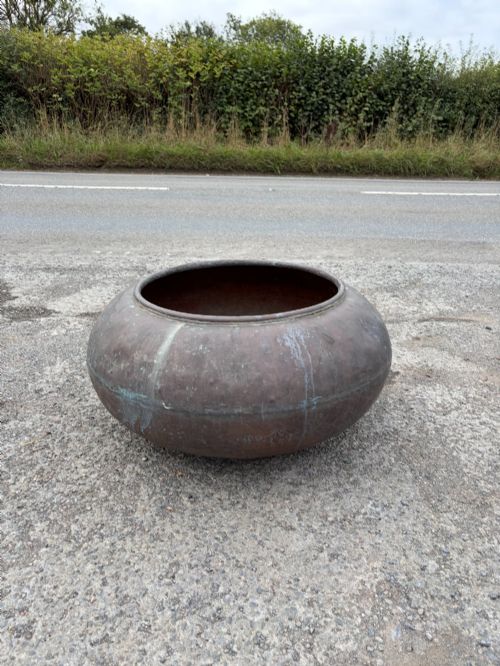
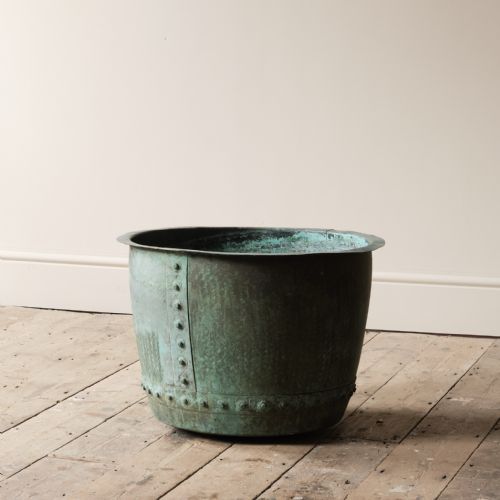
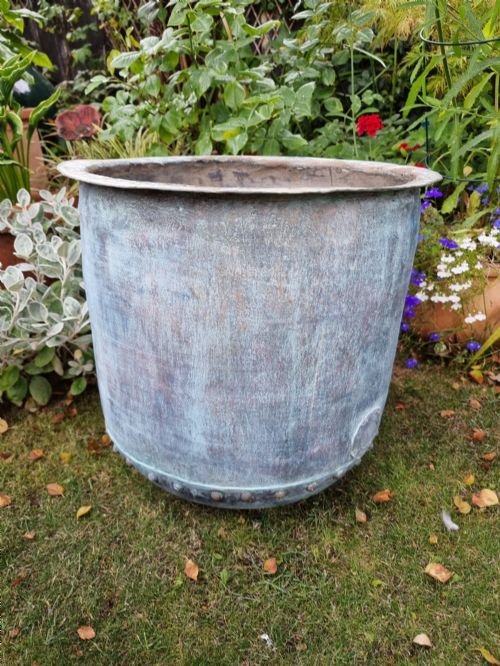
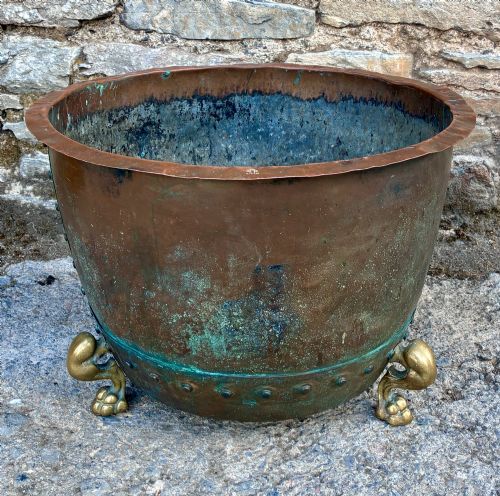
A large copper garden pot brings substantial scale and functional presence to outdoor planting schemes. When searching for a large copper garden pot, buyers encounter 19th-century vessels originally built for utilitarian purposes.
The selections span English and French origins dating from the Victorian era, specifically featuring pieces from the 1850s to the 1890s. These items often double as log bins or garden planters depending on their original workshop design.
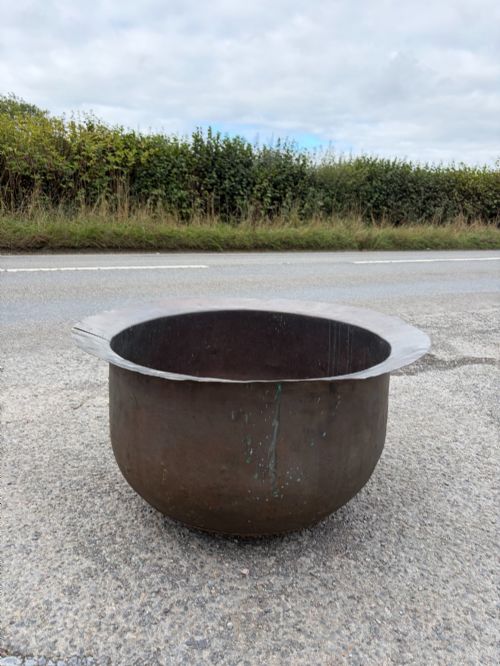
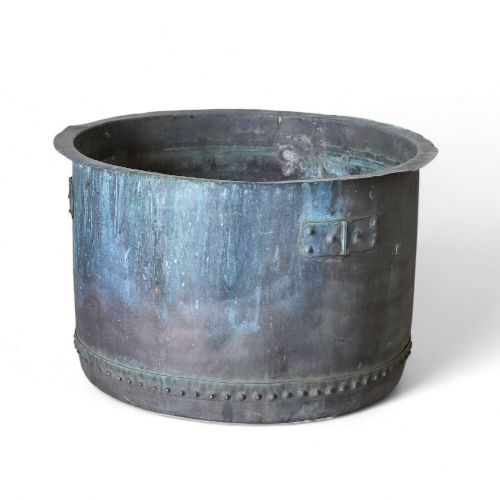
Forms include riveted cauldrons, boilers, and troughs equipped with swing handles or drop handles. Each vessel displays the robust proportions typical of nineteenth-century utility ware adapted for modern garden display.
How they were made
Construction relies heavily on hammered or rolled copper sheet metal joined with hand-riveted seams. Artisans secured these plates tightly to withstand heavy interior loads of water, soil, or timber.
Iron and wrought iron frequently appear on handles and mounts, providing sturdy lifting points for heavy vessels. Some pieces incorporate cast iron or steel elements to reinforce the structural rim and base.
What varies in quality
Quality rests in the heaviness of the metal gauge and the integrity of the hand-riveted construction. Thicker copper sheets endure decades of exterior exposure without buckling under heavy soil pressure.
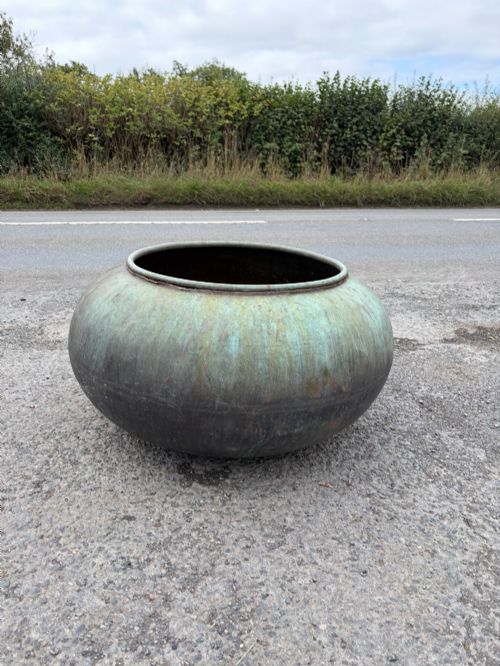
The character of the surface oxidation, ranging from deep brown tones to bright green verdigris, dictates visual appeal. Intact wrought iron swing handles and stable bases also separate utilitarian display pieces from lesser examples.
The Large Copper Garden Pot Glossary
- Riveted
- Joined with metal pins hammered flat to secure overlapping sheets. This method provided durable construction for nineteenth-century water and fuel vessels.
- Verdigris
- A green patina formed naturally on copper surfaces through atmospheric oxidation. This layer protects the underlying metal while offering distinct visual age.
- Cauldron
- A large deep metal pot with a rounded base typically suspended or fitted with a swing handle. These forms provide ample volume for substantial planting schemes.
- Log bin
- A sturdy container originally designed for storing firewood near a hearth. Their generous proportions make them suitable for housing large garden specimens.
Large Copper Garden Pot: Frequently Asked Questions
Are these pots frost proof?
Copper itself handles winter temperatures well, but wet soil freezing inside can exert outward pressure on the metal walls.
Gardeners often elevate these vessels on pot feet or ensure proper drainage holes are clear to prevent ice expansion damage during hard freezes.
How do I clean verdigris?
Most collectors prefer to leave the natural green oxidation undisturbed because it demonstrates age and shields the metal from further wear.
Washing away dirt with mild soap and water preserves the historic surface without stripping the authentic character accumulated over the centuries.
Can I plant directly inside?
Direct planting is common, though lining the interior with a suitable protective membrane helps isolate the copper from continuous acidic moisture.
Ensuring adequate drainage at the base prevents stagnant water accumulation and keeps root systems healthy throughout the growing season.
How do I date a piece?
Dating relies on examining the construction methods, such as hand-hammered seams, individual rivet spacing, and associated iron handle types.
Nineteenth-century utility items typically display irregularities from manual fabrication that distinguish them from later twentieth-century industrial reproductions.