


Rustic Copper Log Holder
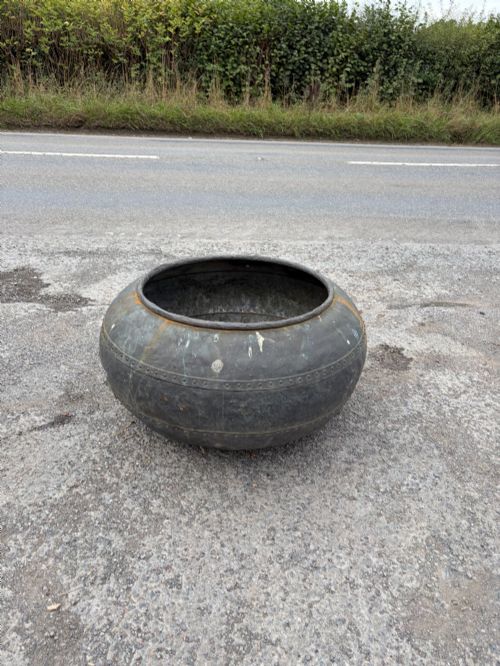
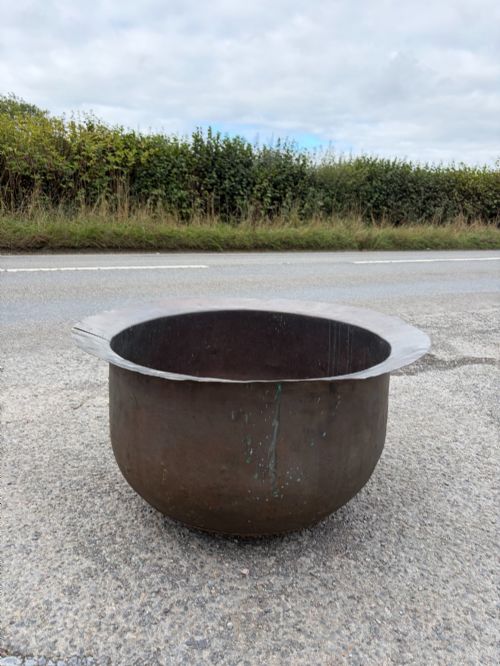
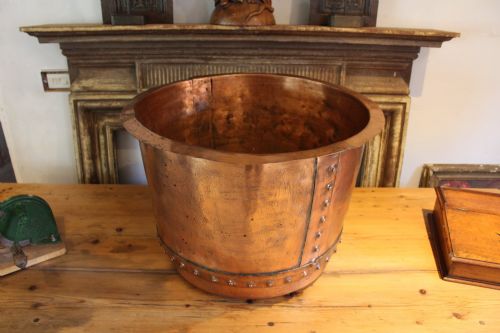
These heavy copper vessels function as a rustic copper log holder by combining warmth and utility beside the hearth.
Rustic Copper Log Holder
The inventory on this page spans Georgian, Victorian, and Arts and Crafts periods, showing how domestic metalwork evolved from plain utilitarian containers to decorative rustic farmhouse accessories.
Materials and construction
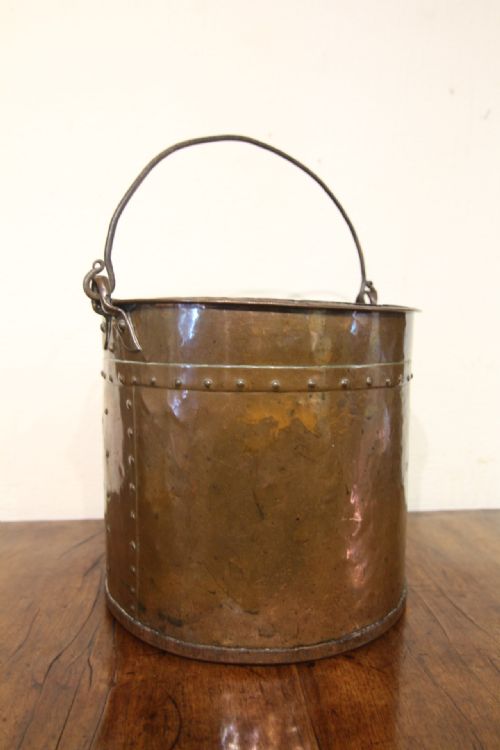
Makers formed these pieces predominantly from heavy sheet copper, joining seams with hand-beaten rivets to ensure structural strength under heavy loads of wood and coal.
Wrought iron, brass, and cast iron provide contrasting handles, rims, and swing Bails, grounding the pliable copper body with rigid metalwork.
Several heavy pots double happily as giant planters when retirement from hearth duty calls.
Judging quality in copper hearth wares
Quality rests in the thickness of the metal plate and the integrity of the hand-riveted seams rather than mere surface polish.
Examples featuring robust wrought iron swing handles and honest verdigris patination hold greater visual weight than lighter, machine-finished vessels.
The Rustic Copper Log Holder Glossary
- Riveted
- Joined with metal pins hammered flat to secure overlapping copper plates. This technique provides both structural strength and visible craftsmanship.
- Cauldron
- A large round vessel with a raised rim and swing handle. These deep forms accommodate substantial quantities of logs.
- Verdigris
- The green patina that forms naturally on copper over decades of exposure to air and moisture. Collectors prize this aged surface layer for its authenticity.
- Swing Handle
- A movable arched metal grip attached to opposing sides of a bucket or pot. It allows for balanced lifting when the vessel is full.
Rustic Copper Log Holder: Frequently Asked Questions
What can I store in these copper vessels?
These containers suit holding firewood, kindling, or coal beside an active fireplace. Their deep interiors and sturdy metal walls contain heavy fuel safely.
Alternatively, many owners repurpose them as large indoor plant pots or garden planters once their active hearth days conclude.
How do I clean a copper log holder?
Dust the surface regularly with a dry cloth to preserve the existing patination and accumulated character. Avoid harsh chemical polishes that strip away the aged tones.
Leaving the natural verdigris intact maintains the historical appearance of nineteenth-century metalwork.
Are these pieces waterproof for plants?
Most riveted copper buckets and cauldrons hold dry materials rather than standing water, though many serve successfully as outer cachepots for potted plants.
Check the base of older riveted vessels for historical wear before filling them directly with damp soil.
How do I date a nineteenth-century copper piece?
Dating relies on observing construction methods, such as hand-beaten rivets, dovetailed seams, and the style of the iron swing handle. Georgian and early Victorian pieces often feature heavier gauge metal and simpler utility forms.
Later Arts and Crafts examples display more deliberate decorative hand-working on the copper surface.