
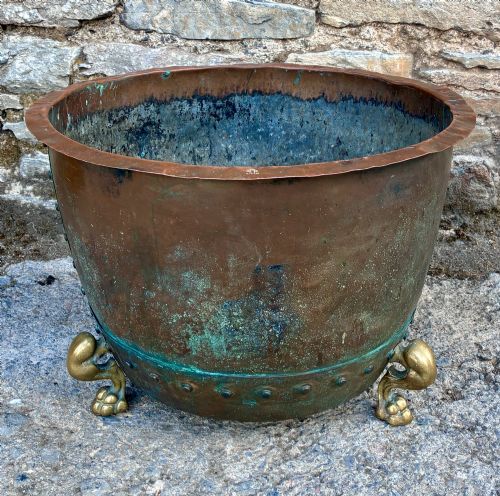
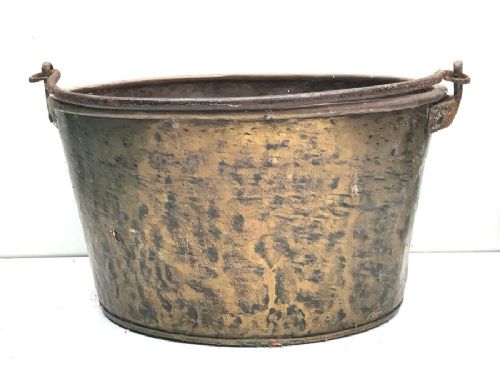
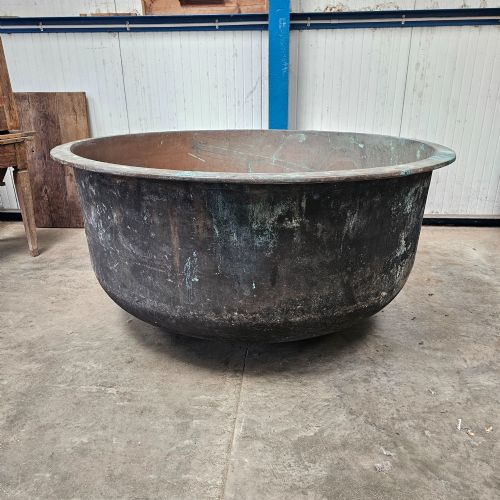
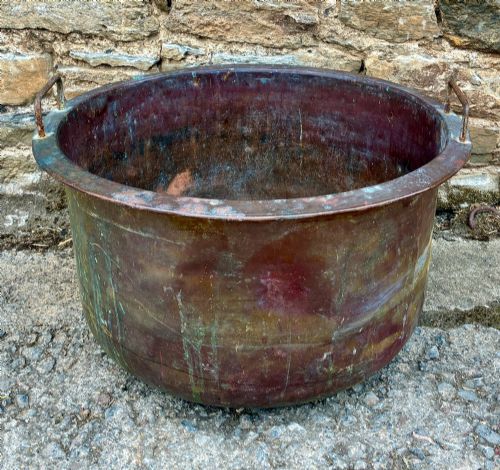



Antique Copper Boiler Tub
These heavy copper vessels, known as an antique copper boiler tub, bring genuine warmth and utilitarian history straight to modern hearths and gardens.
Antique Copper Boiler Tub
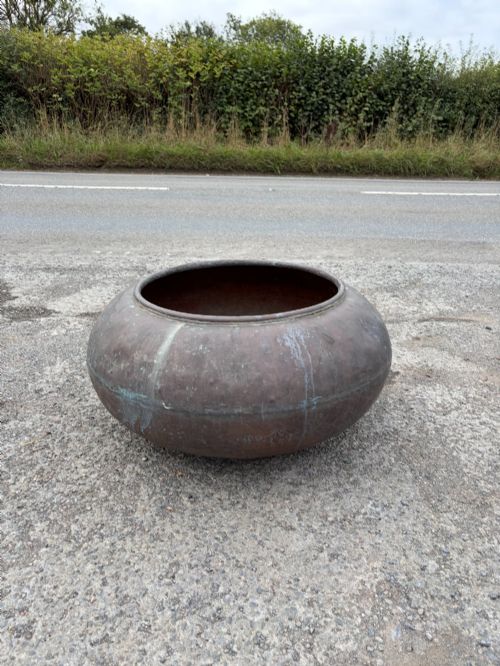
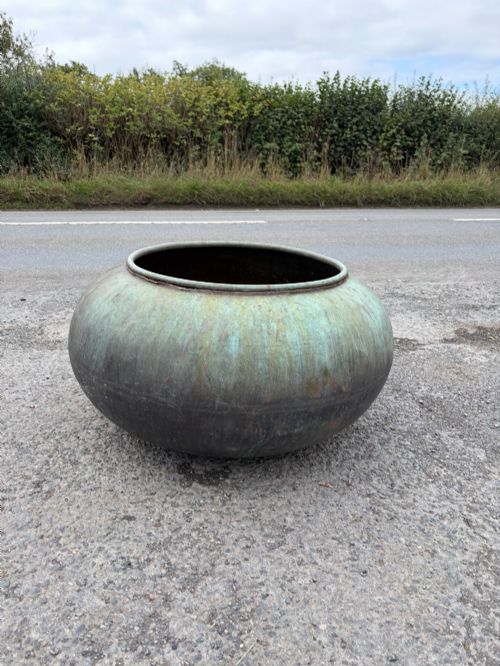
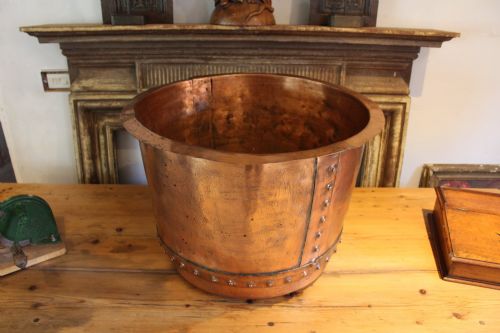
When you search for an antique copper boiler tub, you encounter robust vessels originally built for heavy domestic tasks like washing and boiling. The examples on this page span the eighteenth, nineteenth, and early twentieth centuries, reflecting hardworking origins across English and French workshops.
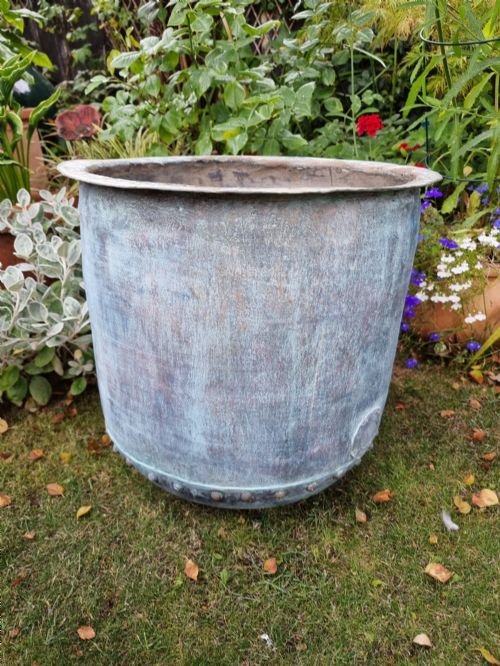
Buyers repurpose these substantial containers today primarily as garden planters, outdoor display pots, or fireside log bins and baskets. Their generous proportions and weathered surfaces suit both rustic farmhouse and industrial interiors.
What varies in quality
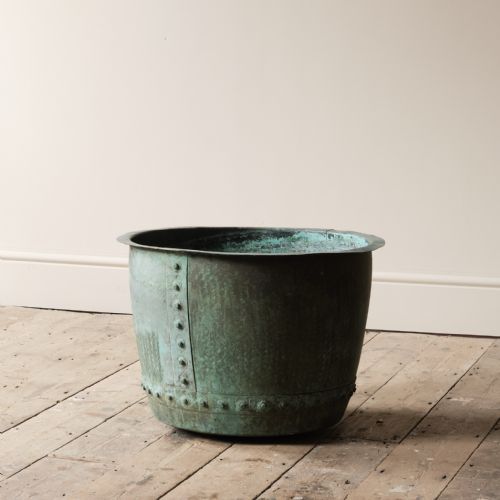
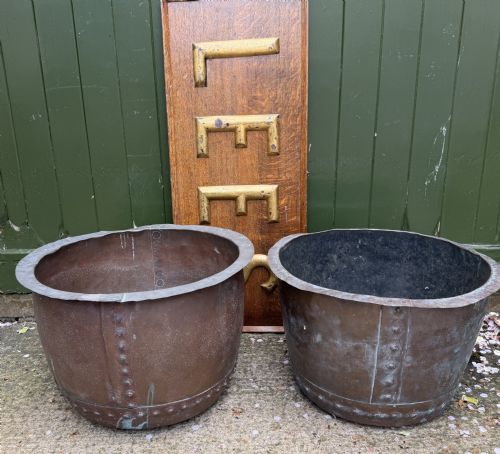
Quality in these utilitarian items rests upon the thickness of the original copper sheet and the integrity of the hand-riveted joints. Vessels that retain their original wrought iron handles and uncompromised structural weight command greater appreciation among collectors.
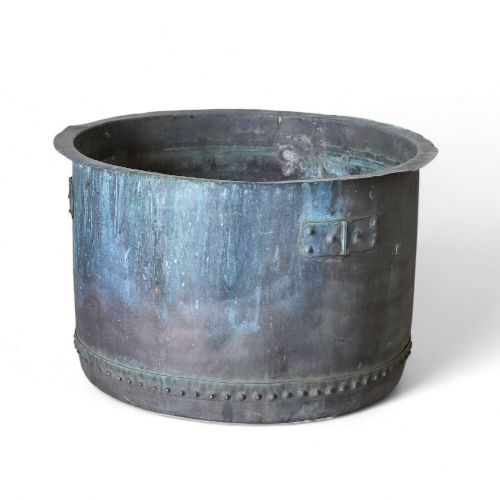
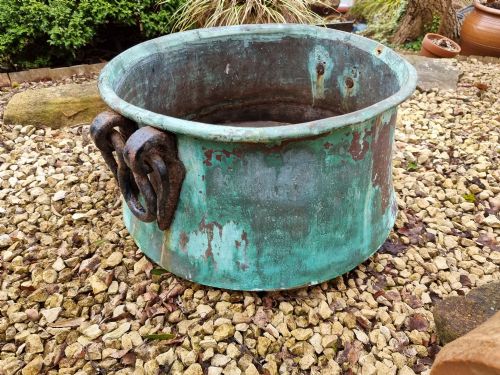
The character of the surface patina and the degree of uniform weathering also separate ordinary examples from exceptional ones. Natural verdigris and minimal distortion from heavy use contribute significantly to the visual appeal of a piece.
The listings span the eighteenth through the early twentieth centuries, featuring copper, iron, and wrought iron in utilitarian forms.
The Antique Copper Boiler Tub Glossary
- Verdigris
- A green patina formed naturally on copper surfaces through long exposure to weather and moisture. This oxidation layer protects the underlying metal and indicates genuine age.
- Cauldron
- A large metal pot with a wide mouth and a swing handle, traditionally hung over an open fire or set upon hearth legs for boiling liquids.
- Cheese vat
- A massive vessel utilised in rural dairies for holding and processing large volumes of milk during the cheese-making procedure.
- Patina
- The deep surface sheen and coloration developed by copper and iron through years of handling, polishing, and environmental exposure. It serves as a visual record of the object's history.
Antique Copper Boiler Tub: Frequently Asked Questions
How do I clean an antique copper tub?
Wash the surface gently with warm water and mild soap to remove accumulated dust and debris without disturbing the historic skin. Avoid harsh chemical cleaners or abrasive scouring pads that strip away the natural verdigris and aged patina.
Dry the metal thoroughly with a soft cloth after washing to prevent spotting. Leave the surface unpolished if you prefer the dull, historic glow characteristic of old utility wares.
Can I use these copper tubs outside?
These robust vessels make excellent garden planters and outdoor display pots thanks to their durable copper construction and generous proportions. Ensure adequate drainage is present or added if you intend to plant directly inside the container.
Harsh winter frosts pose little threat to thick copper, though standing water freezing inside the pot can exert pressure on historic seams. Position them on stable ground where their substantial weight is fully supported.
What is the difference between a log bin and a boiler?
Boilers were manufactured with thin or medium sheet copper specifically to conduct heat quickly for washing clothes or heating water over a fire. Log bins share similar cylindrical proportions but often lack internal scorching and feature decorative handles suited for fireside storage.
Many pieces listed as boilers function perfectly today as log holders or umbrella stands due to their deep cavity. The original purpose remains visible in the heavy soot marks or reinforced rims built for lifting.
How do I date an old copper tub?
Examine the construction methods, noting whether the seams are hand-riveted with irregular spacing or machine-formed with uniform modern fasteners. Eighteenth and nineteenth-century examples typically display irregular hand-beaten panels and heavy wrought iron attachments.
Compare the style of handles and the depth of the metal colour against dated pieces from the Victorian era. Unmarked utilitarian items rely entirely on these physical construction clues rather than stamped signatures.