
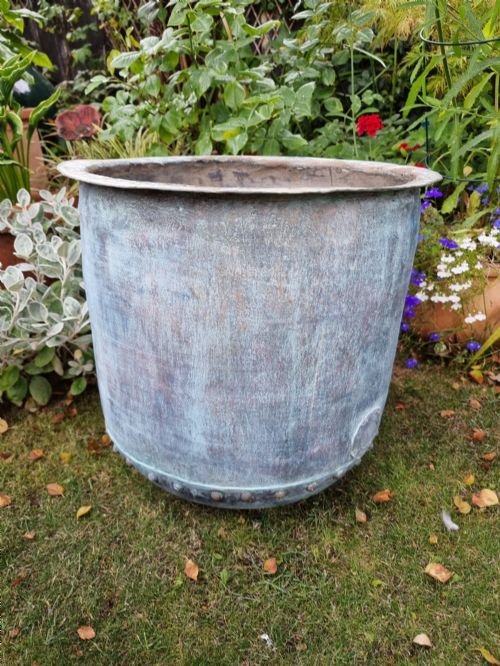
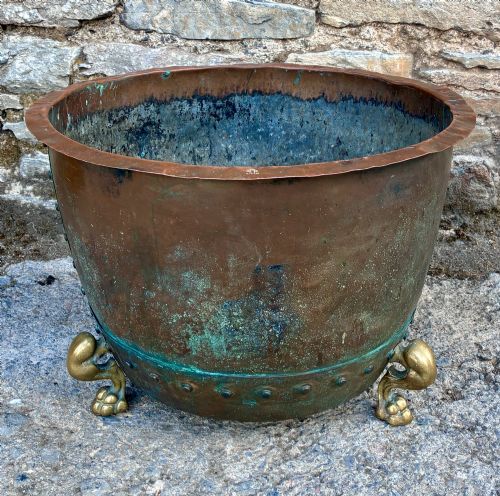
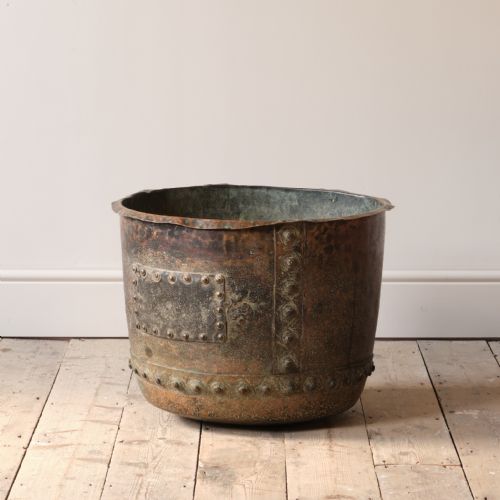


Riveted Copper Cauldron
A riveted copper cauldron brings warmth and heavy metal texture into a room, serving as a practical log bin or garden planter.
Riveted Copper Cauldron
A riveted copper cauldron is a heavy metal vessel originating predominantly from the nineteenth century, spanning Georgian, Victorian, and rustic farmhouse styles. These pieces often cross over in function, serving equally as log buckets, coal tubs, large cooking vessels, or garden planters.
The version most commonly met on this page is a nineteenth century riveted copper boiler or log bin, frequently showing heavy construction. They appear in French country and Victorian industrial guises, often adapted from utilitarian hearth and kitchen use to interior display.
Buyers look for these items to anchor a hearth or to hold logs and plants, relying on the warmth of the metal to ground a room. The forms range from small swing-handled pans to massive garden display pots and cauldrons mounted on heavy iron bases.
How they were made
These vessels are constructed primarily from beaten copper sheets joined together with visible metal rivets. Iron and brass components frequently appear alongside the copper, forming structural rims, swing handles, or heavy supporting bases.
Manufacturing methods rely on traditional smithing techniques where sheets are hammered into hollow forms and secured mechanically. Tinsmithing and brasswork details appear on specific pans and cooking vessels, adding contrasting metal tones to the main body.
Materials recorded across the inventory include copper, iron, brass, and tin, combined in log bins, boilers, and cookware.
What varies in quality
The distinction between ordinary and superior pieces rests on the weight of the metal and the integrity of the construction. Heavier copper gauges and robust iron bases separate substantial log bins from lighter domestic pots.
Quality also shows in the regularity of the riveting and the survival of original patination rather than over-polished surfaces. Pieces that retain their heavy handles and structural stability command greater presence in a room.
The Riveted Copper Cauldron Glossary
- Cauldron
- A large metal pot with a wide mouth used traditionally for boiling and cooking over an open fire. These vessels later transition into decorative log bins and planters.
- Boiler
- A large utilitarian vessel designed for heating water or processing laundry in the nineteenth century. They share the heavy riveted construction seen on cauldrons.
- Log bin
- A deep container used beside a hearth for holding firewood. These are frequently repurposed copper cauldrons and boilers.
- Patina
- The surface sheen and colour acquired by copper through age and handling. This develops naturally over decades of exposure.
- Swing handle
- A movable arched metal handle attached to the sides of a pan or cauldron. They allow the heavy vessel to be lifted or tipped.
Riveted Copper Cauldron: Frequently Asked Questions
How do I clean an old copper cauldron?
Wash the surface gently with warm soapy water and a soft cloth to remove dust without stripping the character. Avoid harsh chemical cleaners that destroy the natural aged patina.
Dry the metal thoroughly after washing to prevent spotting. Leave the darker areas alone, as this aged finish defines the historic nature of the piece.
Are these cauldrons safe for open fires?
Many nineteenth century vessels were originally built for hearth cooking and boiling water over direct heat. Modern usage depends entirely on the current structural stability of the base and sides.
Inspect the metal thickness before exposing any vessel to direct flames or heavy loads. Most buyers utilise them safely for display, log storage, or planting rather than active cooking.
Can I use a copper boiler outdoors?
Copper handles outdoor conditions well and develops a natural green verdigris over time when exposed to moisture. Large garden display pots and planters function effectively on patios or lawns.
Ensure adequate drainage if planting directly into the vessel to protect the metal from prolonged standing water. Heavy iron bases may require protection against rust in damp garden settings.
How do I tell a Georgian piece from a Victorian one?
Georgian vessels, dating around eighteen hundred and the early decades, often exhibit distinct hand-beaten characteristics and specific rim profiles. Victorian pieces frequently display heavier industrial riveting associated with large-scale boiler production.
Examine the construction methods and handle attachments for clues regarding the manufacturing era. Stylistic markers from rustic farmhouse to Victorian industrial also guide the dating process.