
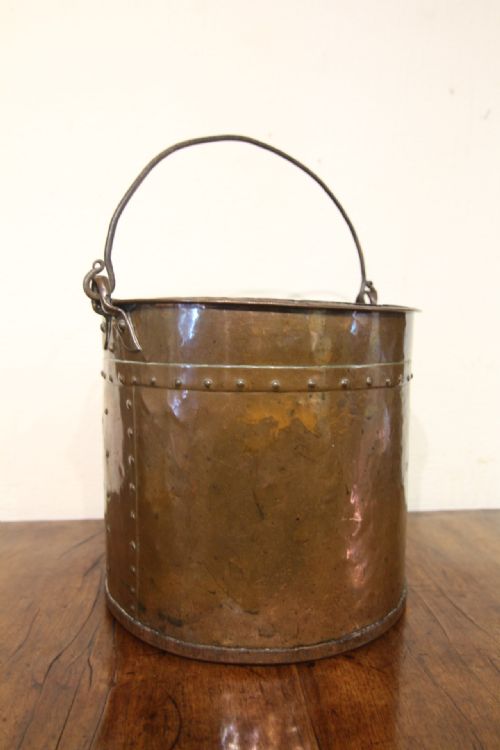


Copper Firewood Basket
A copper firewood basket is a functional fireside container that brings warmth and texture to a hearth.
Copper Firewood Basket
A copper firewood basket is primarily designed to hold logs beside an open hearth, though many double as planters or vessels. You will regularly encounter nineteenth-century examples alongside later Arts and Crafts and Art Deco interpretations. The forms range from simple riveted buckets to substantial cauldrons mounted in iron frames.
Most pieces date from the nineteenth century or the early decades of the twentieth century. Styles span Victorian, Georgian, Rustic Farmhouse, and Arts and Crafts aesthetics. These versatile objects adapt easily to modern interiors while retaining their original utilitarian character.
Materials and construction
These items rely principally on hammered or sheet copper, frequently combined with brass for rims, handles, or decorative mounts. Structural support often comes from wrought iron or galvanised steel frames, handles, and swing mechanisms. Rivets secure the heavy metal plates together, ensuring durability under the weight of heavy logs.
Makers utilised traditional metalworking techniques such as hand-riveting and panel-shaping to form deep vessels and cauldrons. The incorporation of iron handles and swing bales allowed users to transport heavy loads of wood safely. Surfaces often show the subtle marks of the hand-hammering process that shaped the metal.
The listings span multiple periods, including Georgian, Victorian, and the Arts and Crafts era.
Assessing quality and craftsmanship
Quality reveals itself in the thickness of the metal sheet and the integrity of the structural joints. Superior examples feature robust riveted construction and well-balanced wrought iron handles that support the weight without distorting the body. Thinner metal vessels tend to show more dents and structural fatigue from daily use.
The integration of materials also distinguishes finer items, such as the thoughtful pairing of brass trim with heavy copper bodies. Original frames and uncompromised structural hardware elevate a piece above standard utilitarian examples. The crispness of the hand-hammered surface texture indicates superior workshop skill.
The Copper Firewood Basket Glossary
- Cauldron
- A large rounded vessel, typically with a swing handle, used originally for heating or cooking and later adapted for holding logs. These pieces often feature heavy iron mounts and riveted seams.
- Dinanderie
- A term describing European decorative brass and copper ware, particularly vessels produced in various historical styles including Art Deco. This work showcases skilled metal shaping and surface treatment.
- Coal helmet
- A specific type of scuttle featuring a flared shape designed for carrying and pouring coal onto a fire. These items often include brass handles and a stable footed base.
- Wrought iron
- A tough, malleable form of iron easily shaped into handles, frames, and stands for hearth accessories. It provides the necessary structural strength to support heavy copper bodies.
- Arts and Crafts
- A design movement prioritising traditional craftsmanship and visible hand-working techniques over industrial mass production. Objects from this period display honest construction methods like prominent rivets.
Copper Firewood Basket: Frequently Asked Questions
How do I clean a copper firewood basket?
Wipe the surface gently with a soft cloth to remove dust and loose debris.
Avoid harsh chemical polishes that strip away the aged surface character and warm historical patina.
Can these baskets hold wet firewood?
Storing damp logs inside metal containers can encourage moisture retention and inner corrosion over time.
Line the interior or ensure wood is dry before loading to protect the historic metal surface.
Are these pieces purely decorative today?
Many owners continue to use them beside an active fireplace to store logs and kindling.
Others repurpose the larger vessels as indoor garden planters or standalone decorative objects in living spaces.
How do I date an older copper bucket?
Examine the construction methods, such as hand-hammered panels, riveted seams, and the type of iron hardware attached.
Stylistic cues from Victorian, Georgian, or Arts and Crafts periods also help narrow down the manufacturing era.