






Copper Fireplace Log Holder
A copper fireplace log holder brings warmth and metallic texture beside a hearth, combining practical fuel storage with traditional fireside craftsmanship.
Copper Fireplace Log Holder
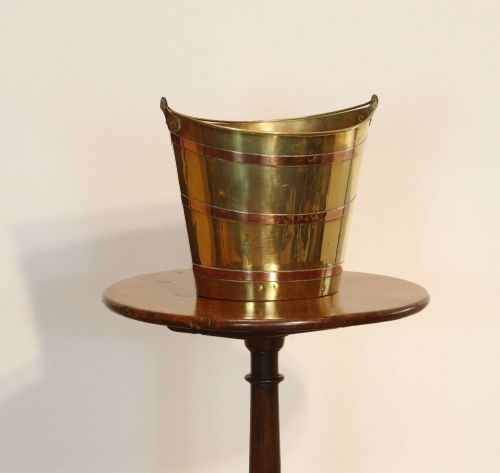
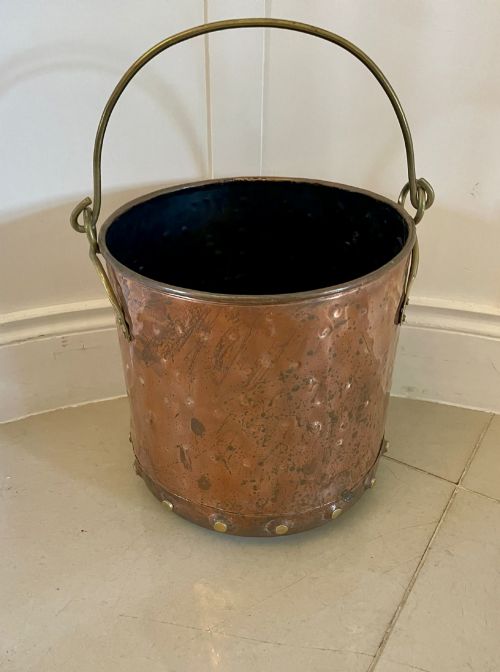
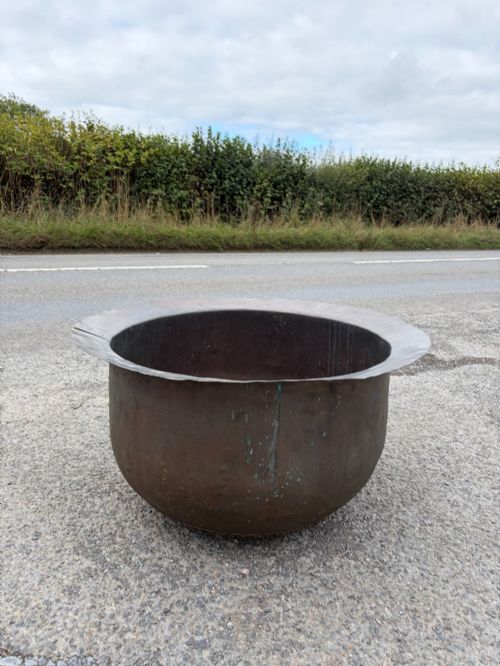
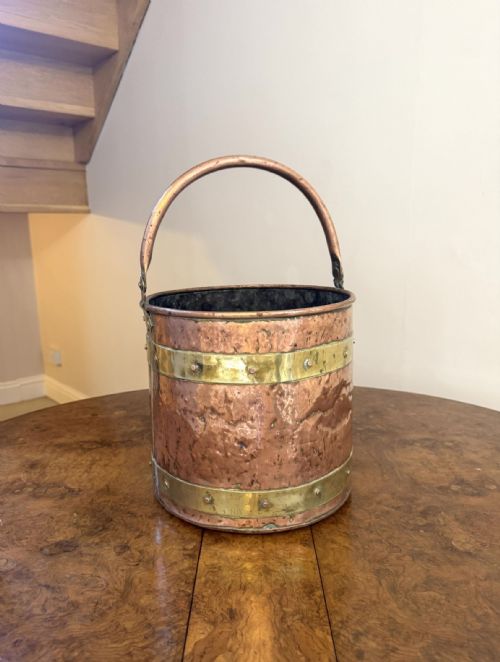
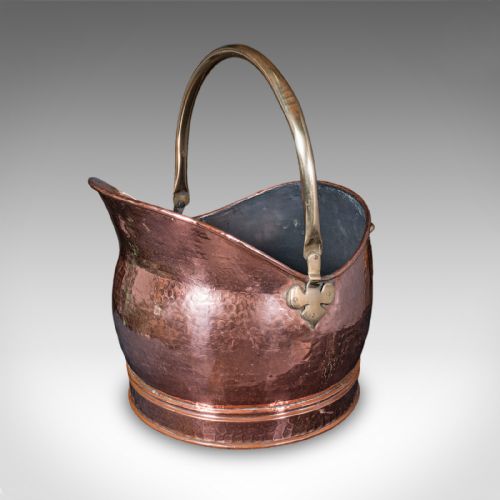
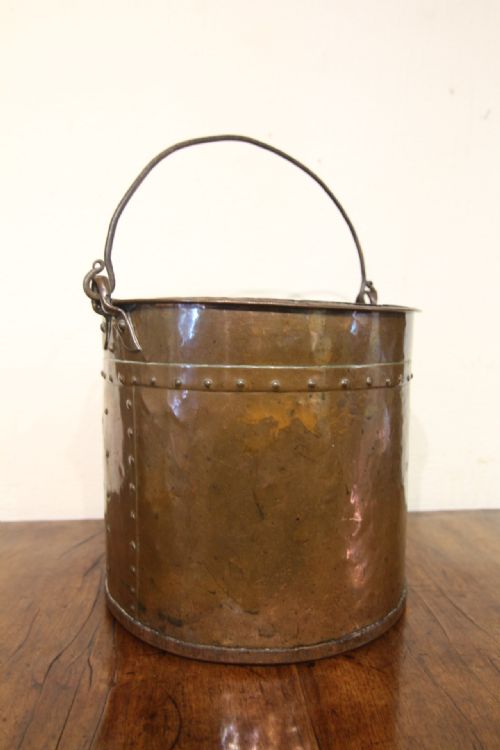
When you search for a copper fireplace log holder, you encounter heavy utilitarian vessels originally designed to store coal, logs, or kindling near the hearth. The pieces on this page span the nineteenth century, including Victorian, Georgian, and Arts and Crafts eras, taking forms such as coal scuttles, buckets, bins, and cauldrons.
The most common examples you will meet are Victorian riveted copper buckets and helmet scuttles. These often feature contrasting brass bands, swing handles, and sturdy metal feet, serving double duty historically as fuel stores and occasionally as large indoor planters or jardinieres.
Origins vary from English workshops to French domestic settings, encompassing rustic farmhouse styles as well as decorative Art Nouveau and dinanderie designs. Collectors and decorators choose them for their rich metallic patinas and robust construction, which suit both traditional inglenooks and modern interiors.
How they were made
Makers formed these vessels using sheet copper, shaping the bodies by hand-hammering or spinning before joining the seams with visible copper rivets. Brass components such as rims, handles, and claw feet were attached mechanically or soldered to reinforce the structure.
Iron and wrought iron featured heavily in handles, swing bails, and structural fixings, providing the necessary strength for carrying heavy loads of wood or coal. Some examples incorporated wooden grips on the handles or oak bases to insulate the floor and protect the metal.
Copper Fireplace Log Holder Retail Price Guide 2026
Typical asking prices for copper fireplace log holder among the pieces listed under this phrase on Sellingantiques today, from the lower quarter to the upper quarter. They describe what is for sale here now, not the wider market.
Some heavy copper coal scuttles spent a century hauling fuel before retiring gracefully to hold potted ferns by the bay window.
What varies in quality
Quality rests in the weight of the metal and the integrity of the construction, distinguishing substantial hand-riveted vessels from thinner, decoratively pressed alternatives. Heavy-gauge copper resists denting and holds its shape under the shifting weight of heavy logs over generations of use.
The refinement of decorative details separates standard utilitarian vessels from finer examples. Crisp hand-hammering, well-cast brass mounts, tight riveting, and the integration of wrought iron or wood distinguish the most accomplished workshop pieces from ordinary production.
The Copper Fireplace Log Holder Glossary
- Riveted
- Joined securely with metal pins whose ends are flattened by hammering. This technique provides structural strength along the main body seams of older copper vessels.
- Helmet Scuttle
- A coal container featuring a flared rim and a hinged spout resembling a medieval helmet. It is designed for pouring fuel cleanly onto a fire.
- Jardiniere
- An ornamental pot or stand designed to hold growing plants or flowers. Many large copper log bins served this secondary purpose.
- Dinanderie
- Ornamental brass and copper ware produced in Europe. The term denotes decorative metal objects created through hammering and shaping.
- Arts and Crafts
- A design movement prioritising handcraftsmanship and traditional materials over industrial mass production. Pieces from this style often display visible hammer marks and simple, honest construction.
Copper Fireplace Log Holder: Frequently Asked Questions
How do I clean a copper log holder?
Wash the surface gently with warm soapy water and a soft cloth to remove dust and soot accumulation. Avoid harsh abrasive cleaners that strip away the aged patina collected over decades.
Dry the metal thoroughly after washing to prevent spotting. Many owners prefer leaving the natural oxidation untouched because it shows the age of the piece.
Were these containers originally for logs or coal?
Most nineteenth-century copper vessels on this page were made for coal, indicated by terms like scuttle or bucket in their original forms. Coal scuttles often included spouts or scoops to transfer smaller fuel pieces cleanly.
Over time, owners repurposed these sturdy metal bins to hold fireplace logs and kindling. Their generous dimensions make them equally suitable for modern firewood storage.
Can I use an antique copper bin outdoors?
These vessels frequently serve as garden planters and jardinieres outdoors, exposed to soil and moisture. Copper develops a green verdigris layer when left outside in the elements.
If you prefer to preserve the polished metal appearance, keep the piece indoors in a dry room. Outdoor use accelerates the natural weathering process significantly.
How do I date an older copper bucket?
Examine the construction methods, such as hand-hammering marks, the style of the rivets, and the shape of the brass handles. Georgian and early nineteenth-century pieces often feature heavy hand-riveted seams and wrought iron fittings.
Later Victorian and Arts and Crafts examples display more refined machine rolling, embossed decoration, or specific stylistic motifs. Compare the form and materials against documented periods in the listings.