


Georgian Copper Planter
A georgian copper planter brings warmth and texture to a room, combining practical utility with the rich tones of beaten metal.
Georgian Copper Planter
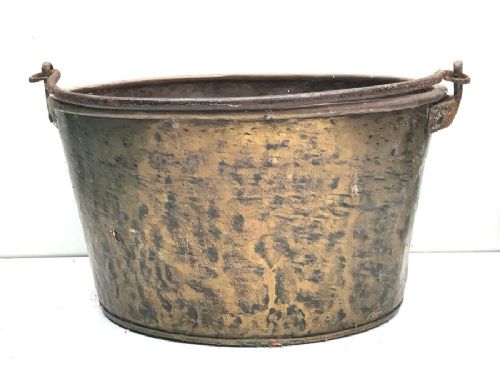
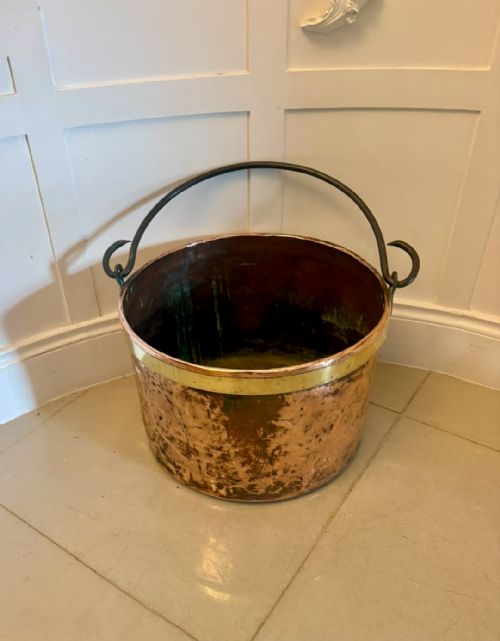
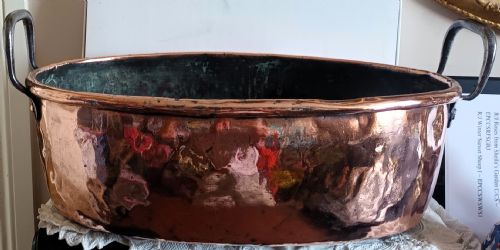
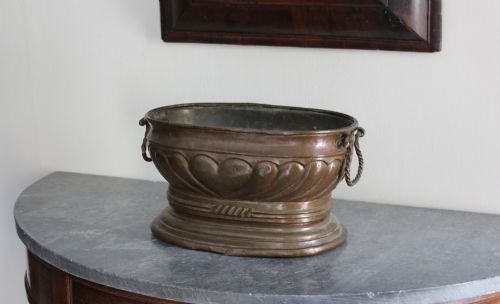
A georgian copper planter draws on utilitarian vessels originally fashioned for domestic hearths and kitchens. The selection on this page centres primarily on robust log bins, wine coolers, and heavy pans adapted over time for botanical use.
Most examples date from the eighteenth and nineteenth centuries, often spanning the Georgian and Victorian eras. Alongside pure copper, many pieces incorporate brass handles, iron swing grips, and occasionally coopered walnut construction.
How they were made
Constructed by hand, these vessels rely on heavy gauge sheet copper joined with visible rivets and seams. Artisans shaped the metal by hammering it over forms to create deep cylindrical or mortar-like profiles.
Brass fittings, such as lion mask handles or paw feet, are frequently riveted or soldered onto the main copper body. Iron components like swing handles and band reinforcements provide structural strength for heavy contents.
Some plants spend their retirement inside vessels that once chilled claret or hauled coal.
What varies in quality
Quality rests in the weight of the metal and the integrity of the hand-beaten surface. Thicker gauge copper holds its structural form better and develops a deeper, more even patination over centuries.
The refinement of decorative details, such as cast brass mounts and cleanly finished riveted seams, distinguishes everyday kitchenware from grander reception room pieces.
The Georgian Copper Planter Glossary
- Planter
- A vessel designed to hold growing plants indoors. In historical contexts, these often double as converted wine coolers or log bins.
- Riveted
- A method of joining sheet metal using metal pins hammered flat to secure overlapping seams. This technique provides both structural strength and visual character.
- Log Bin
- A deep cylindrical container originally used beside a hearth for storing firewood. Their generous proportions make them ideal for housing large potted plants.
- Wine Cooler
- A vessel traditionally filled with ice and water to chill bottles at the dining table. Many surviving examples now function as planters due to their waterproof nature.
- Coopered
- Made by a craftsman using curved wooden staves bound together with metal bands. This technique appears in wooden tea buckets and jardinières.
Georgian Copper Planter: Frequently Asked Questions
Can I plant directly inside a vintage copper planter?
Placing a plastic nursery pot inside the metal vessel prevents moisture from sitting against the historic copper surface. This simple step protects the interior from accelerated corrosion and mineral staining.
Direct planting holds damp soil against the hand-beaten seams, which can weaken old solder and rivets over extended periods.
How do I clean an old copper planter?
Dusting with a soft, dry cloth is usually sufficient to maintain the accumulated patination that collectors value. Avoid harsh chemical polishes that strip away the historical surface character.
Gentle washing with warm water and mild soap removes surface grime without harming the stable oxidation built up over centuries.
How can I tell a Georgian planter from a Victorian one?
Georgian examples often display simpler, heavier hand-beaten construction with plain iron or brass handles. Their silhouettes lean towards utilitarian forms like deep pans and mortar shapes.
Victorian pieces frequently introduce more ornate cast brass mounts, decorative paw feet, and varied surface shaping influenced by revival styles.
Were these always used for plants?
Many items listed as planters began their working lives as kitchen pans, wine coolers, or fireside log bins. Domestic vessels were frequently repurposed once their original kitchen utility ended.
The watertight nature and generous proportions of these antique containers made them natural candidates for indoor horticulture in later periods.