
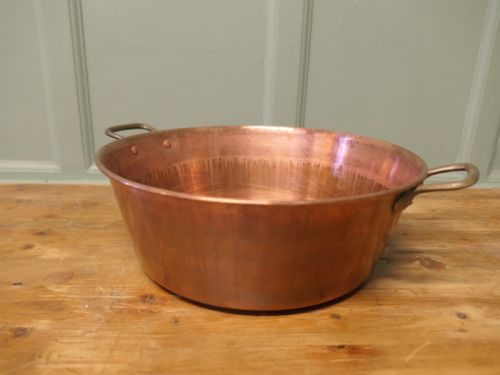
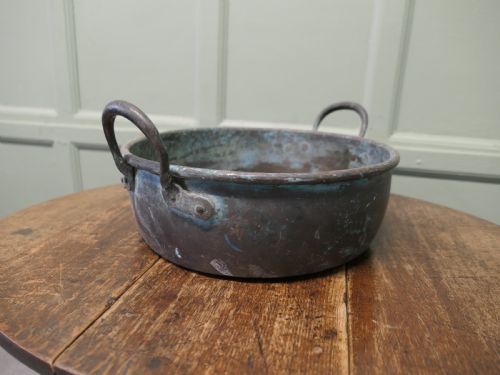
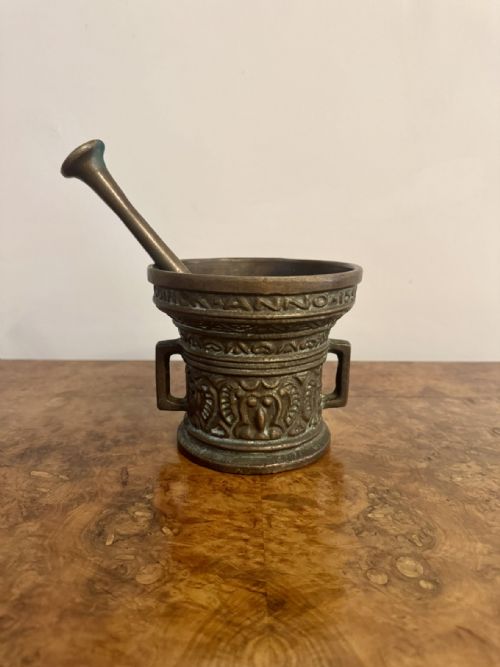


Heavy Copper Bowl
These heavy copper bowl examples are robust culinary vessels and utilitarian containers valued for their practical utility and honest metalwork.
Heavy Copper Bowl
A heavy copper bowl encompasses utilitarian forms like large preserving pans, jam pans, grain measures, cream setting pans, and kitchen vessels. You are most likely to encounter nineteenth century and Georgian examples designed for domestic or commercial food preparation.
The evidence shows periods spanning the eighteenth century through to the early twentieth century, incorporating styles such as Victorian, Georgian, and rustic farmhouse. These objects served heavy-duty domestic tasks before transitioning into decorative roles in modern interiors.
Forms range from double-handled preserve pans to deep pots and basins, reflecting functional workshop and kitchen origins. Their substantial metal weight separates them from lighter decorative wares.
How they were made
Construction relies primarily on heavy copper beaten, hammered, or formed into deep vessels, frequently paired with iron or brass handles. The metalwork displays the hammer marks and joining techniques typical of utilitarian workshop production.
Materials extend beyond pure copper to include cast bronze, bell metal, brass, wrought iron, and tin linings used for food safety. These metals were chosen for thermal conductivity and durability in kitchen environments.
The listings show materials including copper, brass, iron, tin, cast bronze, bell metal, and wrought iron across eighteenth and nineteenth century dates.
What varies in quality
Quality rests in the gauge of the metal and the integrity of the original construction rather than surface finish. Thicker copper walls and substantial forged handles indicate superior commercial or domestic utility.
Maker attribution and period specific details elevate certain examples, such as identified workshop pieces from the Georgian or Victorian eras. The crispness of hammered surfaces and original patination further distinguish finer survivals.
Hodges and Sons
The Heavy Copper Bowl Glossary
- Preserving pan
- A wide, shallow or deep vessel designed for boiling fruit and sugar, characterised by sturdy loop handles. These pans needed thick metal bases to distribute heat evenly across open hearths or stoves.
- Bell metal
- An alloy of copper and tin traditionally used for mortars and heavy vessels. It produces a dense, resonant material capable of withstanding heavy impact.
- Cream setting pan
- A wide domestic vessel utilised in dairies to allow cream to rise to the surface of milk. They feature shallow, open profiles to maximise surface area.
- Grain measure
- A standardised dry capacity container stamped with numbers or capacity marks. These heavy utilitarian pieces were used for measuring agricultural produce.
Heavy Copper Bowl: Frequently Asked Questions
What were heavy copper bowls used for?
These vessels served demanding domestic and agricultural tasks such as preserving fruit, boiling jam, setting cream, and measuring grain.
Their robust construction allowed them to withstand direct heat and heavy daily use in busy kitchens and dairies.
How do I date a copper bowl?
Dating relies on observing handle attachments, construction methods, form styles, and touchmarks where present. Georgian and nineteenth century examples display distinct hand-beaten characteristics and specific rim profiles.
Comparing the weight, metal thickness, and overall form against known period examples helps narrow the decade of manufacture.
Are these bowls safe for cooking?
Many historical vessels feature interior tin linings applied to prevent food from reacting directly with the copper. Over time, historic linings wear thin and require professional retinning if intended for active culinary use.
Many modern buyers prefer to display them as decorative items rather than cooking with them directly.
How should I clean antique copper?
Maintenance typically involves preserving the aged dark patination that accumulates over centuries of use. If polishing is desired, mild non-abrasive cleaners remove active oxidation without harming the historic surface.
Avoid harsh chemical dips that strip away the authentic character accumulated by the metal.