


19th Century Copper
19th century copper brings warmth and substance to any room through heavy pots, coal scuttles and lanterns forged by hand.
19th Century Copper
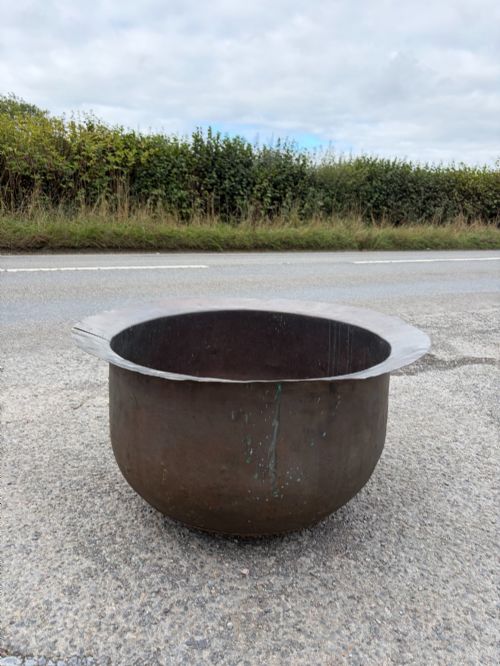
When you search for 19th century copper, you encounter utilitarian kitchenware, heavy coal buckets and large planters built to last. These objects served demanding domestic and industrial roles in Victorian and Georgian households before becoming decorative items.
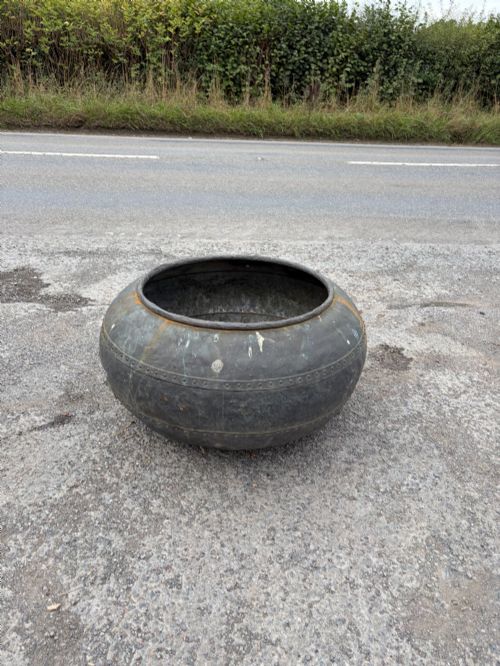
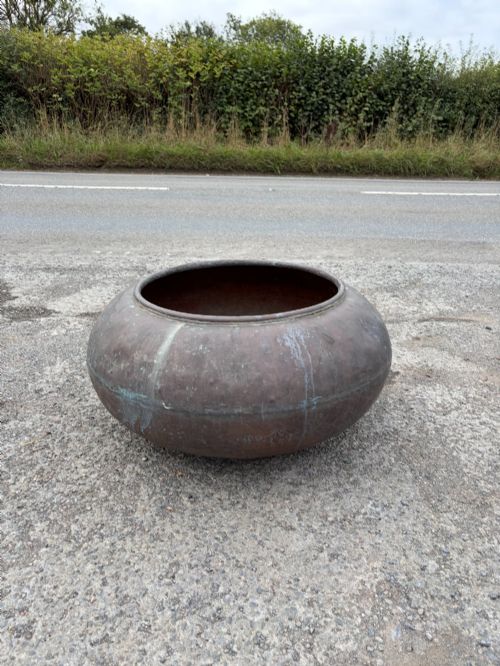
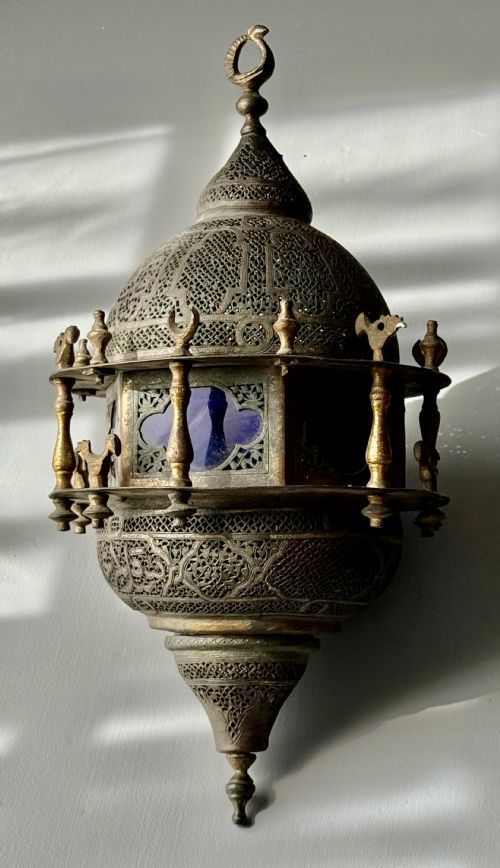
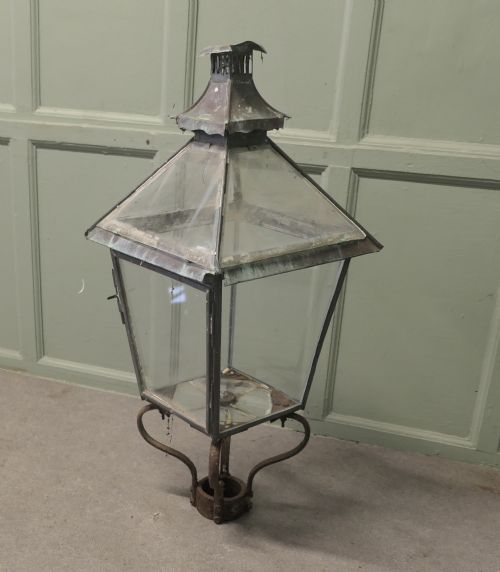
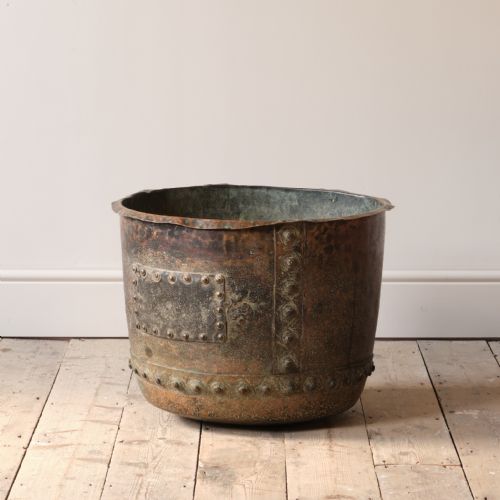
The selection on this page relies heavily on large pots, jam pans and coal bins alongside hanging lanterns and planters. English, French and Indian workshops produced these pieces using traditional methods that left distinct physical traces.
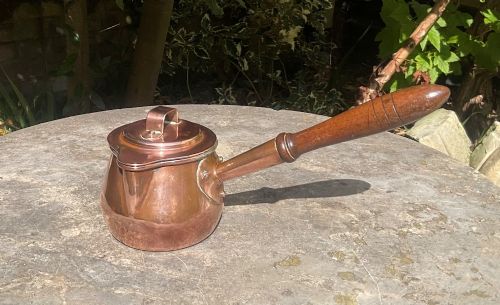
Domestic vessels range from jelly moulds to brandy warmers, while larger architectural pieces include street lanterns and trade signs. The variety spans utilitarian kitchenalia, decorative vessels and Arts and Crafts metalwork.
How they were made
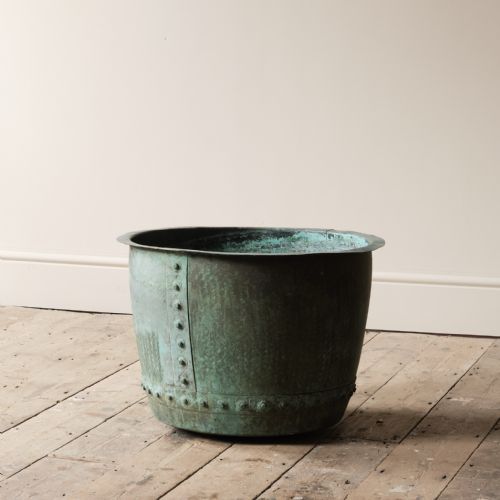
Makers shaped heavy sheet metal by hand, joining seams with overlapping rivets or dovetail joints rather than modern welding. Brass handles, iron swing bails and copper-alloy mounts were attached securely to withstand daily labour.
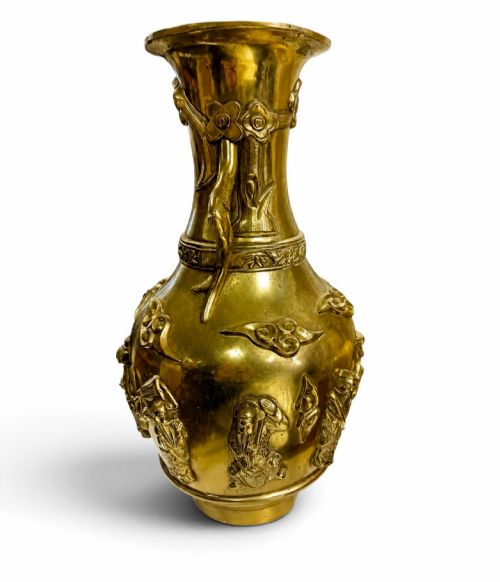
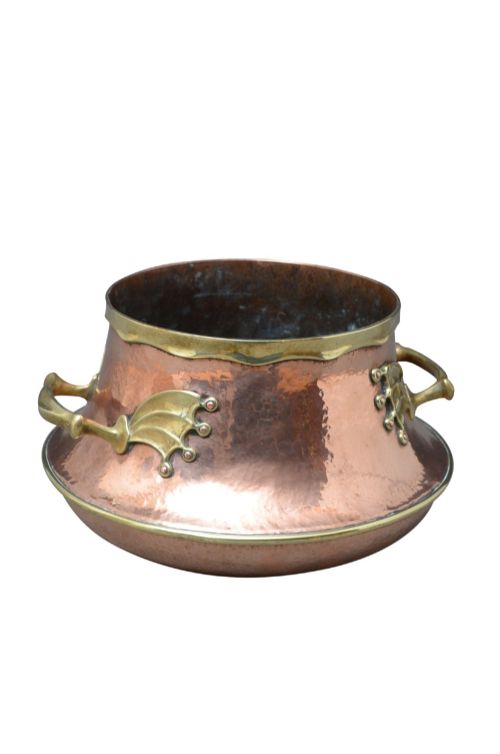
Many large vessels show the rhythmic hammer marks of hand-beating, while others utilise repoussé techniques to push intricate relief patterns from the reverse side. Surfaces often feature tin linings inside cooking pans to prevent chemical reactions with food.
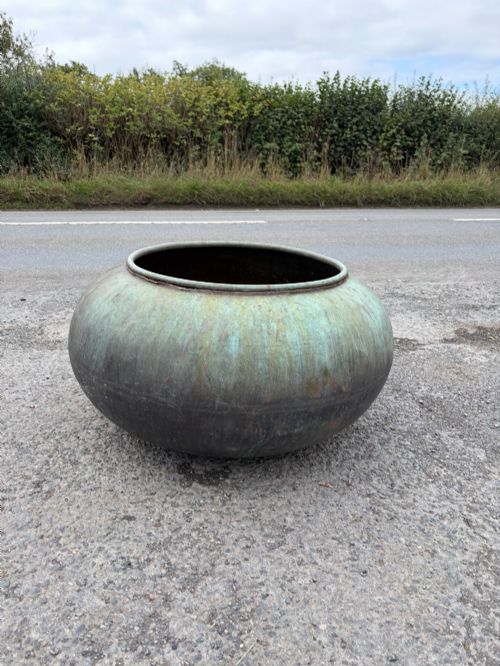
Natural ageing produces distinct patinas, ranging from deep brown oxidation to bright verdigris highlights on outdoor lanterns and garden planters. Exposure to heat, moisture and polishing over generations creates subtle colour variations across the metal.
What varies in quality
Gauge and weight separate robust utility pieces from lighter decorative items, with thicker metal holding its structural integrity better over time. Heavy hand-riveted construction and substantial brass feet indicate higher workshop standards.
Design ambition distinguishes standard kitchenalia from exceptional display items, particularly where repoussé work, integrated iron mounts or distinct regional styles are present. The integrity of original handles, lids and interior linings maintains the historical value of each object.
The 19th Century Copper Glossary
- Repoussé
- A metalworking technique where the artisan hammers a design from the reverse side to form raised relief patterns on the front. This method appears frequently on decorative vases, wall plaques and chargers.
- Verdigris
- The green patina formed naturally on copper, brass or bronze through atmospheric weathering over long periods. Collectors often value this stable surface layer for its visual depth.
- Jam pan
- A large, round vessel with flat bases and sturdy handles designed for boiling fruit and sugar over open hearths or stoves. These heavy copper pans distribute heat evenly.
- Jardiniere
- An ornamental pot or stand designed to hold live plants or floral arrangements indoors. They frequently feature decorative brass feet, riveted seams and handles.
- Kitchenalia
- Utilitarian implements and culinary vessels used historically in food preparation and domestic maintenance. Items in this category include jelly moulds, boiling pots and warming pans.
19th Century Copper: Frequently Asked Questions
How do I clean antique copper?
Gentle washing with warm soapy water removes surface dust without harming the underlying metal or stripping the aged patina accumulated over decades. Avoid harsh chemical abrasives that can scour the surface and remove the character.
Allow the piece to dry thoroughly after washing. If polishing is desired for brighter items, use a mild cream formulated specifically for copper and rub lightly with a soft cloth.
Are old copper pots safe for cooking?
Most historical cooking pots require intact interior tin linings to prevent copper from leaching into acidic foods during preparation. Many surviving vessels are now displayed purely as decorative objects or planters.
If you intend to use a pan for food, inspect the interior coating carefully to ensure the protective metal layer remains continuous and sound.
What causes verdigris on metal?
Exposure to moisture, air and acidic compounds over many years creates a chemical reaction that forms green surface crusts. This natural oxidation layer protects the underlying metal from further corrosion.
While some owners prefer a highly polished finish, others value verdigris as evidence of genuine age, particularly on garden items and outdoor lanterns.
How can I date my piece?
Manufacturing methods offer the clearest clues, as hand-beating, heavy dovetail joints and hand-cut rivets typically indicate production before industrial stamping became dominant. Maker stamps, workshop marks and stylistic influences like Arts and Crafts also help narrow down the period.