



Regency Blue White Plate
These regency blue white plate selections offer bold transfer-printed earthenware and ironstone for any traditional table setting.
Regency Blue White Plate
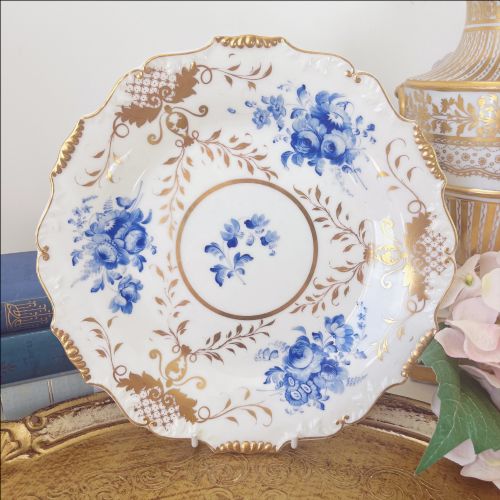
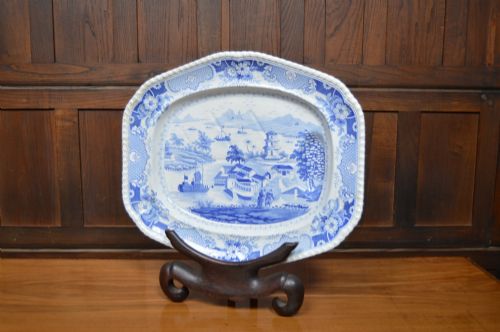
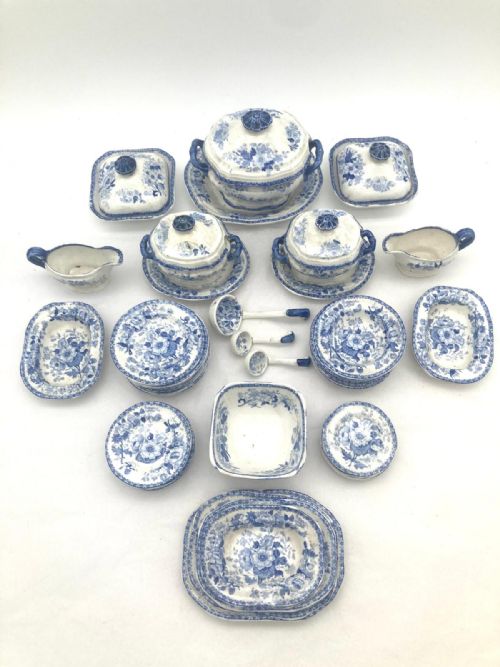
A regency blue white plate brings together the refined ceramic production of the early nineteenth century with striking cobalt decoration. When you search for this phrase, you encounter everything from small tea plates and child services to large serving platters and chargers.
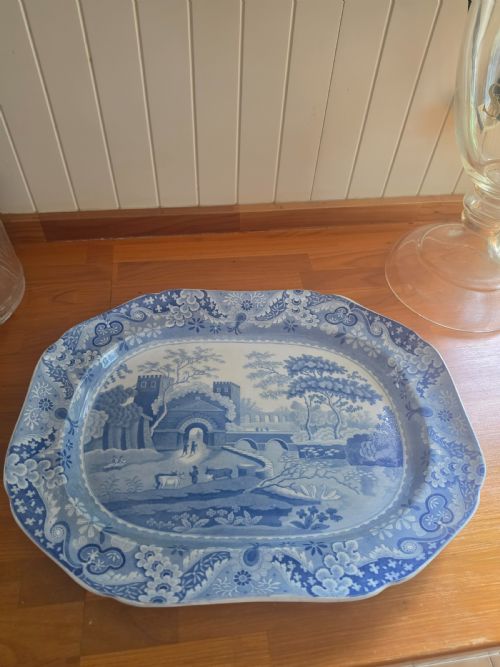
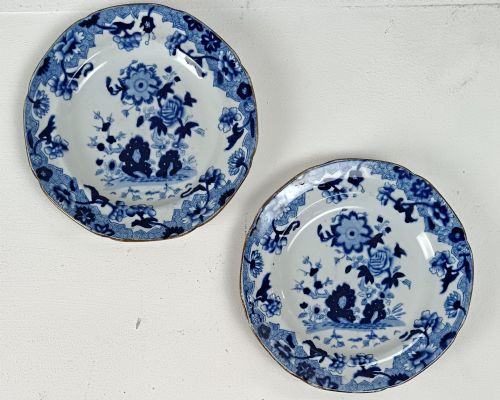
The pieces on this page stem primarily from the Georgian, Regency, and early Victorian periods, capturing a time when British potteries mastered transfer printing. You will frequently find named topographical views, orientalist scenes, and figurative designs stamped or painted across earthenware, pearlware, and ironstone surfaces.
Materials and production methods
Potters of this era relied on earthenware, pearlware, and robust ironstone or New Stone bodies to form the plates and platters. These ceramic bases provided a durable foundation capable of withstanding daily dining use.
Decoration was achieved through transfer printing, a technique where an engraved copper plate transferred cobalt blue designs onto tissue paper and then onto the ceramic surface before glazing and firing. This allowed for intricate patterns like Chinoiserie landscapes, floral sheets, and historical narratives to be reproduced with remarkable consistency.
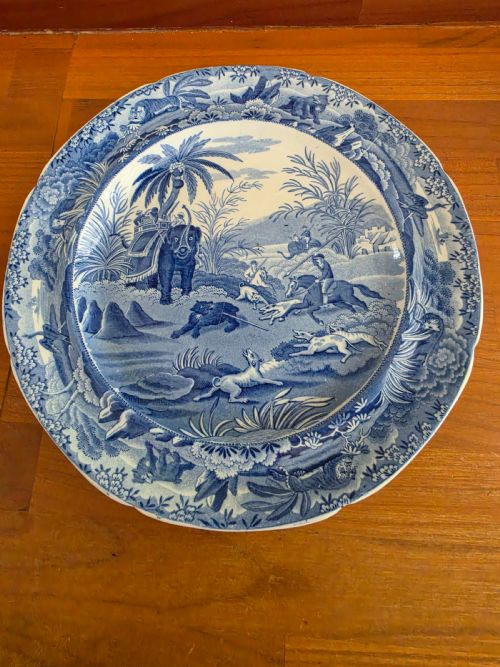
Some nineteenth-century plates proudly depict dramatic historical titles such as The Death of the Bear and the whimsical Crazy Cow.
Distinguishing quality in early ceramics
Quality in a regency blue white plate rests upon the crispness of the transfer print and the clarity of the underlying ceramic glaze. Superior examples exhibit deep, unblurred cobalt lines without smudging, where every detail of the engraved landscape or border remains distinct.
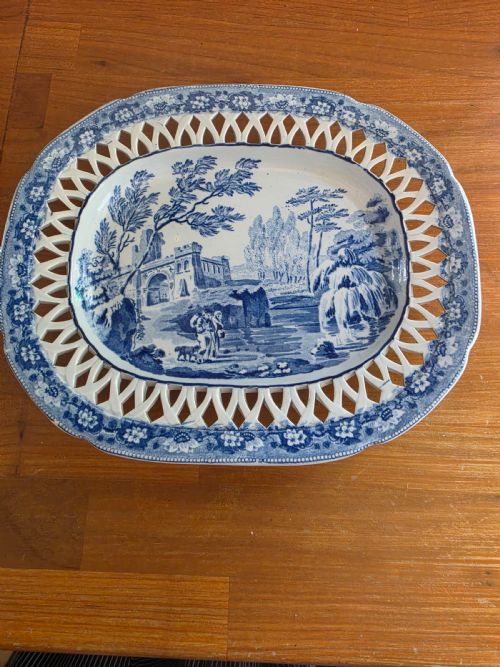
The weight and refinement of the paste also dictate worth, moving from standard porous earthenware up to dense ironstone and translucent bone china. Furthermore, pieces that retain their original matching drainers, or form part of a larger recorded service, demonstrate higher manufacturing ambition and preservation.
Spode·Davenport·Minton·Mason·Wedgwood·William Adam
The Regency Blue White Plate Glossary
- Transferware
- Ceramic ware decorated by applying a printed design from a copper plate onto the bisque body using paper. This method revolutionised British pottery production in the nineteenth century.
- Pearlware
- A refined earthenware developed by Josiah Wedgwood featuring a bluish-white glaze that pooled in crevices. It served as an interim body bridging creamware and later white ironstone.
- Ironstone
- A heavy, durable type of feldspathic earthenware patented to withstand rigorous use. It often presents a thick body and crisp transfer decoration.
- Platter drainer
- A ceramic insert pierced with holes and placed inside a meat platter to catch juices. They are frequently found in larger Regency serving pieces.
Regency Blue White Plate: Frequently Asked Questions
How do I date a blue and white plate?
Dating relies on examining the ceramic body, such as identifying early pearlware glazes or later ironstone fabrics, alongside any impressed maker marks on the reverse.
Stylistic cues within the transfer-printed scenes, such as Regency borders or specific topographical events, help narrow the production window to the early nineteenth century.
Were these plates used for daily dining?
Many larger platters and chargers were designed for substantial family meals and ceremonial meat service during the Georgian and Regency periods.
Smaller tea plates and child service pieces were intended for lighter domestic entertaining or juvenile education, though surviving sets often indicate careful preservation.
What causes the blue colour to vary?
Variations in the cobalt blue tone stem from the composition of the metallic oxide wash and the exact temperatures reached inside the kiln during firing.
Changes in the copper plate engraving depth also altered how much ink transferred to the tissue, creating lighter or darker shades across different batches.
Can I use these antique plates for food?
While durable earthenware and ironstone bodies remain structurally sound, centuries-old glazes can be susceptible to modern cutlery scratching and staining.
Most collectors choose to display these pieces on walls or dresser plate racks to protect the historic surface from further wear.