


Transferware Meat Plate
A transferware meat plate brings nineteenth century blue and white Staffordshire pottery straight to the modern table.
Transferware Meat Plate
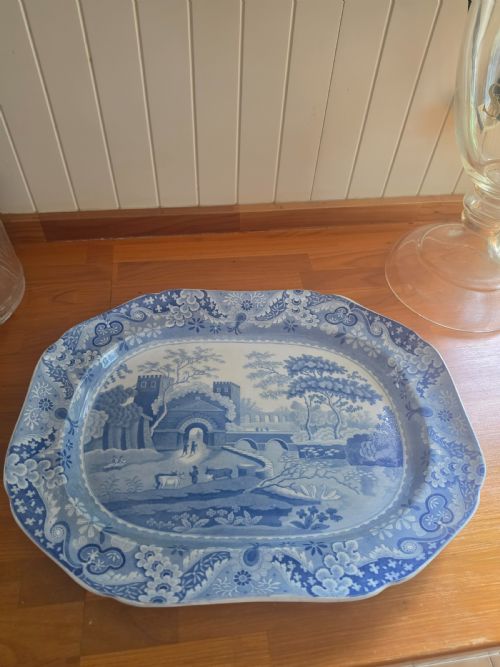
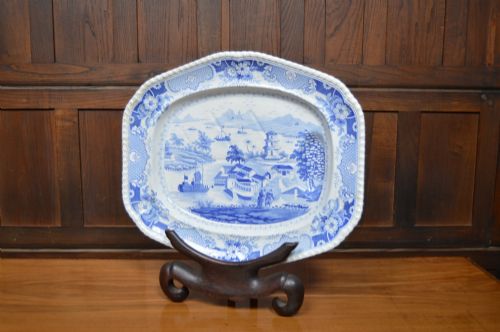
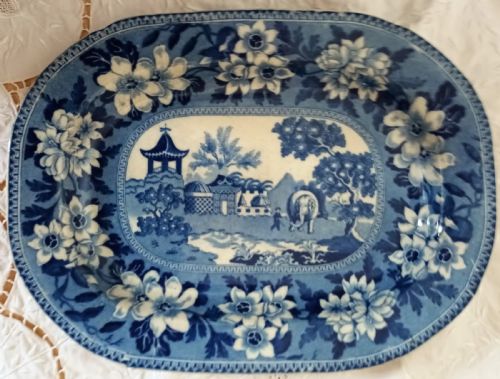
A transferware meat plate is a large ceramic platter designed for serving joints of meat during nineteenth century dining. These heavy serving dishes appear most frequently in deep blue and white schemes featuring romantic landscapes, architectural ruins or chinoiserie motifs.
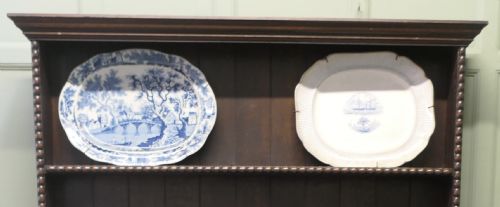
The pieces on this page span the Georgian, Regency and Victorian eras, originating mainly from Staffordshire potteries. Collectors encounter various forms here, including standard platters, serving dishes, chargers and specialised meat drainers.
Makers produced these large earthenware surfaces to accommodate heavy Sunday roasts while presenting intricate printed scenes. Buyers searching for a transferware meat plate will find substantial serving platters decorated with copperplate transfer prints.
Materials and production
Potters shaped these large platters from earthenware and ironstone, building bodies sturdy enough to support heavy joints of meat. Artisans applied cobalt pigment to tissue paper from engraved copperplates, pressing the design onto the ceramic surface before firing.
A clear lead glaze coats the earthenware body, protecting the blue transfer print and giving the platter its characteristic glossy sheen. Many serving pieces include fitted ceramic drainers designed to collect meat juices in the well beneath the platter.
Listings feature nineteenth century earthenware and ironstone from the Georgian, Regency and Victorian periods, decorated with cobalt pigment under lead glaze.
Judging quality in transferware
Quality rests in the crispness of the transfer print and the clarity of the cobalt pigment against the white earthenware. Stronger pieces display deep, even blue tones without blurred edges or smudged copperplate lines.
The weight and presence of ironstone bodies separate superior platters from standard earthenware dishes. Maker attribution and scarce pictorial patterns, such as named architectural views or coat of arms designs, elevate certain serving plates above ordinary topographical scenes.
Spode·John Rogers and Son·Mason's Ironstone·Copeland and Garrett·Don Pottery·Thomas Lakin·Minton·Elkin Knight and Bridgwood
The Transferware Meat Plate Glossary
- Transferware
- Pottery decorated by transferring a printed design from an engraved copperplate onto the ceramic body via tissue paper. This technique allowed Staffordshire potteries to produce detailed pictorial scenes in quantity.
- Ironstone
- A dense, durable type of earthenware patented in the nineteenth century to imitate Chinese porcelain. It provides a heavy, strong base for large serving platters.
- Meat drainer
- A pierced ceramic insert that sits inside a platter to lift meat above accumulated juices. These scarce components fit snugly into the well of larger serving dishes.
- Chinoiserie
- A decorative style employing European interpretations of Chinese artistic motifs and landscapes. This popular aesthetic appears frequently on nineteenth century blue and white pottery.
- Charger
- A large decorative plate or platter used traditionally for ceremonial display or grand service. These imposing vessels sit at the upper end of nineteenth century tablewares.
Transferware Meat Plate: Frequently Asked Questions
What were transferware meat plates used for?
These large platters served joints of meat at the dining table during the nineteenth century. Their generous surface area accommodated large roasts while catching juices.
Many examples include a fitted ceramic drainer to keep the meat elevated above the gravy during carving.
How do I date a transferware meat plate?
Dating relies on stylistic clues, ceramic bodies, and backstamps naming specific nineteenth century potters. Georgian and Regency pieces often feature vibrant blue and white chinoiserie or topographical scenes.
Victorian examples frequently employ ironstone bodies and bear registry marks indicating the exact year of production.
Can I use an antique meat plate for serving food?
These nineteenth century earthenware and ironstone platters remain suitable for serving dry foods at the table. Modern dishwashers and microwaves should be avoided to protect the historic glaze and cobalt pigment.
Hand washing preserves the ceramic body and prevents modern detergents from damaging the antique glaze.
What is the difference between earthenware and ironstone?
Standard earthenware provides a porous, traditional ceramic body used widely across early nineteenth century Staffordshire production. Ironstone, developed later in the period, offers a much heavier, denser fabric designed for durability.
Ironstone meat plates resist chipping better than standard earthenware and carry a brighter white ground.