


Blue White Meat Dish
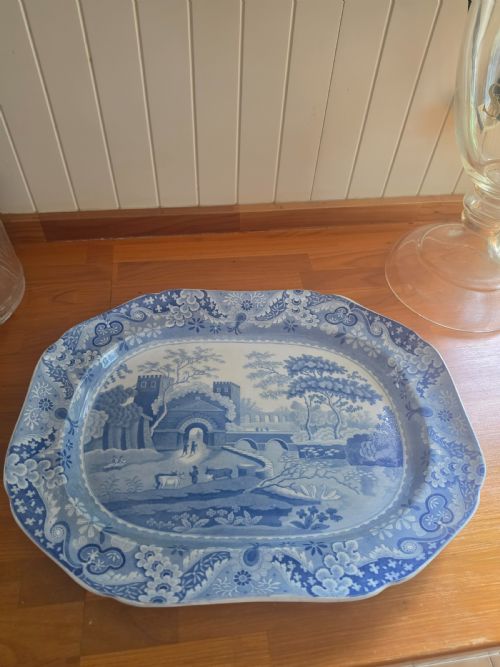
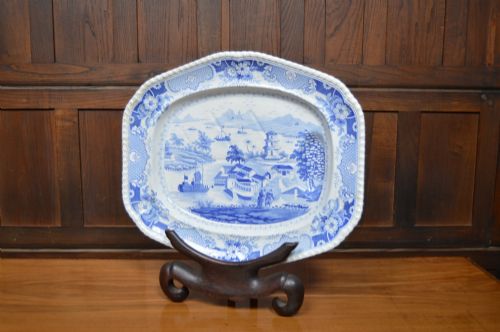
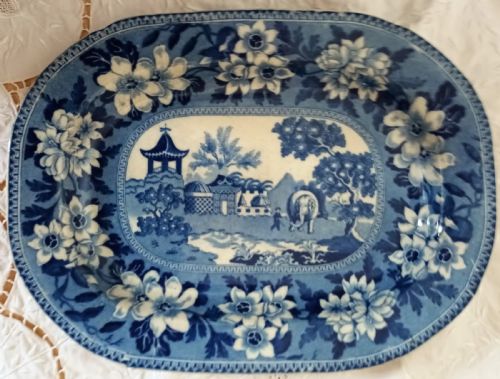
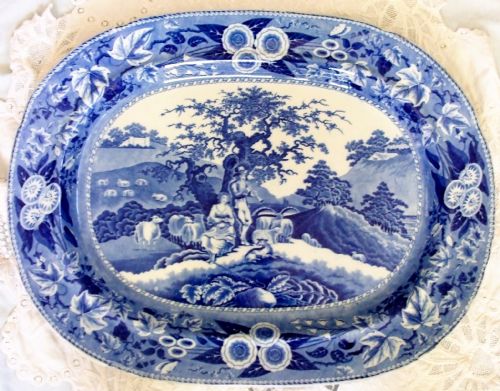
A blue white meat dish is a substantial ceramic platter carrying deep cobalt decoration, made for the dining tables of the Georgian and Victorian periods.
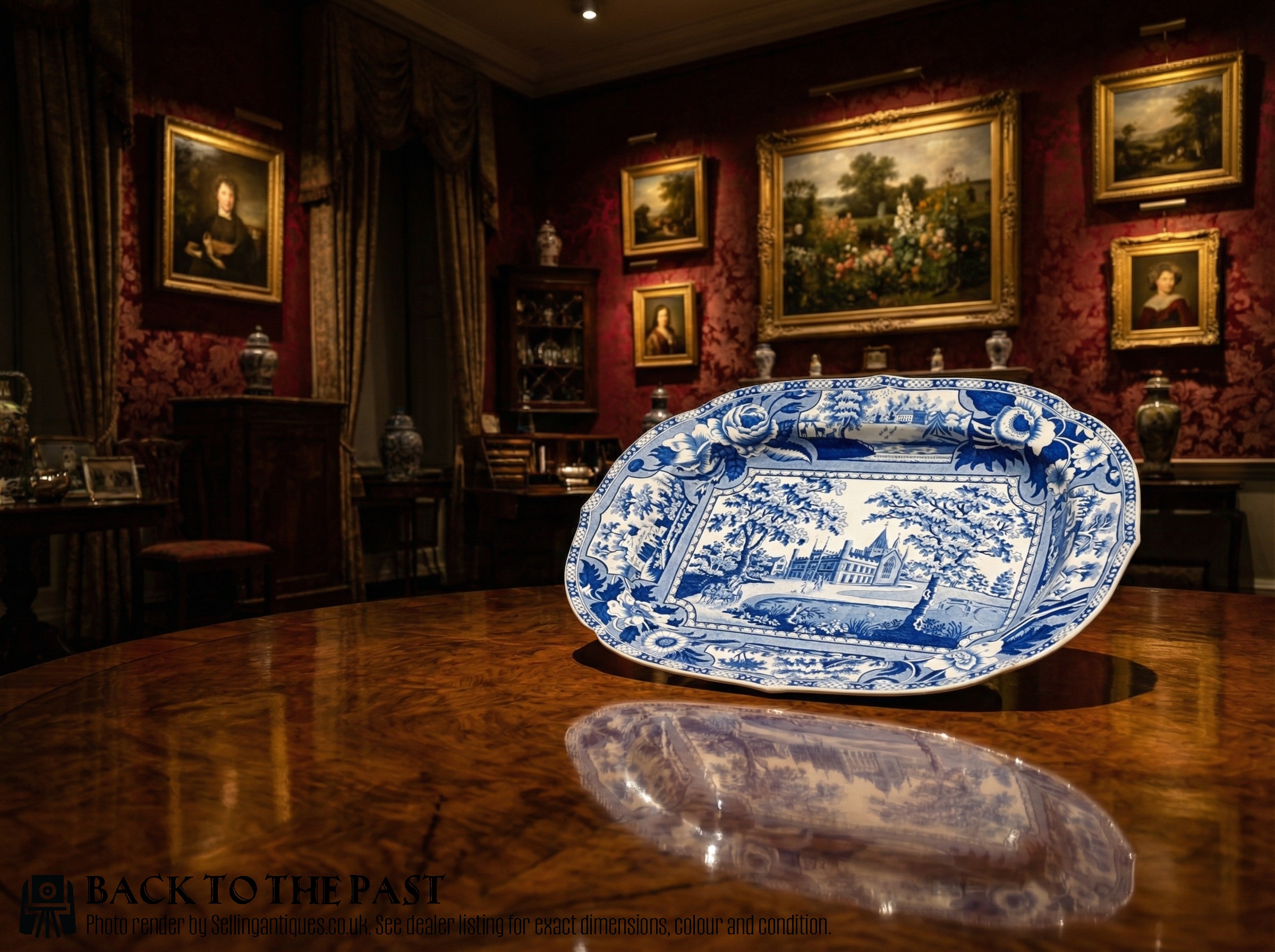
Blue White Meat Dish
When searching for a blue white meat dish, collectors find large serving platters and well-and-tree dishes used to present joints of meat at grand meals. These objects originate primarily from the nineteenth century, spanning the Georgian and Victorian eras.
English earthenware, ironstone, and pearlware dominate the selection, alongside occasional Chinese porcelain pieces made for export. Common forms include large platters featuring transfer-printed landscapes, architectural views, and oriental scenes.
The heaviest examples often incorporate integrated drainers, wells, or reservoirs designed to catch juices during carving. These utility-driven serving dishes reflect the heavy dining demands of nineteenth-century households.
How they were made
Potters shaped these large platters from earthenware, ironstone, pearlware, or porcelain before applying cobalt pigment to the surface. Many factories utilised transfer printing techniques to press intricate copperplate engravings onto the damp ceramic body.
A glossy glaze sealed the cobalt design during firing, giving the surface a vitreous finish that protected the porous clay beneath. Ironstone bodies offered superior strength, allowing makers to produce massive serving dishes without warping in the kiln.
The inventory spans the Georgian and Victorian periods, including Chinese Export items dating back to eighteen hundred.
What varies in quality
Quality rests in the crispness of the cobalt transfer print and the balance of the composition across a large surface. Finer platters show deep, uniform pigment without smudging, bleeding, or kiln distortion.
The complexity of the moulded shape, such as wells, trees, or panelled rims, separates standard utility wares from high-end country house commissions. Maker attribution also drives distinction, with works from renowned potteries commanding closer study.
Spode·John Rogers And Son·Copeland And Garrett·Thomas Lakin·Don Pottery·Minton·Mason·Elkin Knight And Bridgwood
The Blue White Meat Dish Glossary
- Transferware
- Pottery decorated by applying a printed design from an engraved copper plate onto the ceramic body via tissue paper. This mechanised process allowed factories to produce intricate pictorial scenes efficiently.
- Ironstone
- A dense, durable ceramic patented in the nineteenth century to imitate Chinese porcelain while offering greater strength. It forms the heavy body of many large serving platters.
- Pearlware
- A refined earthenware featuring a bluish glaze that pooled in recesses to mask the underlying cream-coloured clay. It served as a popular canvas for early nineteenth-century cobalt decoration.
- Well and tree
- A platter featuring an internal channel and sloping surface leading to a reservoir for collecting carving juices. This design kept meat elevated during formal service.
- Cobalt pigment
- A metallic oxide used under the glaze to produce deep blue ceramic decoration that withstands high kiln temperatures. It provides the signature colour for these printed scenes.
Blue White Meat Dish: Frequently Asked Questions
What is a meat dish?
A meat dish is a large ceramic platter designed to hold roasted joints or poultry for family dining and formal entertaining.
These platters frequently feature deep wells or drainage channels to manage carving liquids at the table.
How were they used?
Staff brought heavy joints of meat to the dining table resting upon these oversized ceramic platters.
Servants used the surface to carve portions while juices drained into the integrated wells or reservoirs.
How do I date a platter?
Pottery bodies, backstamps, and pictorial styles help determine the manufacturing era of these serving pieces.
Early examples often feature pearlware bodies and Chinese export designs, while later Victorian pieces utilise heavy ironstone and detailed topographical prints.
Can I use them today?
These robust antique platters function well for serving large meals or displaying seasonal arrangements.
Hand washing preserves the historic glaze and prevents damage to the nineteenth-century ceramic body.