
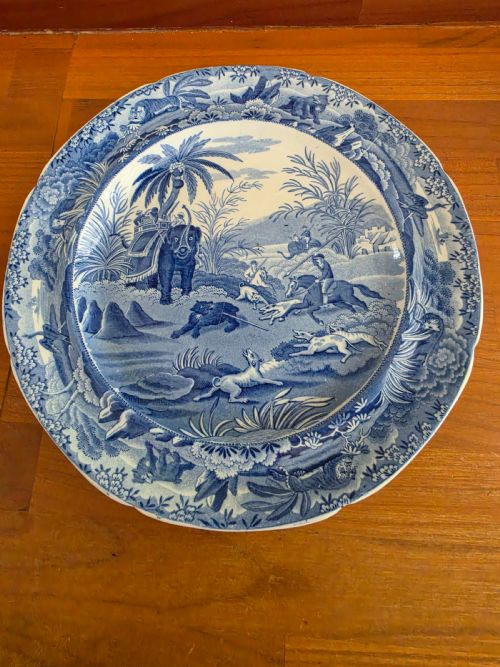


Underglaze Blue Printed Dish
An underglaze blue printed dish brings deep cobalt tones and detailed transfer patterns straight to the table.
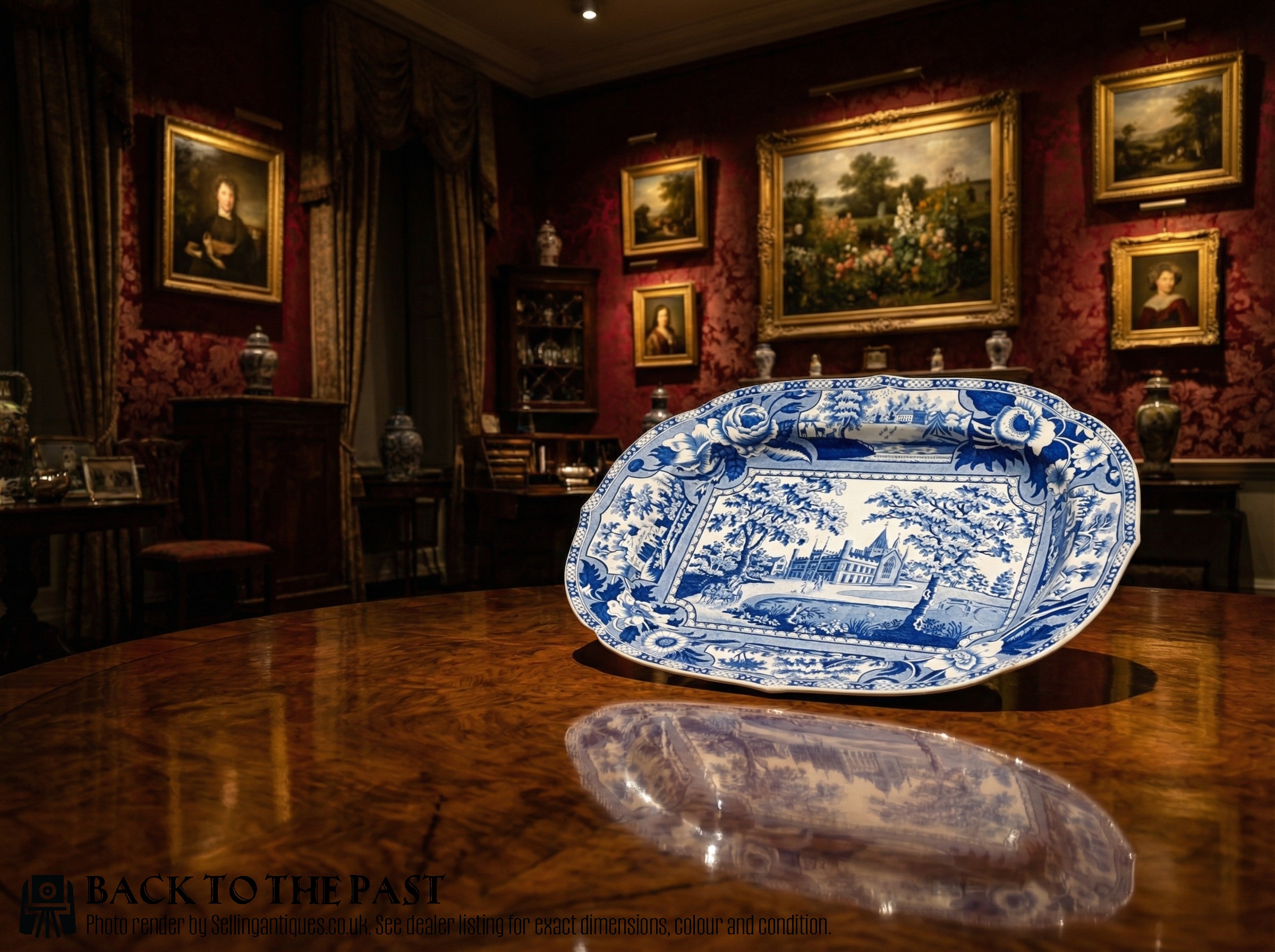
Underglaze Blue Printed Dish
An underglaze blue printed dish covers serving platters, meat dishes, pickle dishes, and decorative plates produced across the eighteenth and nineteenth centuries. These tablewares range from small spoon trays and leaf dishes to large meat platters featuring pictorial scenes.
Most examples found here date from the Georgian and Victorian eras, originating primarily from English potteries. Buyers will encounter specialised forms like bread stands, gravy well platters, and asparagus dishes alongside standard service plates.
How they were made
Potters applied cobalt oxide designs onto earthenware, pearlware, or soft-paste porcelain using copperplate transfer printing before firing. This method allowed intricate topographical and pictorial motifs to be repeated consistently across various dish shapes.
A transparent glaze was then applied over the printed decoration before a high-temperature kiln firing fused the cobalt into the body. This technique protected the blue pigment beneath the glossy surface, ensuring the pattern remained durable through daily use.
Listings feature earthenware, pearlware, and soft-paste porcelain bodies decorated with cobalt underglaze transfer prints.
What varies in quality
The clarity and depth of the cobalt transfer print define visual success, distinguishing crisp pictorial detail from blurred or smudged lines. Early pearlware bodies and soft-paste porcelain exhibit finer potting and more delicate translucency than later heavy earthenwares.
The sophistication of the specific pattern, whether a named topographical view or a narrative scene like the death of the bear, influences the desirability of the dish. Condition of the glaze and the overall balance of the printed composition also set finer examples apart.
Spode·Copeland and Garrett·Mason·John Rogers and Son·Liverpool Pennington
The Underglaze Blue Printed Dish Glossary
- Underglaze blue
- A decorative technique where cobalt pigment is applied to the ceramic body before the glaze is fired. This protects the blue colour beneath a glossy protective layer.
- Pearlware
- A refined earthenware developed in the late eighteenth century featuring a subtle bluish glaze that pooled in crevices. It bridged the gap between creamware and later white earthenwares.
- Transfer printing
- A method of decorating ceramics by pressing paper engraved with a copperplate design onto the biscuit ware. This transferred the ink pattern before glazing and firing.
- Soft-paste porcelain
- A ceramic composition made from clay and glass frit fired at lower temperatures than hard-paste porcelain. It produced a warm, slightly translucent body common in early English factories.
- Gravy well
- A sunken depression or channel incorporated into the surface of large meat platters. It collected juices at one end during carving.
Underglaze Blue Printed Dish: Frequently Asked Questions
How do I date an underglaze blue printed dish?
Dating relies on identifying the ceramic body, such as early pearlware versus later Victorian earthenware, alongside any maker marks or named pattern series. Style cues in the transfer printed border and central motif also help narrow the period.
Examining the glaze characteristics and footrim construction provides further clues to the decade of production. Comparative research on specific potteries active in Staffordshire and Liverpool confirms typical manufacturing spans.
Can I use these antique dishes for serving food?
Most of these durable earthenware and porcelain dishes remain structurally sound for serving dry foods or cold items at the table. Historic glazes on pieces from this era should be assessed individually before daily culinary use.
Gentle hand washing preserves the fragile glaze surfaces and prevents any historic crazing from absorbing moisture or staining. Modern dishwashers and microwaves should be strictly avoided with these historic ceramics.
What is the difference between pearlware and earthenware?
Pearlware is a refined, whiter earthenware developed to imitate Chinese porcelain by adding a small amount of cobalt to the transparent lead glaze. This gives the glaze a faint bluish pooled tint in recessed areas.
Standard later earthenwares often utilised whiter glazes without that characteristic bluish hue. Both bodies served as reliable canvases for vibrant blue transfer printed decoration.
Why do some platters feature a well?
Meat platters with a gravy well were designed for serving large joints of meat, allowing meat juices to pool away from the slices during carving. This practical innovation kept the meat tidy and made serving easier at grand dining tables.
Such specialised forms indicate formal dining practices of the Georgian and Victorian periods. They highlight how utilitarian tableware was engineered for specific culinary tasks.