
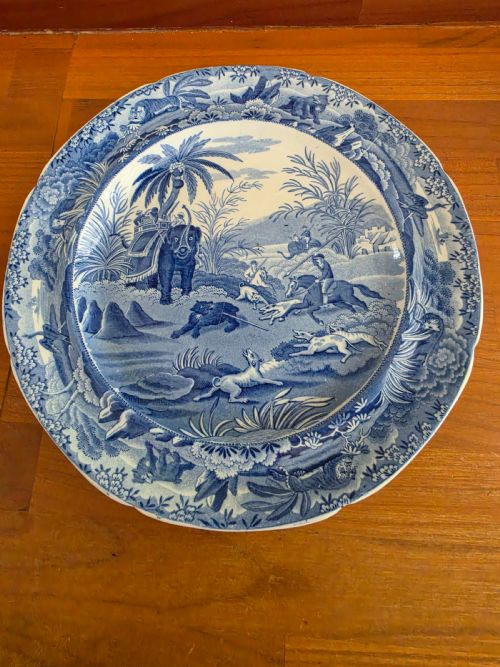


Antique Spode Earthenware
Antique spode earthenware brings together durable ceramic bodies and crisp cobalt transfer printing, offering functional serving pieces for the table.
Antique Spode Earthenware
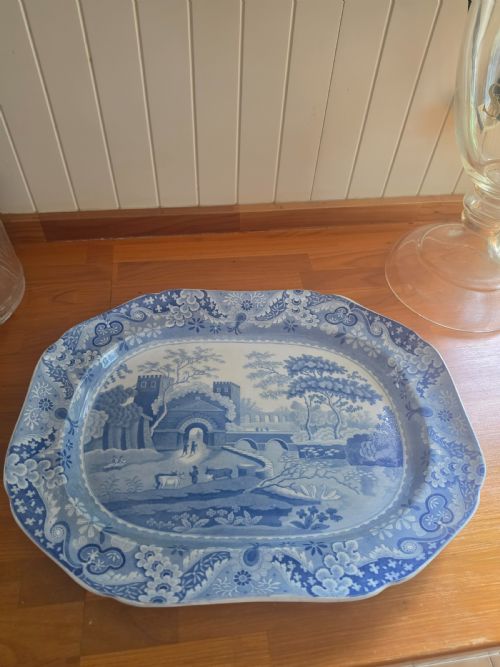
Most examples originate from the nineteenth century, including pieces produced by Copeland and Garrett or under the Copeland Spode name. Formats range from expansive serving platters designed for formal dining to smaller plates and stands utilised for specific courses.
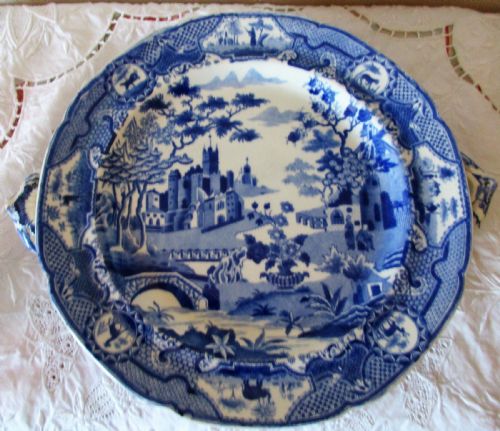
The patterns often reflect popular Regency and Georgian tastes, incorporating architectural scenes, landscape views such as the Bridge of Lucano, and traditional Chinoiserie motifs. Buyers frequently find matching series or individual serving pieces that demonstrate the extensive range of nineteenth-century pottery production.
Materials and production
These items utilise earthenware and pearlware bodies coated in clear or tinted glaze to create a smooth surface for decoration. Potters shaped the clay by hand or mould before applying transfer printing techniques using cobalt ink.
The blue and white transfer print method involved engraving a copper plate, inking it, and transferring the design onto tissue paper which was then pressed onto the ceramic biscuit. Subsequent firing fixed the cobalt pigment beneath the glaze, resulting in deep blue tones.
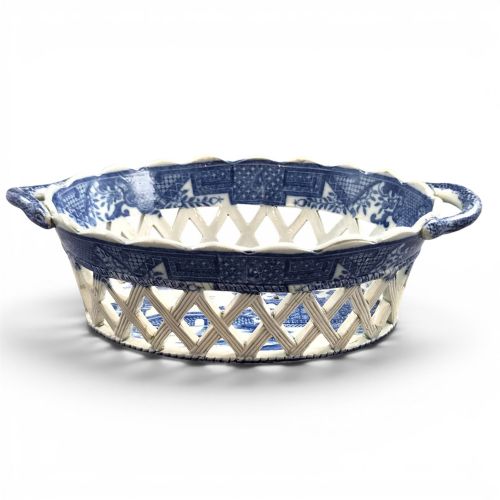
Specialised pieces such as reticulated chestnut baskets and footbaths required intricate piercing and modelling alongside standard throwing and pressing methods. The resulting glazed ceramic body provided both durability and a refined canvas for detailed pictorial scenes.
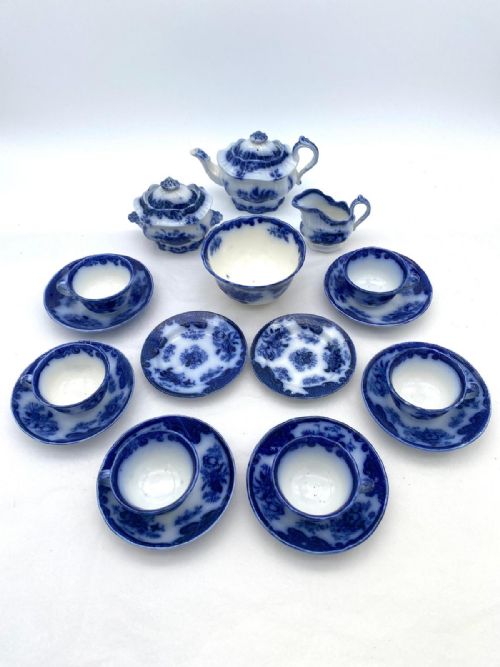
Object types recorded here include serving platters, decorative plates, chestnut baskets, tea services, and footbaths.
Judging quality in the range
The crispness of the cobalt ink transfer defines the visual strength of each piece, distinguishing sharply printed architectural motifs from blurred impressions. Early Georgian and Regency production often displays deeper cobalt glazes and finer detail in complex landscapes.
The complexity of the ceramic form itself dictates the level of craftsmanship, seen in pierced reticulation on chestnut baskets or substantial thrown forms like footbaths and large meat platters. Intact glaze coverage and minimal warping from the kiln firing further separate standard production from superior examples.
Spode·Copeland and Garrett·Copeland Spode
The Antique Spode Earthenware Glossary
- Earthenware
- A porous pottery body fired at lower temperatures, requiring a glaze to achieve impermeability. It forms the core material for the majority of these domestic vessels.
- Pearlware
- A refined earthenware body developed in the late eighteenth century featuring a subtle bluish glaze that sat in recesses. This innovation bridged the gap between creamware and later white ironstone.
- Transfer printing
- A decoration technique where an engraved copper plate applies ink to paper, which is subsequently pressed onto the ceramic surface. This allowed intricate patterns to be replicated across large services.
- Flow blue
- A printing style where cobalt ink intentionally blurred during the kiln firing process, bleeding into the surrounding white glaze. This creates a soft, hazy effect popular in mid-nineteenth-century wares.
- Reticulated
- Decorated with an openwork network of pierced holes or lattice patterns. This technique appeared on decorative baskets and specialised serving pieces.
Antique Spode Earthenware: Frequently Asked Questions
How do I date these ceramics?
Dating relies on stylistic markers, backstamps, and the composition of the ceramic body, moving from early pearlware bodies towards later nineteenth-century earthenware.
Changes in transfer print sharpness and pattern names also help narrow the period of manufacture.
Can I use these platters daily?
While structurally sound, antique earthenware requires gentle hand washing to preserve the historic glaze and cobalt decoration.
Harsh detergents and modern dishwashers can damage the surface over time.
What is flow blue?
Flow blue is a specialised pottery style where the cobalt ink intentionally spreads into the surrounding glaze during firing.
This technique creates a misty, painterly aesthetic rather than a sharp, defined transfer print.
What are transfer printed scenes?
Transfer printing uses an engraved copper plate to apply detailed pictorial designs onto the ceramic body before glazing.
Common themes include architectural ruins, eastern landscapes, and pastoral views.